Birds of the Republic of Crimea
Crimea's mix of Black Sea and Sea of Azov coastline, the vast Sivash wetland, and a warm Mediterranean-influenced south coast make it one of the most important birding regions on Russia's southern flyway.
Two seas, a vast wetland, and a mild southern coast
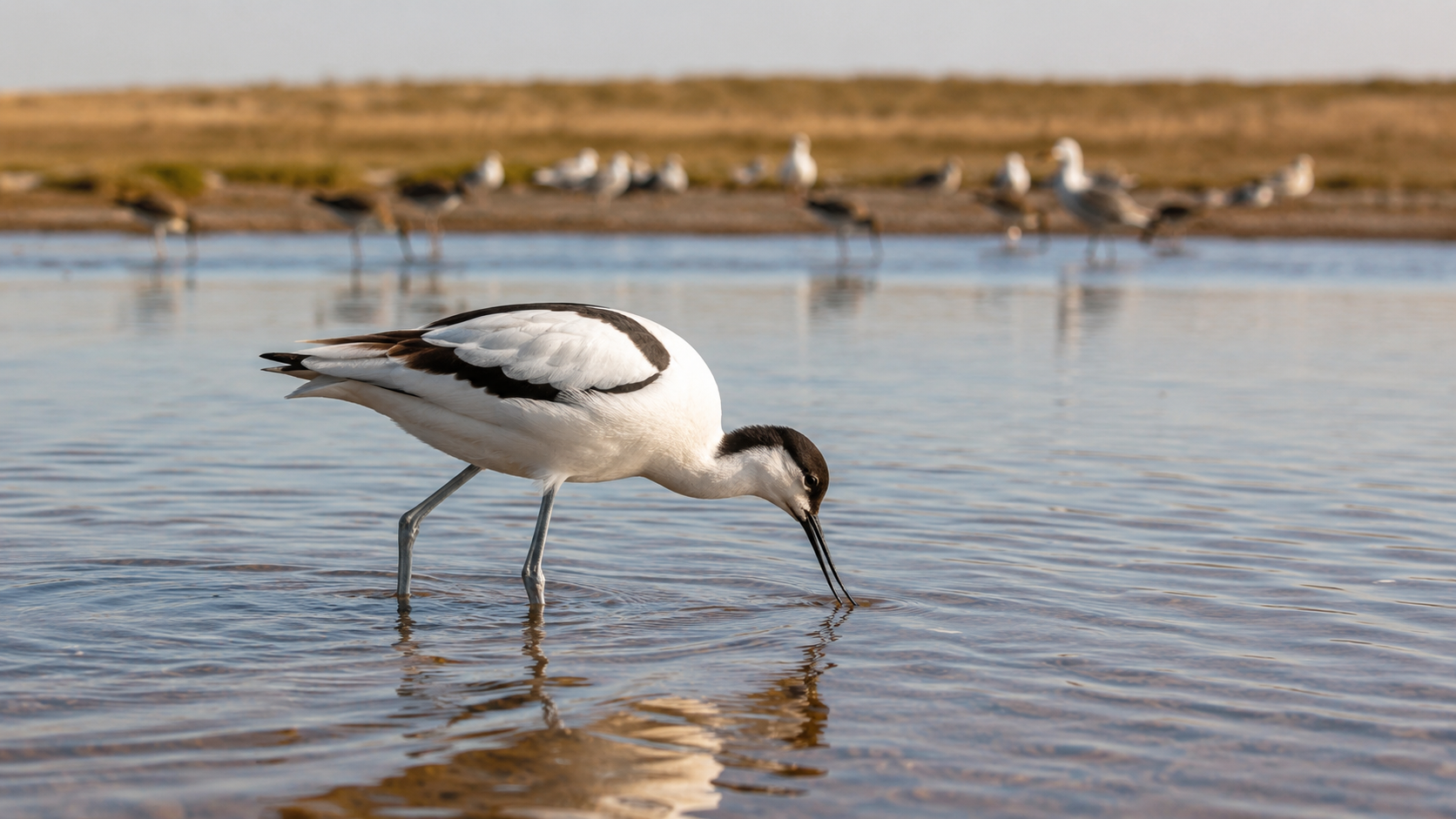
The Republic of Crimea occupies a peninsula bordered by the Black Sea to the south and west and the Sea of Azov to the east, connected to the mainland by a narrow isthmus bordering the Sivash, a vast, shallow, and largely hypersaline lagoon that ranks among the most important wetlands anywhere on the Black Sea and Mediterranean flyway. This combination of two seas, an exceptional wetland system, and a warm, sheltered southern coast beneath the Crimean Mountains gives the peninsula one of the more varied bird communities among Russia's southern regions.
Away from the coast, Crimea's interior is dominated by open steppe and farmland, broadly similar in character to other steppe regions of southern Russia, while the narrow strip of coastline sheltered by the Crimean Mountains along the south enjoys a notably mild, almost Mediterranean-influenced climate that sets it apart from the rest of the peninsula and from most of Russia's European territory.
Typical species of the region
The Sivash and Crimea's coastal shallows attract large numbers of the black-headed gull and common gull, both breeding and staging on the peninsula's extensive salt-influenced wetland habitat, while the grey heron hunts the shallow margins of coastal lagoons and slower inland waters throughout the warmer months. The mallard and mute swan are both well established on Crimea's coastal wetlands and inland reservoirs.
Crimea's steppe interior and farmland support the northern lapwing and Eurasian skylark as widespread breeding species, while the rook forms large, conspicuous colonies across the peninsula's cultivated land. Along the milder southern coast, the European turtle dove and common wood pigeon find suitable habitat in the region's scattered woodland and orchard country.
Seasonality
The Sivash and Crimea's broader coastline see substantial wader, gull, and waterfowl passage during both spring (March–May) and autumn (August–October) migration, as birds move along the Black Sea and Mediterranean flyway between northern breeding grounds and wintering areas further south. Breeding activity across the peninsula's steppe and coastal habitats peaks through May and June. Winters on the mild southern coast are considerably gentler than in Crimea's steppe interior or in most of Russia's European territory, allowing a meaningfully larger number of species to remain year-round in that narrow coastal strip.
Conservation notes
The Sivash is recognized internationally as a wetland of major importance for migratory birds, though it faces pressure from altered water management linked to changes in regional irrigation infrastructure over recent decades, which has affected water levels and salinity across parts of the lagoon system. Crimea's steppe interior, like much of southern Russia, continues to see conversion of natural grassland to agriculture, placing long-term pressure on the peninsula's open-country breeding species even as its coastal wetlands retain outsized importance for the wider Black Sea and Mediterranean flyway.