Birds of Novosibirsk Oblast
Novosibirsk Oblast's Baraba steppe wetlands, the Ob river, and the vast Ob Sea reservoir make it one of West Siberia's most productive regions for steppe and waterbird species.
The Baraba steppe and the Ob river system
Novosibirsk Oblast spans a broad stretch of the West Siberian plain, centered on the Ob river and dominated in its western half by the Baraba steppe, a vast forest-steppe plain remarkable for the sheer density of shallow lakes and marshes scattered across its otherwise open terrain. This unusual combination of steppe and abundant wetland gives the Baraba steppe outsized importance for waterbirds relative to most other steppe landscapes, which typically offer far less standing water.
Just south of the regional capital, the city of Novosibirsk, the Ob Sea (Obskoye More), a large reservoir created by a Soviet-era hydroelectric dam, adds a further substantial body of open water and associated shoreline habitat to the region's wetland resources, complementing the naturally occurring lakes of the Baraba steppe further west.
Typical species of the region
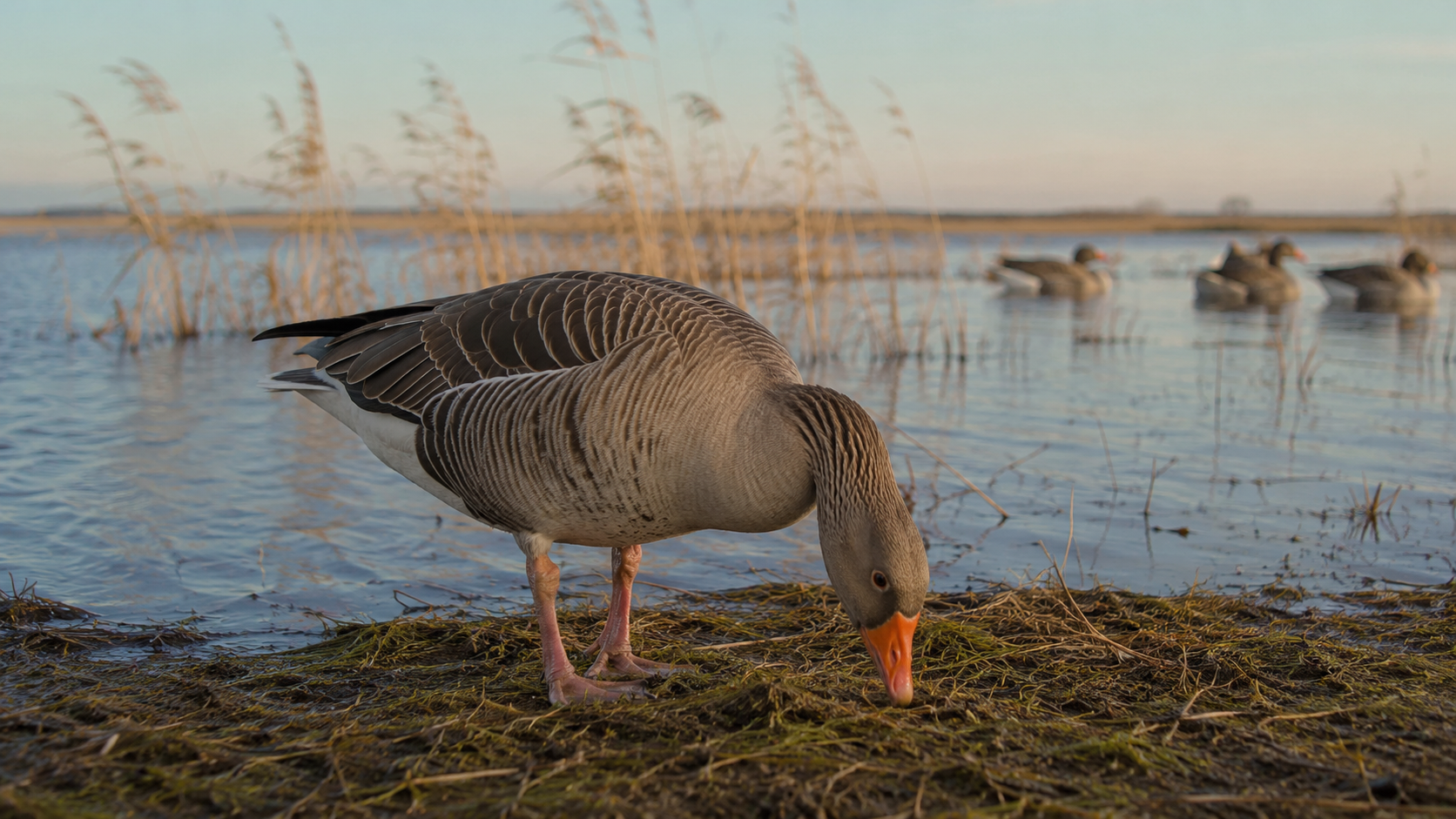
The Baraba steppe's many shallow lakes support significant numbers of the greylag goose and mallard during breeding and migration, while the black-headed gull nests colonially on marshy lake margins and small islands throughout the region. The grey heron hunts the shallow, reed-fringed edges of both the Baraba lakes and the Ob Sea reservoir.
Across the region's open steppe and farmland, the Eurasian skylark and northern lapwing are both widespread breeding species, and the rook forms large, conspicuous colonies across the region's cultivated land. In areas of remaining forest-steppe woodland, the great spotted woodpecker and common raven are both regularly encountered.
Seasonality
Spring migration reaches Novosibirsk Oblast from April into May, with geese and other waterbirds among the earliest arrivals to the Baraba steppe lakes as ice cover breaks up, and breeding activity across the region peaking through June during the short, warm West Siberian summer. Autumn migration runs from August through September, with the Baraba lakes and Ob Sea again serving as important staging areas for waterbirds moving south ahead of the region's long, cold continental winter, during which bird activity is largely limited to hardy resident species in sheltered forest-steppe woodland.
Conservation notes
The Baraba steppe's many lakes are sensitive to water level fluctuations linked to both natural climatic cycles and agricultural water use, with dry years significantly reducing the extent of shallow-water habitat available to breeding and staging waterbirds. The Ob Sea reservoir, while providing substantial open-water habitat, has also altered the natural flow regime of the Ob river locally, a trade-off common to large Soviet-era hydroelectric projects across Siberia, and continued monitoring of both systems remains important for the region's wider wetland bird populations.