Birds of Moscow Oblast
Moscow Oblast's mix of mixed forest, farmland, rivers, and city parks supports a rich resident and migratory bird community within easy reach of Russia's capital.
A varied landscape around the capital
Moscow Oblast surrounds Russia's capital with a mix of mixed birch-and-spruce forest, farmland, river valleys, and countless small lakes and reservoirs, giving it one of the more accessible and thoroughly birded landscapes in central Russia. Its habitats are broadly representative of the wider central European Russian forest-and-farmland zone, making it a good starting point for understanding bird life across a much larger swathe of the country.
Large protected areas within and around the oblast, including Losiny Ostrov National Park on Moscow's northeastern edge and the Prioksko-Terrasny Biosphere Reserve further south along the Oka River, preserve substantial tracts of forest and floodplain habitat within easy reach of the city, making them popular and reliable destinations for local birdwatchers.
Typical species of the region
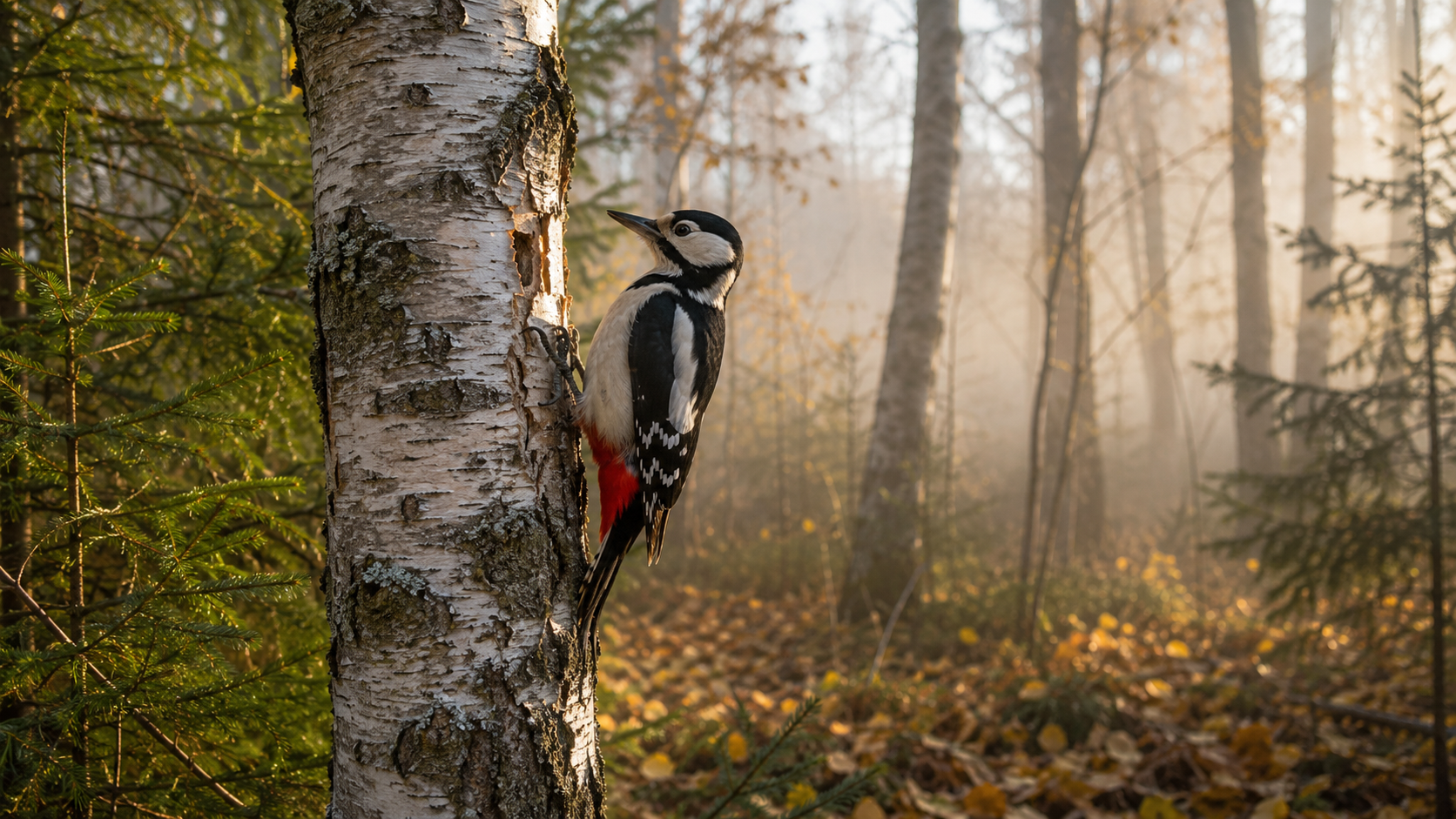
Mixed forest across the oblast supports a strong community of resident and migratory woodland birds, including the great tit, blue tit, and great spotted woodpecker, alongside the deeper, more resonant calls of the less common black woodpecker in older stands with mature trees. Farmland edges and hedgerows bring in the common chaffinch and, in more open country, the ground-nesting Eurasian skylark.
Urban parks and green corridors within Moscow itself remain surprisingly productive, hosting the Eurasian magpie, hooded crow, and rock dove alongside more retiring woodland species where sufficient tree cover survives. The oblast's many rivers, reservoirs, and lakes attract the mallard year-round and seasonal visits from the grey heron, which hunts the shallows of slower waterways and fish ponds across the region.
Seasonality
Spring migration brings the oblast's forests and wetlands to life from late April through May, when returning migrants such as warblers and flycatchers join resident species in full song, making this the single best window for variety. Breeding continues through June, and by August and September many migratory species are already moving south again, leaving a smaller but still active community of hardy residents — tits, woodpeckers, and corvids chief among them — to see out the long central Russian winter, when snow cover makes these year-round residents comparatively easy to spot against bare branches and white ground.
Conservation notes
Ongoing suburban and infrastructure expansion around Moscow places continued pressure on forest fragments and wetland habitat close to the city, making protected areas like Losiny Ostrov and the Prioksko-Terrasny reserve increasingly important refuges for species that need larger, less disturbed tracts of habitat to persist within commuting distance of one of Europe's largest urban areas.