Birds of Rostov Oblast
Rostov Oblast's Don river delta, Sea of Azov coastline, and steppe lake systems make it one of southern Russia's key wetland and steppe birding regions along the Sea of Azov flyway.
The Don delta and the wider Don steppe
Rostov Oblast sits at the mouth of the Don river, one of the largest rivers of European Russia, which empties into the Sea of Azov through an extensive delta of reed beds, shallow channels, and seasonally flooded wetland just south of the regional capital, Rostov-on-Don. This delta, together with the region's stretch of Sea of Azov coastline, forms one of the more significant wetland systems in southern Russia, complementing the open steppe and farmland that dominate the rest of the region.
Away from the delta and coast, Rostov Oblast is characterized by extensively cultivated Don steppe, historically one of Russia's most productive agricultural regions, giving the region's bird community a strong open-country character alongside its locally concentrated but ecologically significant wetland habitat.
Typical species of the region
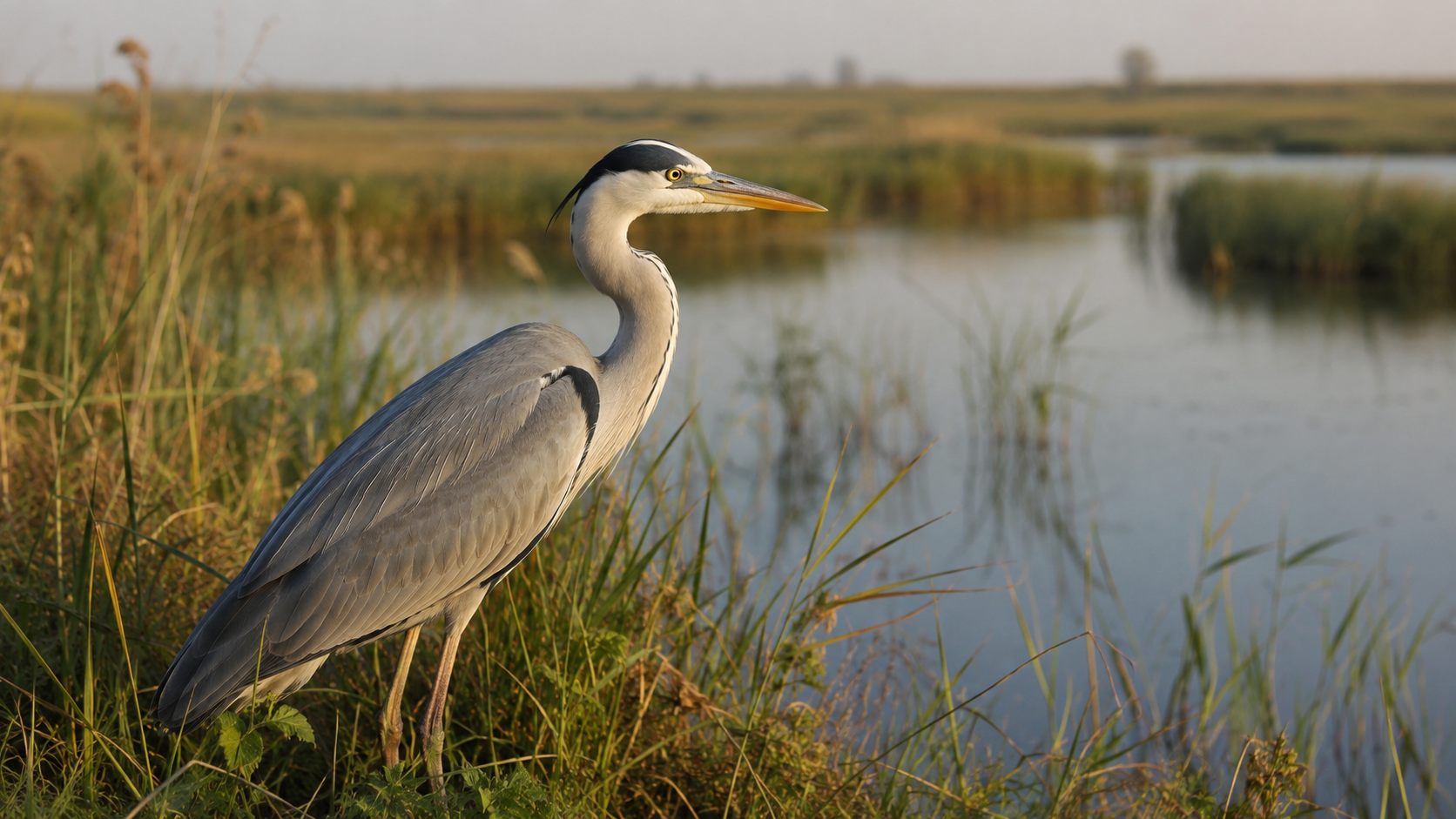
The Don delta's reed beds and shallow channels provide extensive habitat for the grey heron, a common and conspicuous hunter along the delta's margins, while the mallard and greylag goose both make significant use of the delta's wetland habitat during breeding and migration. The black-headed gull breeds colonially on the delta's marshy islands and forages widely across the wider Sea of Azov coastline.
Across the region's open steppe and farmland, the Eurasian skylark and northern lapwing are both widespread breeding species, while the rook forms large colonies closely associated with the region's extensive cultivated land. The white stork nests on rooftops and utility poles in villages across parts of the region, particularly where farmland borders damp meadow or wetland edge habitat.
Seasonality
The Don delta and Sea of Azov coastline see substantial waterbird and wader passage during spring (March–May) and autumn (August–October) migration, as birds move along the Sea of Azov and wider Black Sea flyway. Breeding activity across the region's steppe and wetland habitats peaks through May and June, taking advantage of the warm, sunny continental summer typical of the Don steppe. Winters are cold but generally milder than regions further north or east, and the Don delta's open water and reed beds continue to support a meaningful population of hardy waterbirds through much of the colder season.
Conservation notes
The Don delta's wetlands, though smaller and less internationally documented than some other major Russian river deltas, remain an important regional wetland system facing pressure from water management changes upstream on the Don and from ongoing agricultural and industrial development around Rostov-on-Don. The wider Don steppe, like much of southern Russia's farmland, has seen the near-complete conversion of natural grassland to cultivation over the past century, leaving the region's open-country breeding species increasingly reliant on field margins, fallow land, and other secondary habitat within an intensively farmed landscape.