Birds of Altai Krai
Altai Krai's forest-steppe landscape, unique ribbon pine forests, and thousands of steppe lakes make it one of southern Siberia's most productive regions for both open-country and waterbird species.
Forest-steppe, ribbon forests, and the Kulunda lakes
Altai Krai occupies a broad stretch of the upper Ob river basin in southern Siberia, its landscape transitioning from forest-steppe in the east toward the open, almost treeless Kulunda steppe further west, near the border with Kazakhstan. The region's most distinctive habitat feature is its network of ribbon pine forests, narrow bands of pine woodland stretching for tens of kilometers across the open steppe along ancient glacial meltwater channels, giving forest bird species an unusual corridor of habitat deep into otherwise open country.
The Kulunda plain also contains many thousands of shallow lakes, some fresh and some saline, scattered across the steppe and providing an important concentration of open-water and wetland habitat in a landscape that would otherwise offer little for waterbirds. This combination of forest-steppe, ribbon pine forest, and steppe lakes gives Altai Krai one of the more varied bird communities among Russia's southern Siberian regions.
Typical species of the region
Open steppe and farmland across the region support the Eurasian skylark, whose song-flight display over open grassland is one of the most characteristic sounds of the Altai Krai steppe through spring and summer, and the northern lapwing, which breeds in damp meadows and field margins across the region. The rook, highly colonial and closely tied to farmland, is common across the region's cultivated areas, often nesting in the ribbon pine forests themselves despite hunting mainly over open fields.
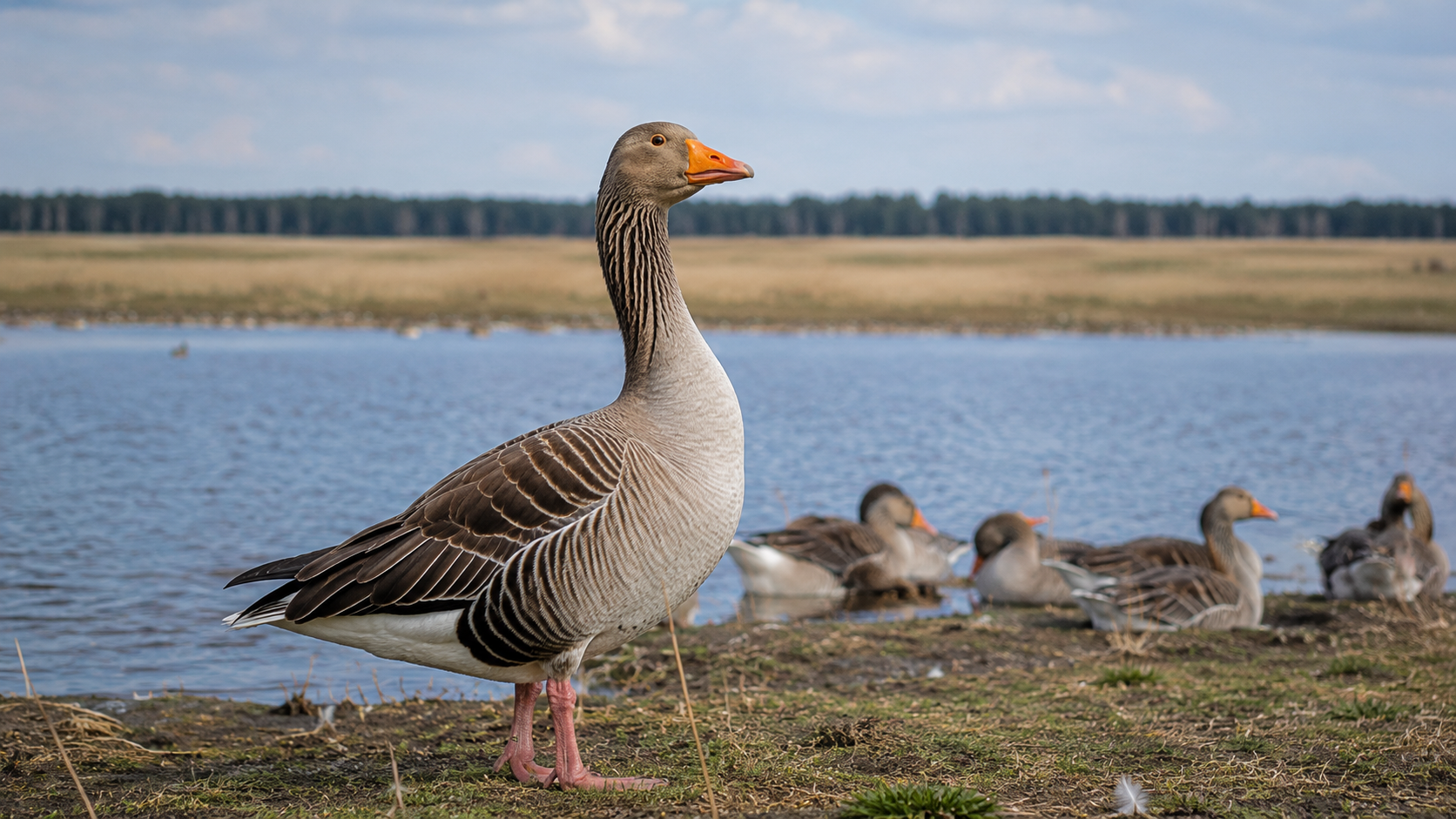
The Kulunda steppe's many shallow lakes attract the greylag goose in substantial numbers during breeding and migration, alongside the mallard and the black-headed gull, which nests colonially on lake islands and marshy margins throughout the region. Where ribbon pine forest breaks up the open steppe, the great spotted woodpecker and common raven find suitable habitat within otherwise treeless surroundings.
Seasonality
Spring migration arrives across Altai Krai from late March through May, with geese and other waterbirds among the earliest returning migrants to the Kulunda lakes as the ice breaks up, and steppe passerines establishing territories through April and May. Breeding activity peaks through June, taking advantage of the region's warm, sunny continental summer. Autumn migration runs from August through September, with the Kulunda lakes again serving as an important staging area for geese and other waterbirds moving south ahead of the region's cold, dry continental winter, during which open steppe habitat supports very little bird activity outside sheltered ribbon forest.
Conservation notes
The Kulunda steppe's many lakes face pressure from agricultural water use and periodic drought cycles typical of the wider West Siberian steppe, both of which can reduce the extent of shallow-water habitat available to breeding and staging waterbirds in dry years. The ribbon pine forests, unique to this part of Siberia and providing forest habitat within an otherwise open landscape, remain a conservation priority given their role as habitat corridors and their vulnerability to fire and logging pressure in a region where natural forest cover is already scarce.