Birds of the Republic of Karelia
Karelia's dense boreal forest, thousands of lakes, and long northern summer days make it one of Russia's premier destinations for taiga and wetland birdwatching.
Taiga forest and an abundance of lakes
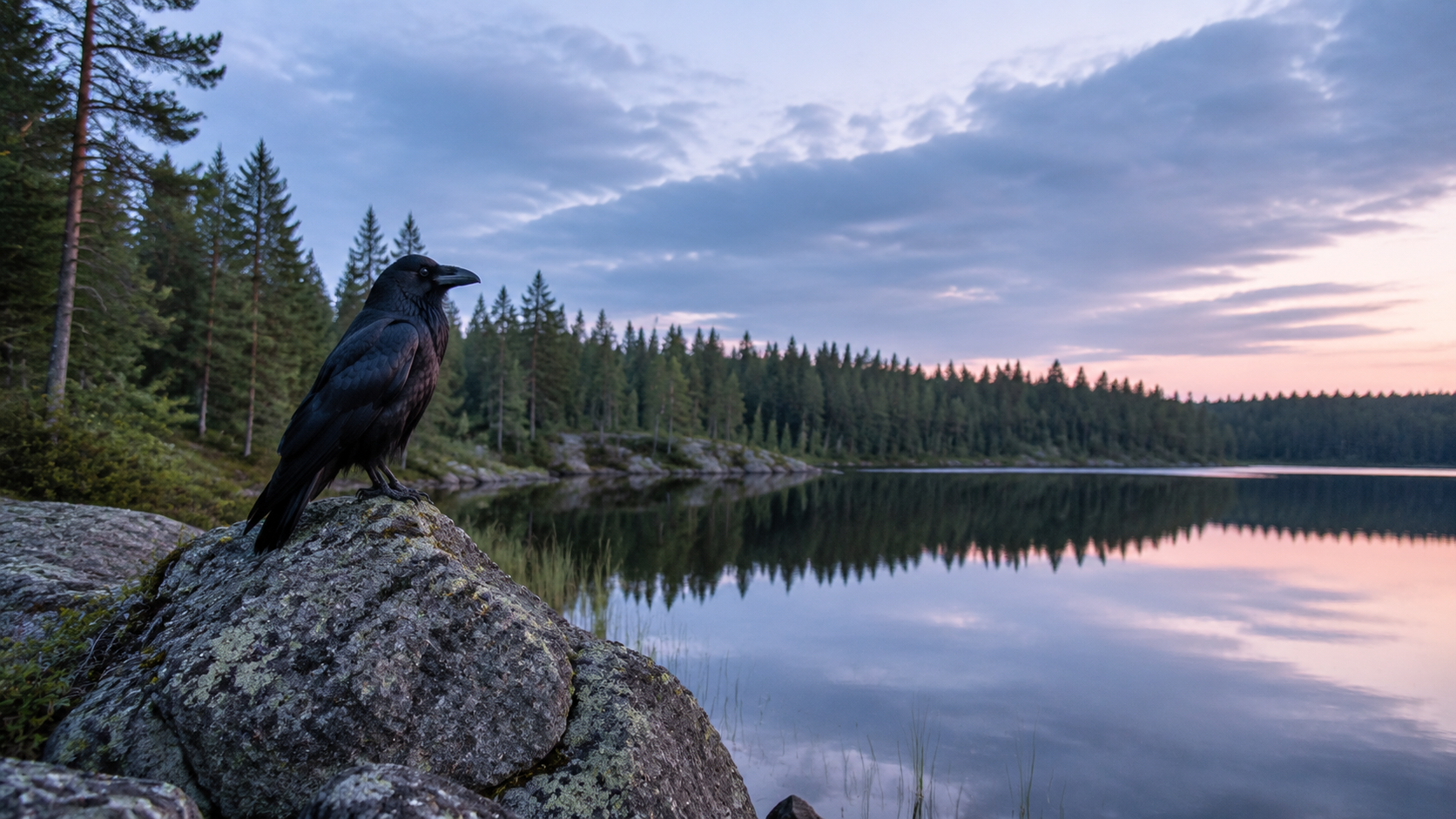
The Republic of Karelia, bordering Finland in Russia's northwest, is defined above all by two features: dense, largely unbroken boreal taiga forest of spruce and pine, and an extraordinary density of lakes — commonly numbered in the tens of thousands across the republic's territory — left behind by glacial activity. This combination of extensive forest cover and abundant open water gives Karelia one of the more distinctive landscapes among the Russian regions covered in this atlas, supporting both classic taiga forest specialists and a strong lake-and-wetland bird community in close proximity.
Karelia's position at a similar latitude to southern Scandinavia, combined with its inland forest character, gives it long summer daylight hours that extend the daily activity window for breeding birds well beyond what is available at more southern latitudes, even though the overall breeding season itself remains relatively short and compressed.
Typical species of the region
Karelia's extensive taiga forest supports strong populations of resident boreal specialists, with the coal tit particularly at home in the dense spruce stands that dominate much of the landscape, alongside the common crossbill, whose crossed bill is specially adapted to prising seeds from the conifer cones that make up the bulk of its diet across the republic's pine and spruce forest. The common raven is a familiar sight over the region's more remote forest and lake country, often the most conspicuous large bird across otherwise quiet stretches of taiga.
The republic's thousands of lakes provide extensive habitat for waterfowl, with the mallard found on virtually any accessible body of open water, while the grey heron hunts the shallow, reed-fringed margins of the calmer lakes and slow-moving rivers scattered across the landscape. Open clearings and forest edges support the Eurasian skylark where farmland or natural openings break up the otherwise continuous forest cover.
Seasonality
Karelia's breeding season is concentrated into a relatively short window compared with regions further south, with migratory species arriving through May and breeding activity peaking during June, when the region's long northern daylight hours give birds an extended daily period for feeding, singing, and provisioning young. Autumn migration begins relatively early, from August through September, as species head south ahead of the onset of the long Karelian winter. Winter itself is long, cold, and comparatively quiet, with activity limited mainly to hardy resident species such as tits, crossbills, and corvids well adapted to the boreal forest environment.
Conservation notes
Karelia's extensive taiga forest remains comparatively well preserved relative to more heavily developed regions of Russia, though logging pressure on old-growth stands remains an ongoing concern for species that depend on mature forest structure. The republic's many lakes and wetlands are generally less affected by the agricultural drainage pressures seen in more intensively farmed regions further south, giving Karelia's wetland bird populations a comparatively stable habitat base for now.