Bird Families
Bird species grouped by taxonomic family — from falcons and hawks to crows, finches, and thrushes — with shared traits and links to every species profile.
What a family page covers
A taxonomic family is a rank in biological classification that sits above genus and species but below order — it groups birds that share a common evolutionary origin and, as a result, a recognizable set of physical and behavioral traits. The Falconidae, for example, share a hooked beak built for tearing flesh, a distinctive fast, direct flight style, and the habit of laying eggs in existing cavities rather than building elaborate nests.
Each family page in this section explains what unites its members, how to distinguish one species from another within the same family, and where and when to look for them. Every family links directly to the species pages of its members, so once you've identified a bird down to its family — even without pinning the exact species — you're only one click away from the full list of candidates.
Why real taxonomy, not informal groups
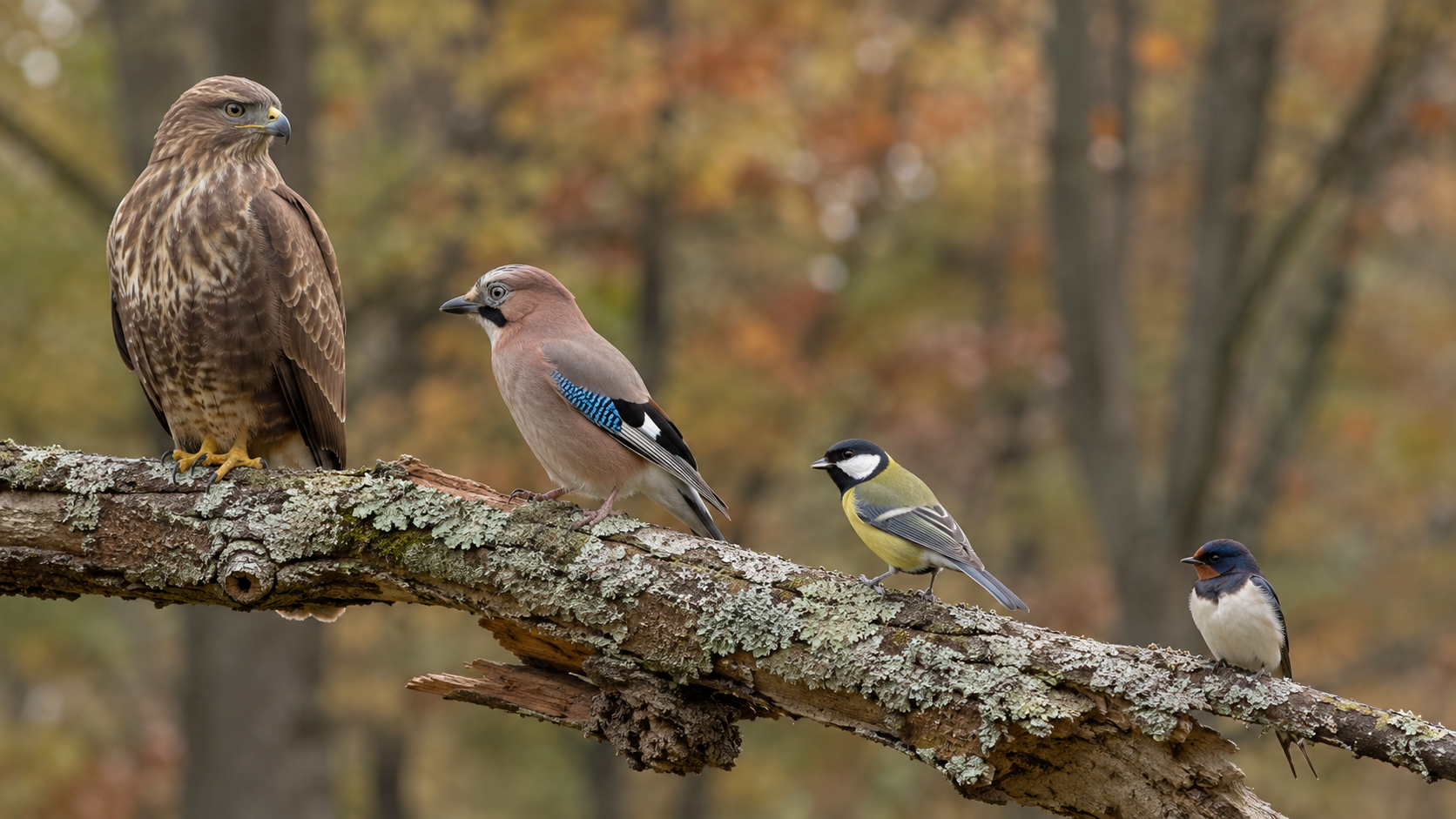
Bird Atlas deliberately builds this section around real taxonomic families rather than the broader, informal groupings — such as "birds of prey" or "waterfowl" — used elsewhere on the site, for example in the seasonal migration calendar. Those informal groups are useful shorthand for comparing unrelated birds that share a lifestyle, but they mix species from several different families, which makes them a poor fit for a page about shared ancestry and identification traits. A common buzzard and a common kestrel are both diurnal raptors, but they belong to different families (Accipitridae and Falconidae respectively) with different skull structures, hunting techniques, and breeding habits.
How families relate to species and identification
Family membership is one of the fastest ways to narrow down an unfamiliar bird. Recognizing the harsh, insistent calls and gregarious flocking behavior typical of the crow family (Corvidae), for instance, immediately rules out dozens of other candidates even before you've matched plumage details to a specific species. For that reason, every species profile in the species catalogue names its family and links back to this section, and the bird identifier uses family-level traits — beak shape, size class, typical habitat — as some of its earliest filtering questions.
As more families are added, this page will continue to serve as the index for all of them, grouped loosely by how frequently their members turn up in gardens, farmland, forests, wetlands, and coastal habitats across the atlas's covered regions.