Songbirds
Songbirds are the largest and most vocally elaborate group of birds in the atlas — from the chaffinch's cascading spring song to the nightingale's celebrated night-time performance.
What makes a bird a songbird
Songbirds make up by far the largest group of birds in this atlas and, indeed, in the world, belonging to the suborder Passeri within the much larger order Passeriformes. What sets them apart anatomically is the syrinx, a specialized vocal organ positioned where the windpipe branches into the lungs, equipped with fine muscular control that allows songbirds to produce an unusually wide and precise range of pitches, trills, and tonal shifts compared with most other birds.
This vocal specialization underpins one of the most familiar and well-studied behaviors in ornithology: territorial and courtship song, typically delivered by males from a prominent perch during the breeding season, layered on top of a separate repertoire of shorter calls used for everyday communication such as alarm signals and contact between mates or flock members.
Featured songbirds in this atlas
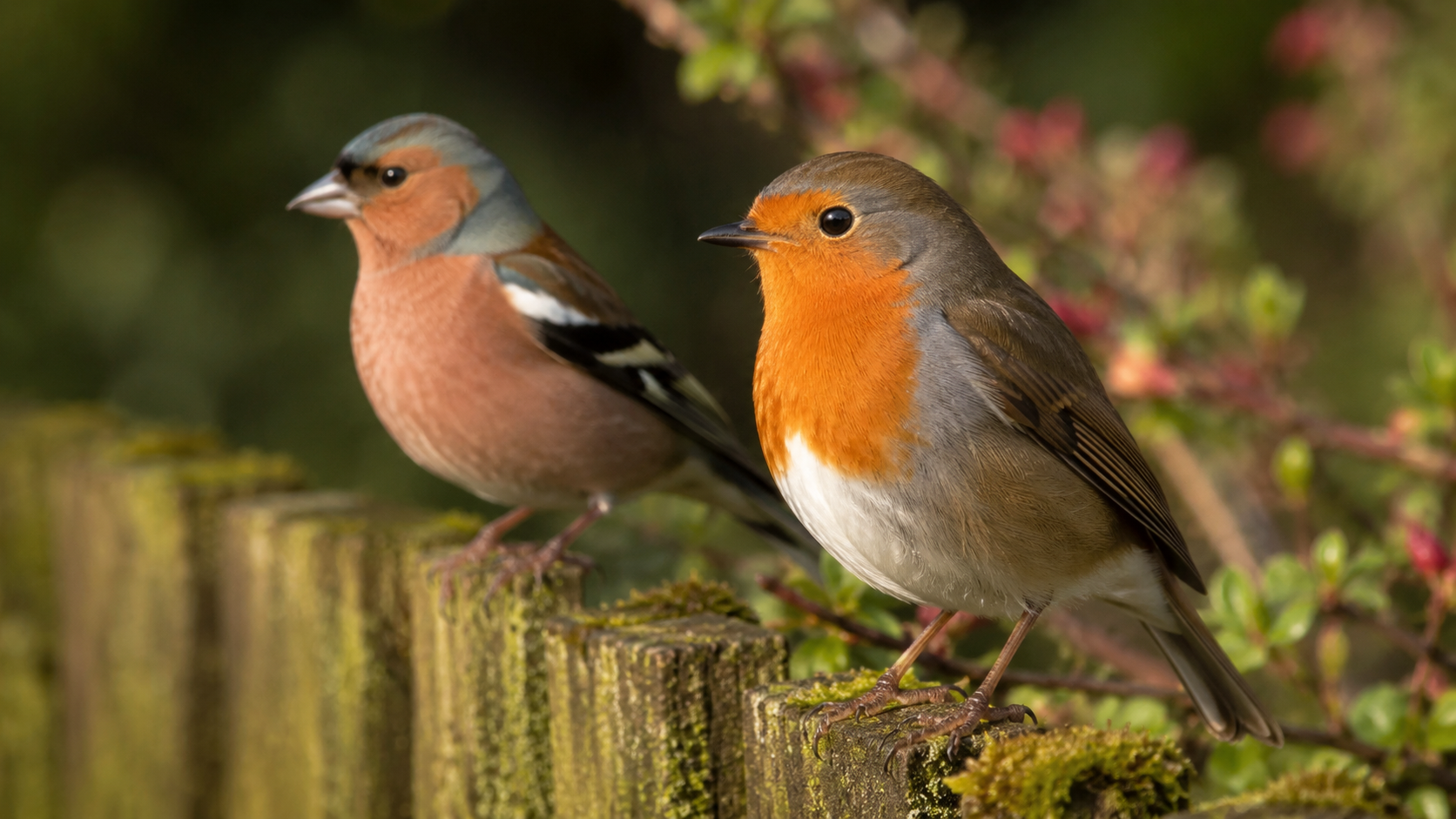
The common chaffinch (Fringilla coelebs) is one of the most familiar songbirds across Europe and Russia, its cascading, accelerating spring song a defining sound of woodland edges and gardens alike, and a useful example of how local populations can develop recognizable song dialects through partial vocal learning. The thrush nightingale (Luscinia luscinia), by contrast, is famous less for how often it is seen than for how it sounds, delivering one of the richest and most celebrated songs of any European bird, often after dark when few other species are still singing.
The European robin (Erithacus rubecula) sings almost year-round, including through much of autumn and winter when most other songbirds fall silent, reflecting its strongly territorial year-round behavior even outside the breeding season. The great tit (Parus major) rounds out this selection with one of the most variable song repertoires of any common garden songbird, with individual males capable of switching between several distinct song types.
Where and when to hear songbirds at their best
Spring, from the first mild days through late May and into June, is by far the most productive season for songbird activity, as males establish and defend breeding territories through frequent, sustained singing. Dawn is typically the peak period for song, a phenomenon widely known as the dawn chorus, when many species sing simultaneously and at their most intense before the day's foraging and other activities take over. Gardens, woodland edges, hedgerows, and parks with a mix of trees, shrubs, and open ground tend to offer the richest concentration of songbird species and activity across the atlas's covered regions.