What Do Birds Eat
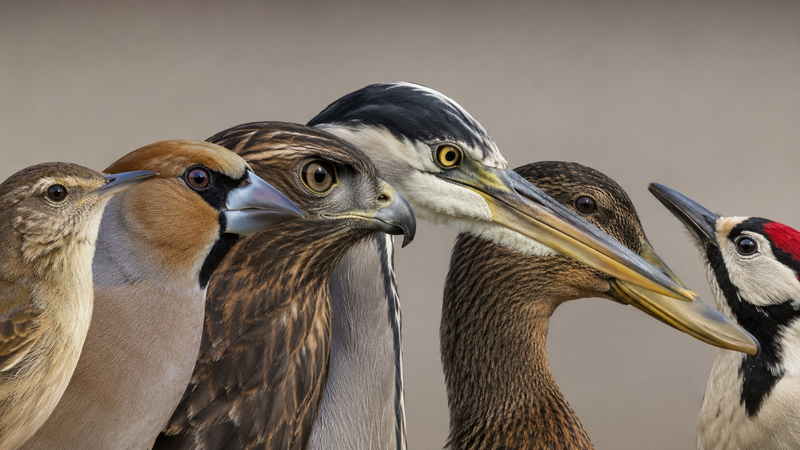
Bird diets range from strict seed and insect specialists to opportunistic omnivores that eat almost anything — and beak shape is usually the clearest visual clue to which category a species falls into.
Diet shapes almost everything about a bird
What a bird eats influences far more than just its feeding behavior — it shapes beak and foot shape, migration timing, habitat choice, and even plumage in some cases. Diet is one of the most useful lenses for understanding why different species look and behave so differently, and it's closely tied to beak shape, one of the five traits used in this atlas's bird identifier.
The main diet categories
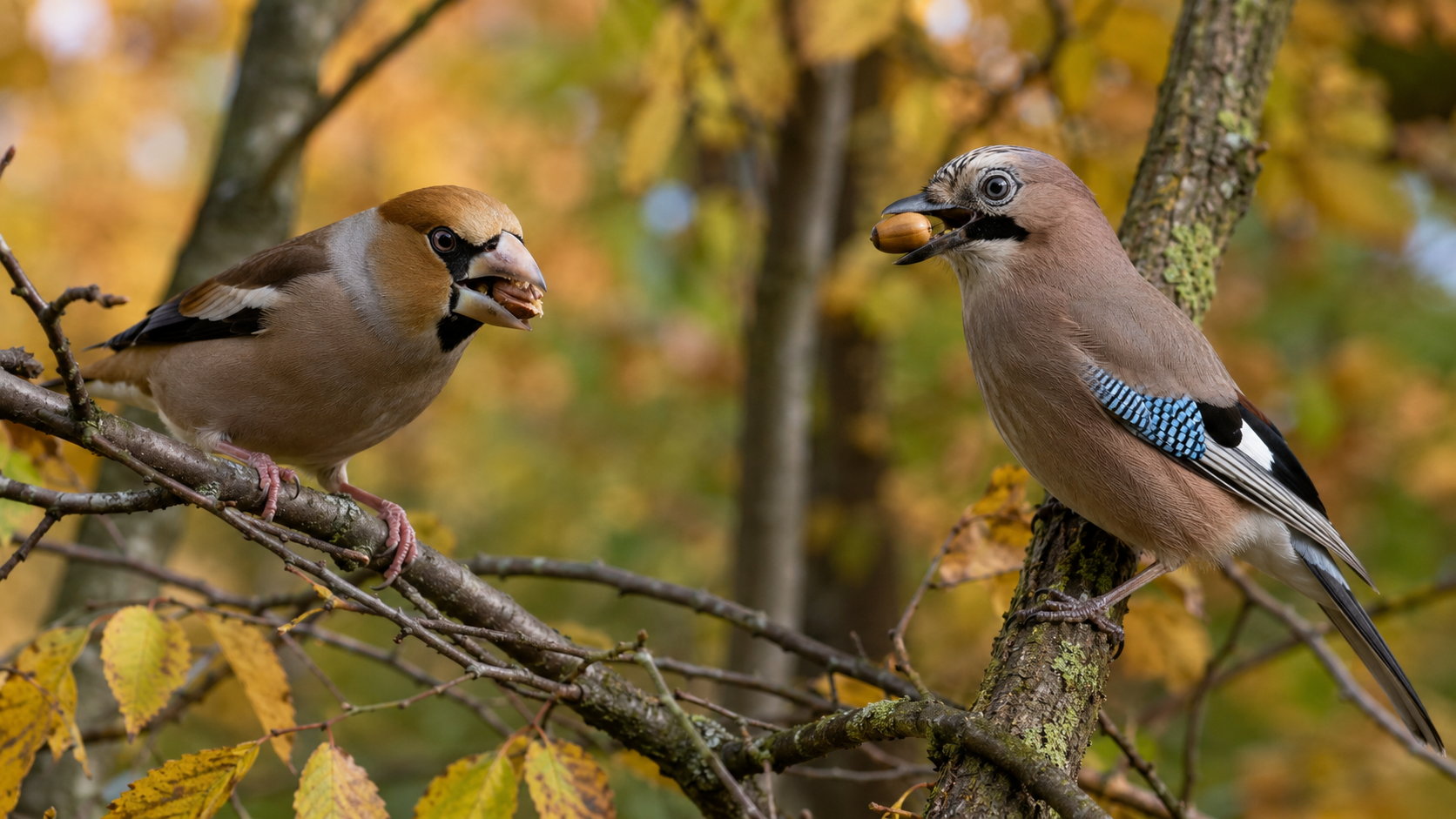
Seed-eaters, like many finches and buntings, have thick, conical beaks built to crack open tough seed coats — a hawfinch's beak can generate enough force to crack cherry stones that would defeat most other birds. Insect-eaters, including most warblers, flycatchers, and swallows, typically have thin, pointed beaks suited to picking insects off leaves or catching them in flight. Predatory species — hawks, falcons, and owls — have hooked beaks for tearing flesh, paired with strong grasping talons for catching prey. Waders and probing feeders, such as many sandpipers and herons, use long beaks to reach food buried in mud, hidden in water, or (for hummingbirds, though absent from this atlas's region) deep inside flowers. Omnivores and generalists, like crows, jays, and many gulls, have less specialized beaks and eat an unusually broad range of food — seeds, insects, carrion, eggs, and human food waste alike — a flexibility that often helps these species thrive in human-altered landscapes where more specialized feeders struggle.
Diet changes with the seasons
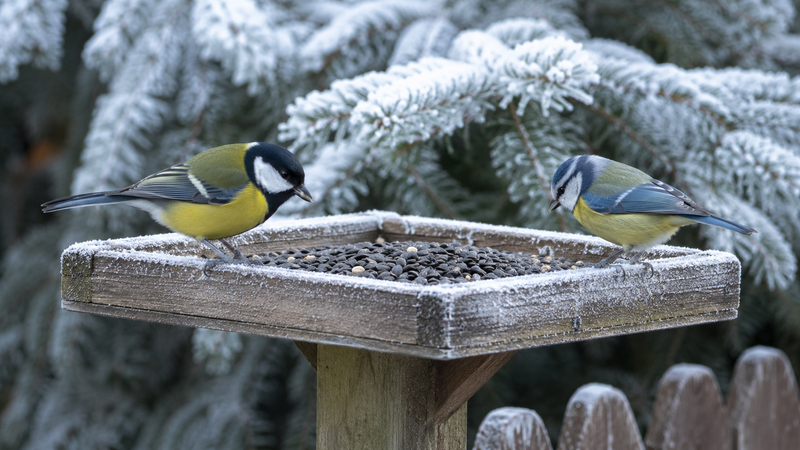
Many species don't stick to one diet category year-round. A large number of birds that feed their chicks almost entirely on insects during the breeding season — because growing nestlings need protein-rich food to develop quickly — switch toward seeds, berries, or garden feeders once insects become scarce in autumn and winter. This seasonal shift is one reason a garden feeder can see markedly different visitors and feeding behavior across the year, and why some species that look purely insectivorous in summer turn out to rely heavily on seed or berry food to survive winter.
Diet and habitat are closely linked
A bird's habitat is often chosen largely around food availability, which is part of why habitat and diet correlate so strongly across species. Wetland species cluster around aquatic invertebrates and fish, woodland species around insects, seeds, and fruit produced by trees, and farmland species around grain, seeds, and the insects that farmland habitats support. Understanding a species' diet, in other words, usually explains a great deal about where it lives, when it migrates, and even how its beak has evolved to look the way it does.