Birds of Australia and Oceania
Long isolation has given Australia and the Pacific islands a bird fauna dominated by unique local lineages, from parrots and honeyeaters to the flightless birds of remote island groups.
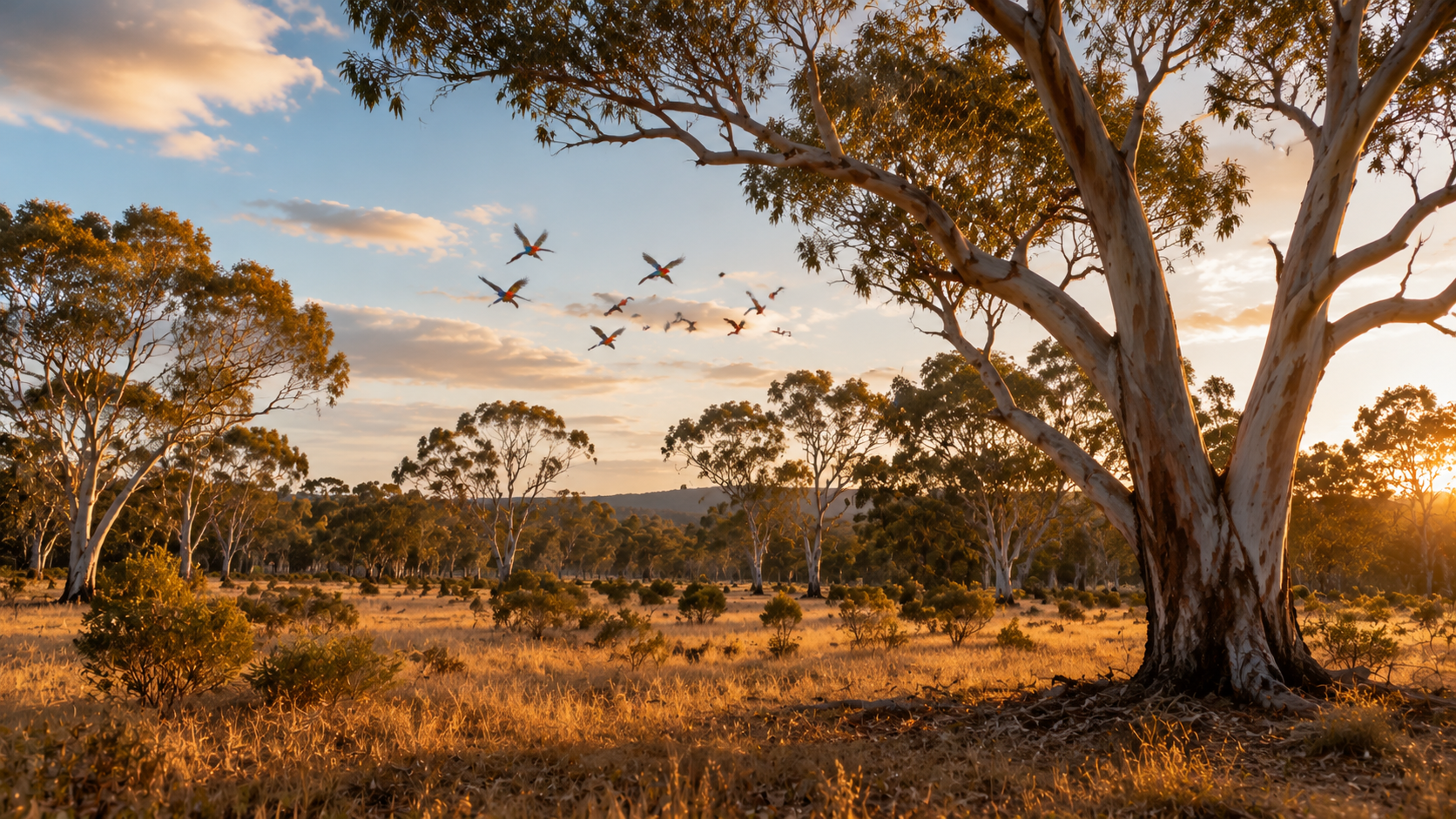
A bird fauna shaped by isolation
Australia and the wider Oceania region — encompassing New Guinea, New Zealand, and the many island groups scattered across the Pacific — hold a bird fauna shaped above all by long geographic isolation. Australia itself separated from other major landmasses tens of millions of years ago, allowing groups such as parrots and honeyeaters to diversify extensively within the continent largely free from competition with bird families that dominate elsewhere in the world, while many globally widespread families never arrived or failed to establish a lasting presence.
Across the wider Pacific, isolated island groups have independently produced their own remarkable, often highly localized bird lineages, including a number of flightless species that evolved in the historical absence of ground predators — a pattern of island evolution repeated, with different specific outcomes, across many of the region's remote archipelagos.
A largely distinct bird fauna
Unlike the meaningful species connections linking Africa and North America to this atlas's Eurasian coverage, Australia and Oceania's native bird fauna shows very little overlap with species profiled elsewhere in this collection. A handful of European-origin species have been introduced to Australian cities and farmland since the 19th century and established lasting populations there, but the vast majority of the region's remarkable diversity — parrots, honeyeaters, birds-of-paradise in New Guinea, and the unique flightless and near-flightless birds of various Pacific islands — belongs to lineages with no close representation in the rest of this atlas.
Seasonality
Australia's seasons run opposite to the Northern Hemisphere, with its main breeding season falling broadly across spring and summer, roughly September through February, while its size and range of climate zones — from tropical north to temperate south — mean this general pattern varies considerably by region. Across the Pacific islands, seasonality is often driven more by rainfall and cyclone patterns than by temperature, adding further regional variation that individual country and island pages in this section will address in more specific detail.
Countries of the region in this atlas
Australia opens the country-level coverage thanks to its scale and highly distinctive bird fauna. Alongside it are pages for New Zealand, Papua New Guinea, Fiji, the Solomon Islands, and Vanuatu, which show the remarkable and often highly localized diversity of wider Oceania.