Bird Identifier
Identify a bird you've seen using what you actually observed — plumage color, size, beak shape, habitat, and season — no prior knowledge of bird names required.
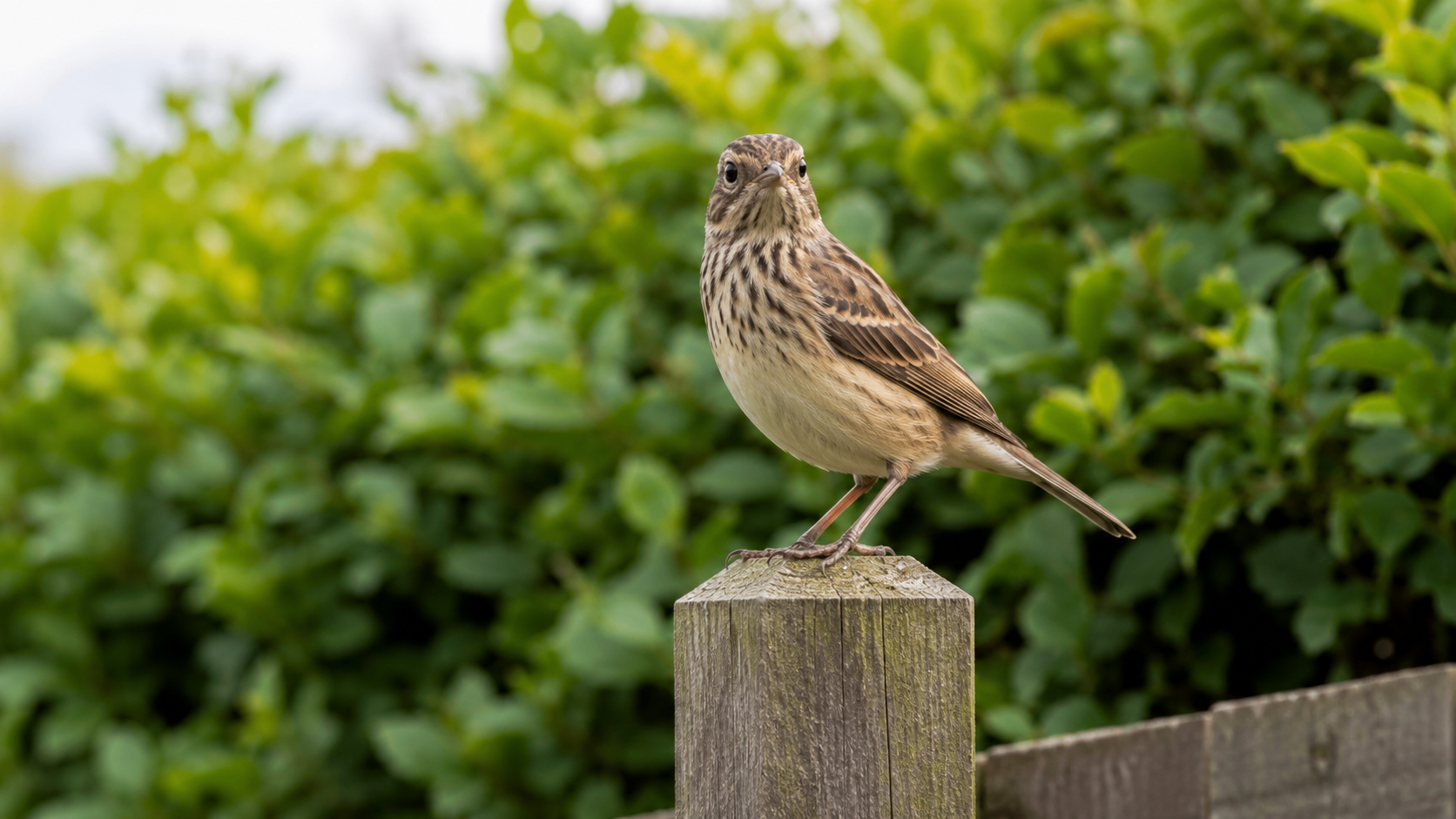
Identify by what you actually saw
Most people who want to identify a bird don't start with a name — they start with an observation: a flash of yellow in a hedge, a large silhouette circling over a field, a wading bird with a long curved beak. This section is built around that reality. Rather than requiring you to search a catalogue by species name, the identifier walks through a short sequence of steps based on traits you can observe directly in the field, narrowing the list of possible species at each stage.
The funnel works through five main criteria, each covered by its own page in this section: plumage color, size, beak shape, habitat, and season. You don't need to answer all five with certainty — even a rough size class and a habitat (garden, wetland, forest edge, open field) will usually cut the list of candidates down to a handful of realistic options.
Why these five criteria
Color, size, beak shape, habitat, and season were chosen because they are both highly diagnostic and reliably observable without specialist equipment. Beak shape in particular is one of the fastest ways to narrow a bird down to its broad ecological role — a short, stout, conical beak points toward a seed-eating finch or bunting, a long thin beak toward an insect- or nectar-feeder, a strongly hooked beak toward a bird of prey. Combined with season, which rules out species that simply aren't present at a given time of year, these five filters do most of the narrowing work before you ever need to compare detailed plumage patterns.
Bird song and call are deliberately not part of the funnel: they are powerful identification tools in the hands of an experienced birder, but far harder to describe or filter on consistently through a step-by-step tool, so this section focuses on what can be seen rather than heard.
When the funnel isn't enough
No identification tool resolves every case, especially with similar species pairs — juvenile plumages, partial views, or birds seen only in flight can all leave more than one candidate on the table. For those situations, this section also includes a page on common mistakes made when identifying birds, covering the traits that are most often overlooked, misjudged, or confused between look-alike species. Once you've narrowed things down, the species catalogue lets you compare full profiles side by side to make the final call.
Identify a bird
Step 1 / 5
What is the main plumage color?