How to Identify a Bird Species
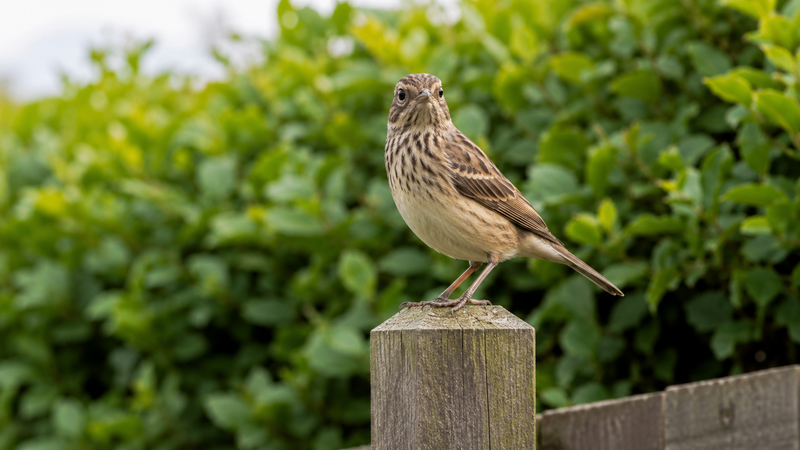
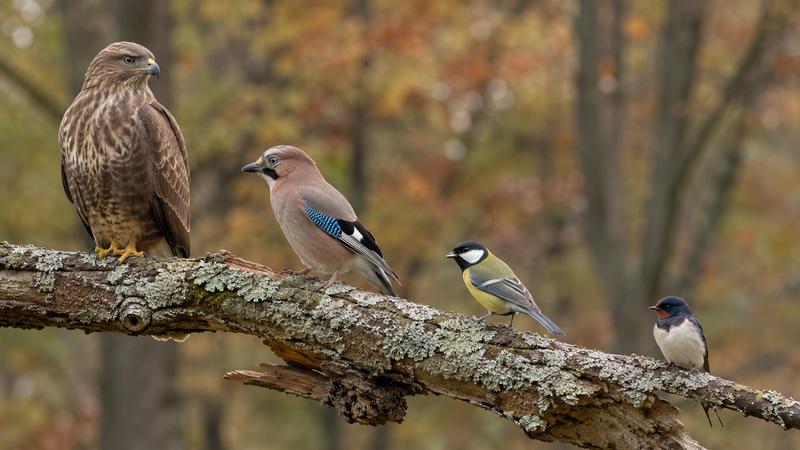
Most bird identification starts with an observation, not a name — plumage color, size, beak shape, habitat, and season narrow the field faster than flipping through a list of species.
Start with what you actually saw
Bird identification rarely begins with a name in mind — it begins with a fragment of observation: a burst of color, a rough size, a distinctive beak, or the kind of place the bird was in. This atlas's bird identifier is built around exactly that reality, working through five practical criteria — color, size, beak shape, habitat, and season — that together narrow a sighting down to a short, realistic list of candidates without requiring any prior knowledge of species names.
None of these criteria needs to be pinned down with total precision on its own. A rough size class combined with a habitat and a hint of color is often enough to eliminate the vast majority of species covered in the species catalogue, leaving only a handful of pages worth comparing in detail.
Color as a first clue
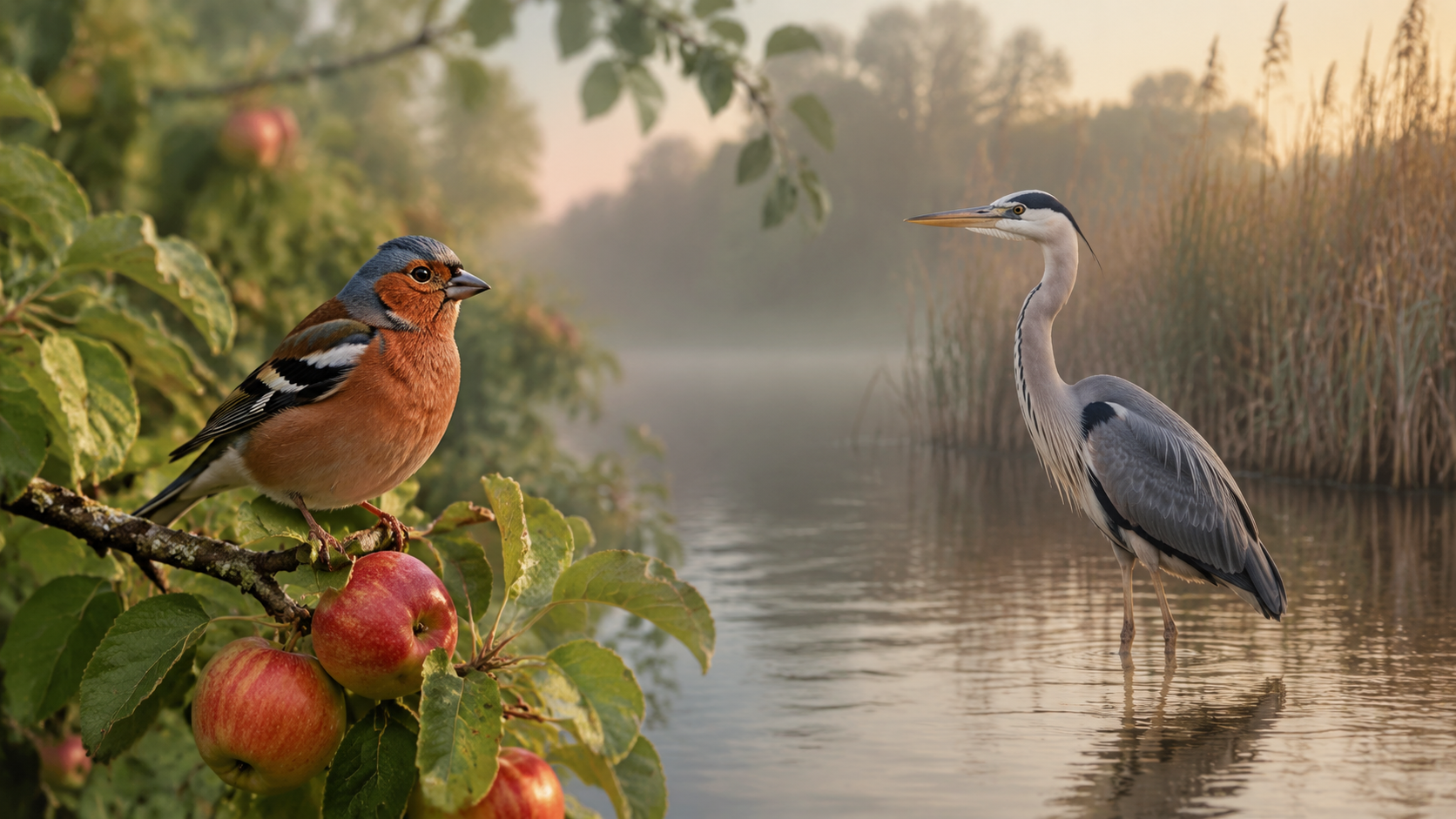
Distinctive, saturated colors are often the fastest route to a confident identification. The European robin is instantly recognizable by its orange-red breast, while the male common chaffinch combines a blue-grey crown with a warm pinkish-brown face and chestnut back — a combination unlike almost any other common garden bird. Color has real limits, though: females and juveniles across many species, including the house sparrow, are deliberately much plainer and streaky brown than the more boldly marked males, so a dull-colored bird should push you toward the other criteria rather than a dead end.
Size as a quick filter
Even a rough size comparison against a familiar reference bird does a lot of narrowing work. The house sparrow, at a wingspan of only 21–25.5 cm, sits near the small end of common garden and farmland birds, while the mute swan, with a wingspan of 200–240 cm, is large enough to rule out almost every other species in this atlas on size alone. Sorting a sighting into a rough size class — smaller than a sparrow, sparrow-sized, pigeon-sized, or dramatically larger — is often the fastest way to eliminate whole groups of unlikely candidates before looking at anything else.
Beak shape reveals ecological role
Beak shape is one of the most diagnostic and reliably observable traits available in the field, because it reflects diet and hunting strategy rather than variable plumage. The common chaffinch's short, stout, conical beak signals a seed-eating finch, well suited to cracking husks, while the grey heron's long, dagger-like beak signals a fish- and amphibian-hunter built for a rapid strike in shallow water. A strongly hooked beak, as seen on the common kestrel, points immediately toward a bird of prey adapted for tearing flesh rather than cracking seeds or probing mud.
Putting it together with habitat and season
Habitat and season round out the picture by ruling out species that simply aren't present in a given place or time of year — a heron-like silhouette seen on dry farmland far from water, for instance, is almost certainly not a heron, and a species that only occurs on its breeding grounds from March to October won't be the answer to a winter sighting. Once color, size, beak shape, habitat, and season have narrowed the field, the bird identifier walks through each step in more detail, and the species catalogue lets you compare the remaining candidates side by side to make a confident final call.