Waterfowl and Wetland Birds
Waterfowl and other wetland birds span dabbling ducks, grazing geese, elegant swans, and patient wading hunters — from the everyday mallard to the towering mute swan and the motionless grey heron.
What unites waterfowl and wetland birds
Waterfowl — ducks, geese, and swans — form the family Anatidae, united by webbed feet, a broad, flattened bill, and dense waterproof plumage adapted to life on and around open water. Within this one family, feeding strategy varies enormously: dabbling ducks like the mallard tip forward to reach submerged plants without diving, geese graze on land like small livestock, and swans use their long necks to reach vegetation well beyond the depth available to ducks.
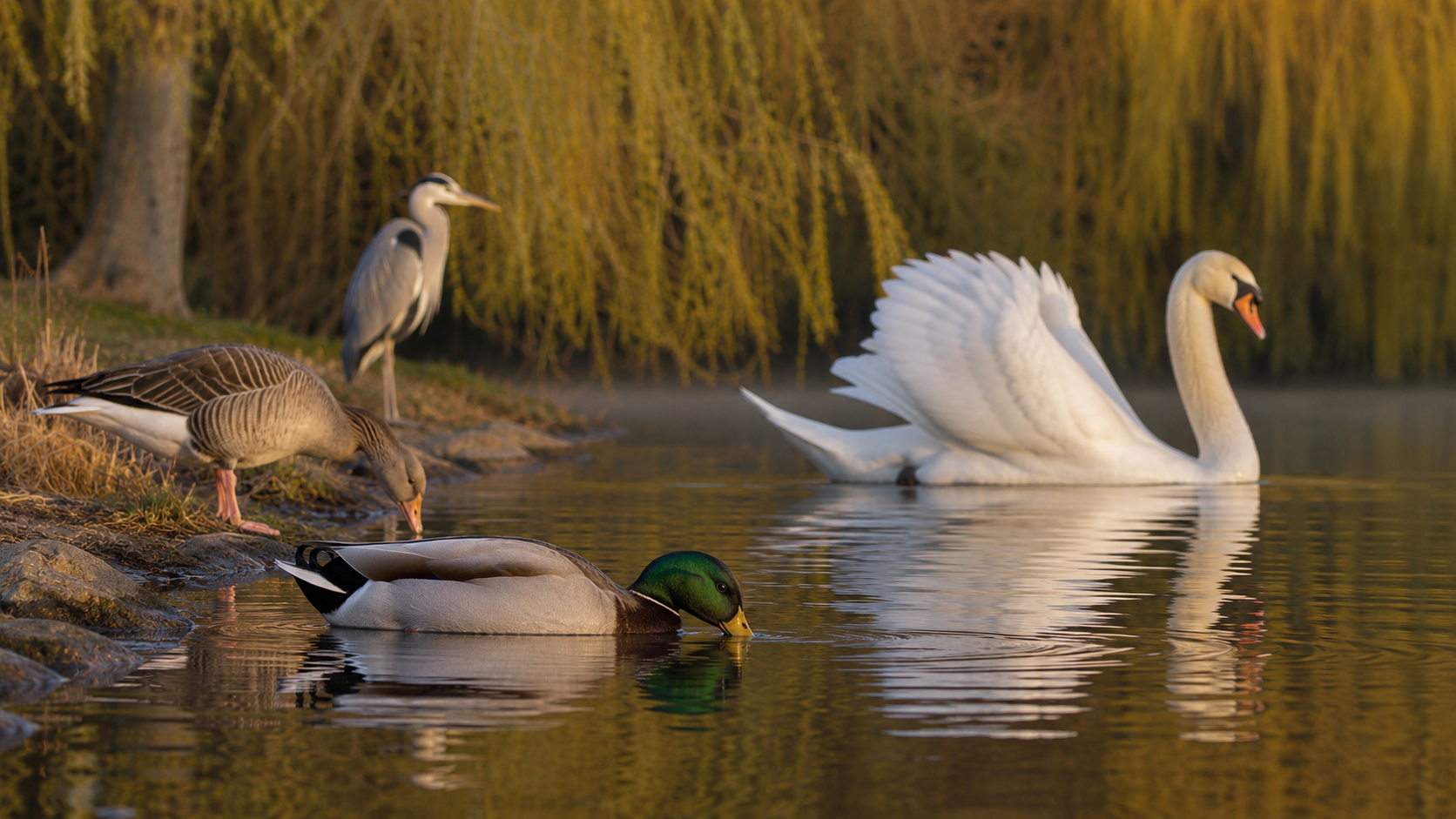
Alongside true waterfowl, this overview also features the grey heron, a member of the unrelated family Ardeidae that shares the same wetland habitats but hunts fish and amphibians using patience and a lightning-fast strike rather than swimming, dabbling, or grazing — a useful contrast in how different bird lineages have adapted to the same watery environment in very different ways.
Featured waterfowl and wetland birds in this atlas
The mallard (Anas platyrhynchos) is the most familiar dabbling duck across the Northern Hemisphere, found on almost any body of water year-round and instantly recognized by the drake's glossy bottle-green head. The greylag goose (Anser anser) is a large grazing bird and the wild ancestor of most domestic geese, typically seen in flocks on farmland close to open water.
The mute swan (Cygnus olor) is one of the largest flying birds in the world, unmistakable for its pure white plumage, curved neck, and orange bill with a black basal knob. The grey heron (Ardea cinerea) represents a very different hunting strategy, standing motionless in shallow water for long stretches before striking suddenly at passing fish.
Where and when to watch waterfowl and wetland birds
Lakes, slow rivers, marshes, reservoirs, and sheltered coastal shallows offer the best opportunities to see this group, with resident mallards and mute swans visible on the same waters throughout the year, including in city parks and canals. Migratory populations of greylag geese and grey herons from colder, more continental parts of the range are best looked for from March to October, with numbers swelling further at favored sites during spring and autumn passage as birds pause to feed on the way to and from breeding grounds.