By Size
Sorting a bird into a rough size class — small (up to 15 cm), medium, large, or very large (70 cm+) — quickly separates unrelated groups without needing an exact measurement.

Why size is a fast filter
Body size instantly separates groups of birds that could otherwise share similar colors or habitats. A brown bird the size of a sparrow and a brown bird the size of a buzzard are never going to be confused for long once size is factored in, which is why this identifier uses four broad size classes based on total body length rather than asking for an exact centimeter figure that's rarely possible to judge accurately in the field.
The four size classes
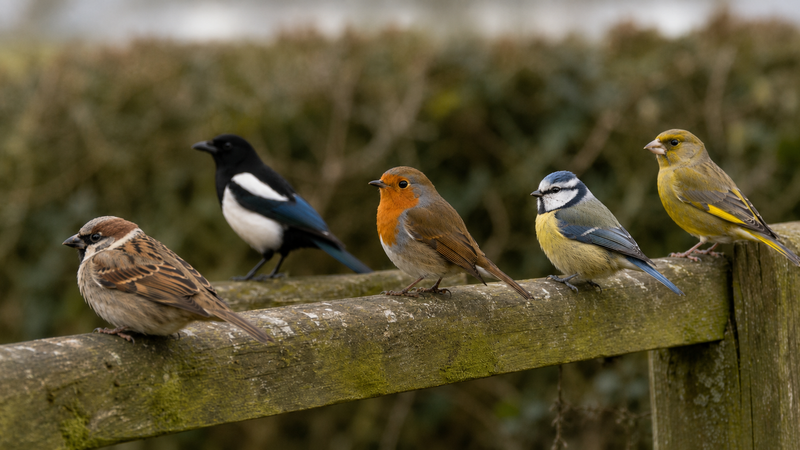
Small (up to 15 cm) covers the smallest songbirds regularly seen in gardens and hedgerows, such as the Eurasian blue tit and the Eurasian siskin — birds light enough to perch on the thinnest twigs without bending them.
Medium (15–35 cm) is the largest and most varied class, spanning most familiar songbirds and small waders — the common starling and Eurasian jay both fall here, despite looking quite different in color and shape.
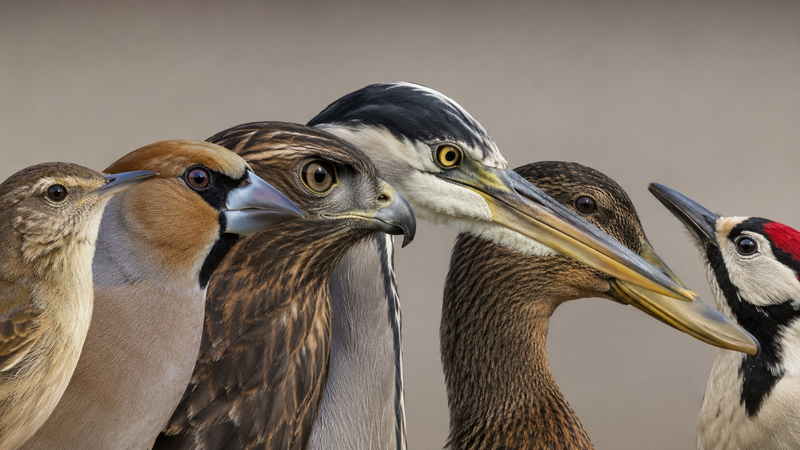
Large (35–70 cm) covers birds noticeably bigger than a pigeon, including many raptors like the common buzzard and the grey heron, whose long neck and legs push its total length well past most songbirds despite a relatively light body.
Very large (70 cm+) is reserved for the biggest species in the atlas, such as the white stork and the mute swan — birds large enough to be identified by silhouette alone at considerable distance.
Judging size without measuring
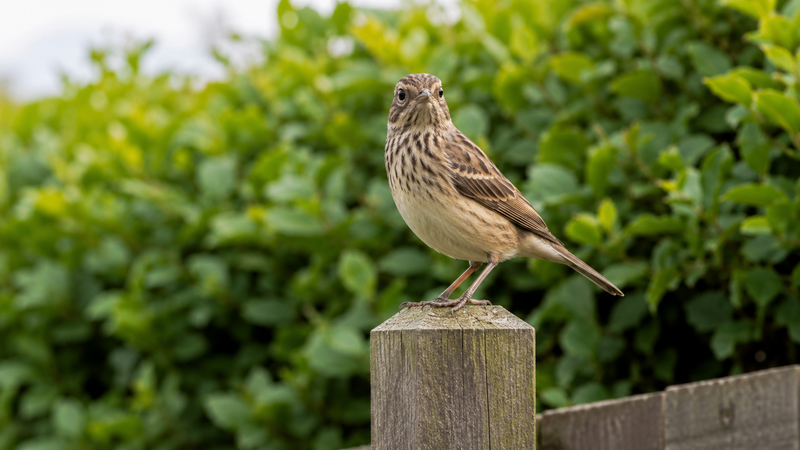
In practice, nobody measures a wild bird with a ruler — size is judged by comparison. Familiar species make good mental yardsticks: a bird "about sparrow-sized" or "bigger than a pigeon but smaller than a crow" conveys real information even without a number attached. Distance and angle can distort a first impression, so where possible, compare the bird against a nearby fixed object of known size — a fence post, a car, a person — rather than relying on gut instinct on how large something looks against open sky or water, where there's nothing else to judge scale against.
Because total body length includes a variable neck and tail, size categories can group ecologically very different birds together, which is exactly why size works best paired with plumage color or beak shape rather than used alone.