How Do Birds Migrate
Bird migration is driven by seasonal food availability, guided by a mix of celestial cues, the Earth's magnetic field, and learned landmarks, and timed with remarkable precision year after year by species like the barn swallow.
Why migrate at all
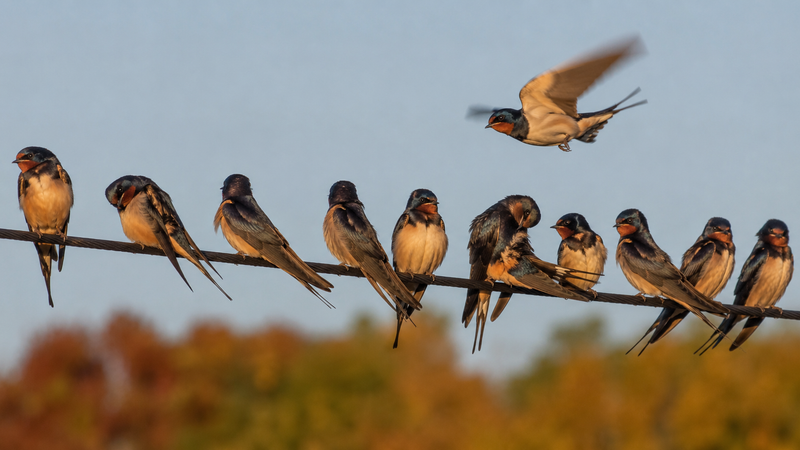
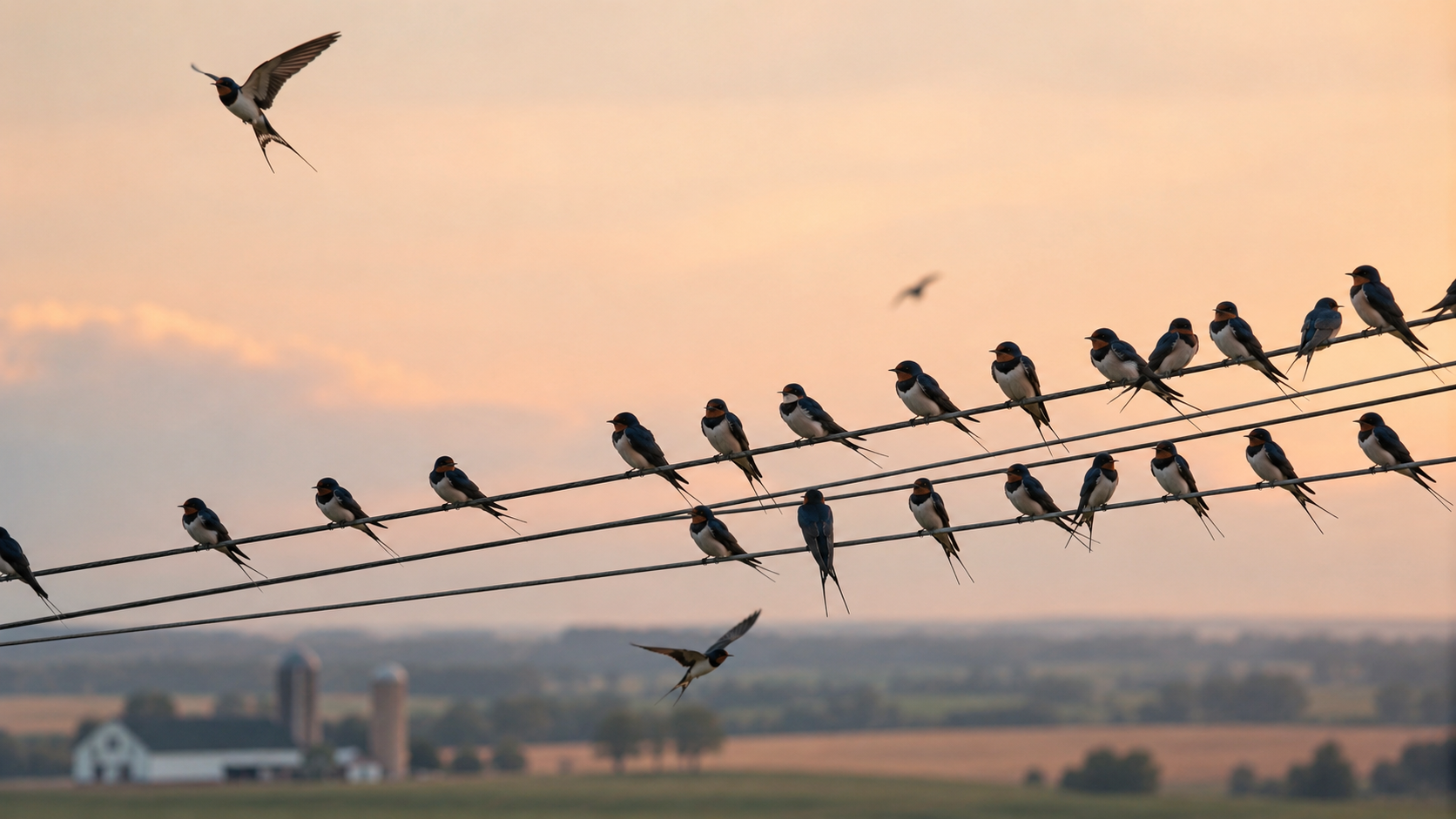
Migration is, at its core, a response to seasonal food availability. Many species that breed at northern latitudes rely on a seasonal surge of insects, seeds, or other food that's abundant in spring and summer but disappears in winter, so migratory species travel to regions where food remains available instead of trying to survive a winter their breeding grounds can't support. The barn swallow, which feeds almost entirely on flying insects, is a clear example: insects become scarce in its northern breeding range well before winter arrives, forcing a journey to warmer regions where flying insects remain active year-round.
How birds find their way
Long-distance navigation without maps, instruments, or guides sounds implausible, but migratory birds combine several independent cues into a remarkably reliable system. By day, many species use the sun's position, adjusting for its movement across the sky over the course of the day. By night, some use star patterns, apparently calibrated against the fixed point of rotation in the night sky. Most migratory species also sense the Earth's magnetic field directly, through a mechanism still not fully understood, giving a built-in compass that works even under overcast skies. Experienced adults add a further layer: memorized landmarks — coastlines, mountain ranges, river valleys — built up from previous journeys, refining the route each year.
Timing matters as much as direction
Migration timing is under strong selective pressure: leaving too early risks arriving before food is available, while leaving too late risks missing the peak breeding conditions or facing worse weather en route. Species like the barn swallow return to the same breeding areas within a strikingly narrow window each spring, a precision that reflects both inherited timing cues, tied to changing day length, and — for adults with prior experience — direct memory of how the journey and arrival played out in previous years.
Not every generation learns the route the same way
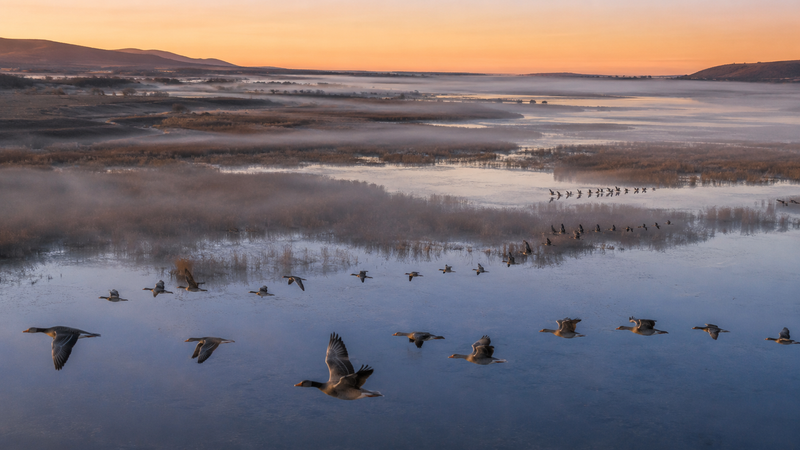
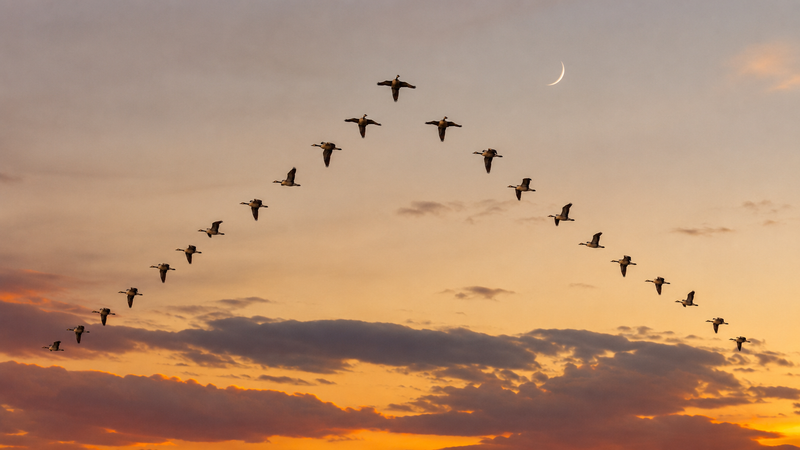
How a route is passed on differs by species. In some, young birds make their first migration alongside experienced adults, in family or flock groups, and appear to learn the specific route directly through following. In others — most famously several cuckoo species elsewhere in the world, though the pattern also appears in some species covered by this atlas — juveniles migrate entirely alone, with no adult present, relying purely on inherited navigational instinct to reach a wintering area they've never seen. Migration's flyways, the broadly consistent routes taken generation after generation, reflect the cumulative outcome of these navigational strategies operating at a population scale over evolutionary time.