By Beak Shape
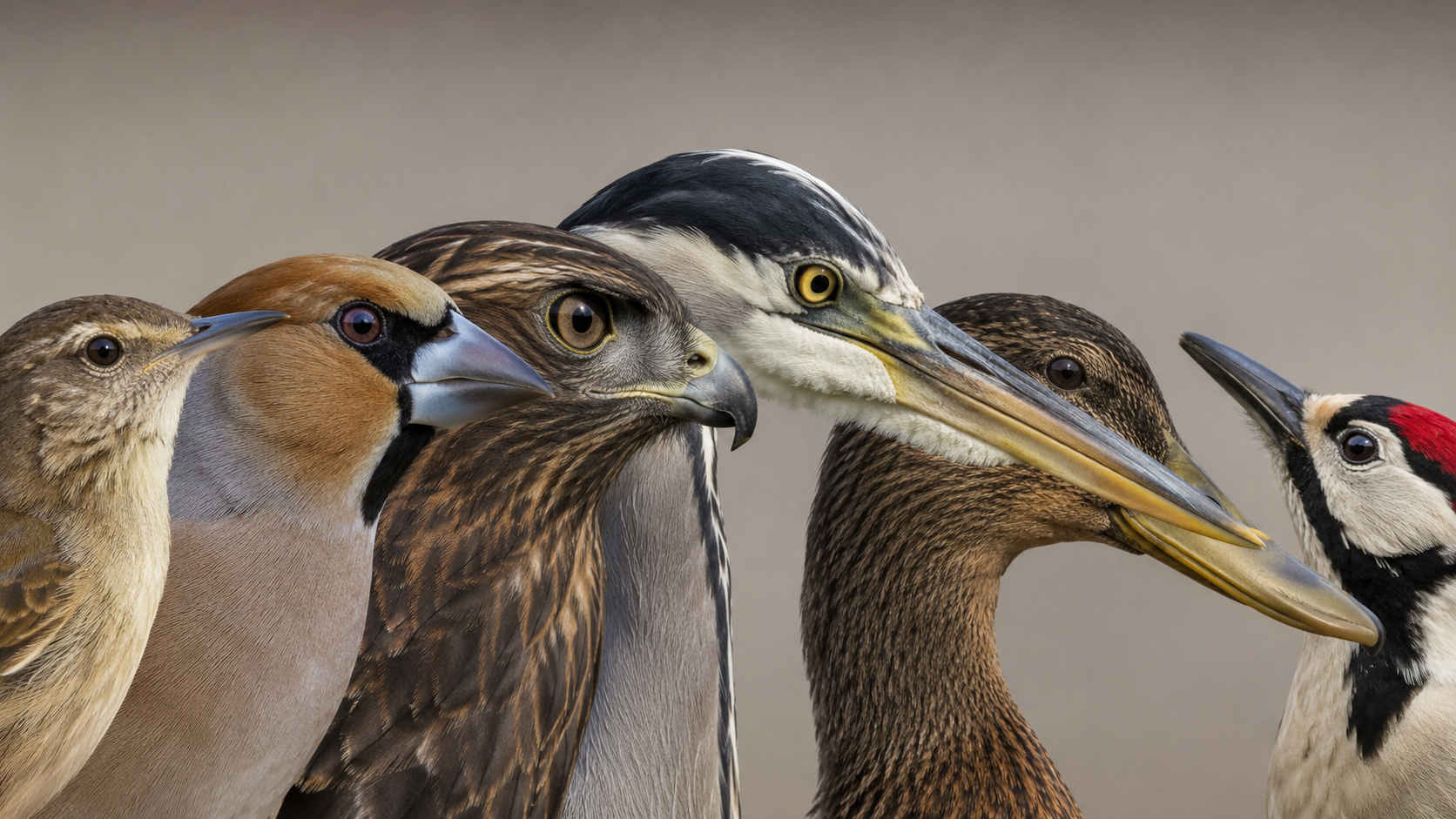
Beak shape reveals a bird's diet and ecological role at a glance — thin and straight, thick and conical, hooked, long, flat and duck-like, or chisel-shaped.
Why beak shape matters
Beak shape is one of the most reliable identification traits available, because it is shaped directly by diet and changes far less than plumage between individuals, sexes, and seasons. A bird's beak is essentially a tool built for a specific feeding method, so recognizing the shape often points straight to a broad ecological group before any other trait is even considered.
The six beak shapes
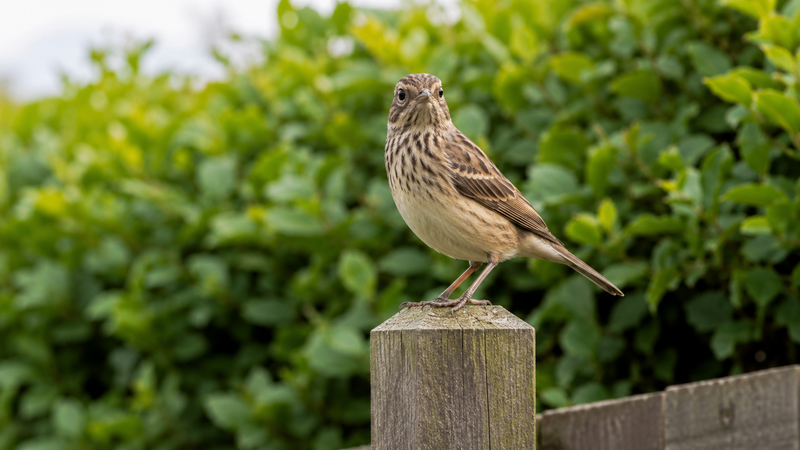
Thin and straight beaks suit birds that pick insects, seeds, or nectar from foliage and bark — the European robin and white wagtail both use a fine, straight bill to snap up small invertebrates.
Thick and conical beaks are built for cracking seed husks, giving finches and buntings their characteristic stout, triangular profile — seen clearly in the common chaffinch and yellowhammer.
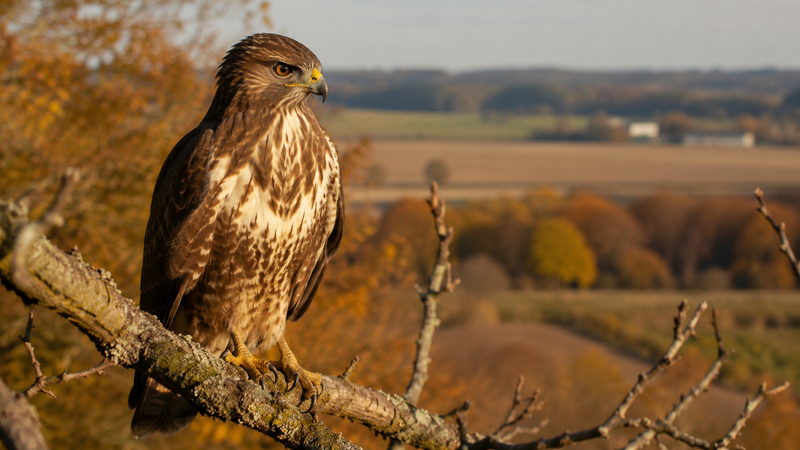
Hooked beaks belong to birds of prey, where the sharp downward curve is used to tear flesh — the common kestrel and tawny owl both carry this shape despite belonging to unrelated taxonomic orders.
Long beaks (waders, herons, storks) suit probing in mud, shallow water, or grass for hidden prey — the grey heron spears fish with a long dagger-like bill, while the northern lapwing uses a shorter but still elongated bill to probe soft ground for invertebrates.
Flat, duck-like beaks are broad and flattened, adapted for filtering food from water or grazing vegetation — found in the mallard, greylag goose, and mute swan.
Chisel-shaped beaks belong to woodpeckers, strong and straight with a hardened tip for hammering into bark and wood — the great spotted woodpecker and black woodpecker both rely on this shape to excavate insects and nest cavities alike.
Using beak shape alongside other traits
Beak shape narrows candidates to a broad ecological group almost immediately, but species within the same group — several finches, several waders — can still share a similar bill shape. Pairing beak shape with size and habitat usually finishes the job: a thick conical beak on a small bird in a garden points toward a common finch, while the same beak shape on a larger bird in open farmland points toward a bunting or a different seed-eating specialist entirely.