Common Wood Pigeon
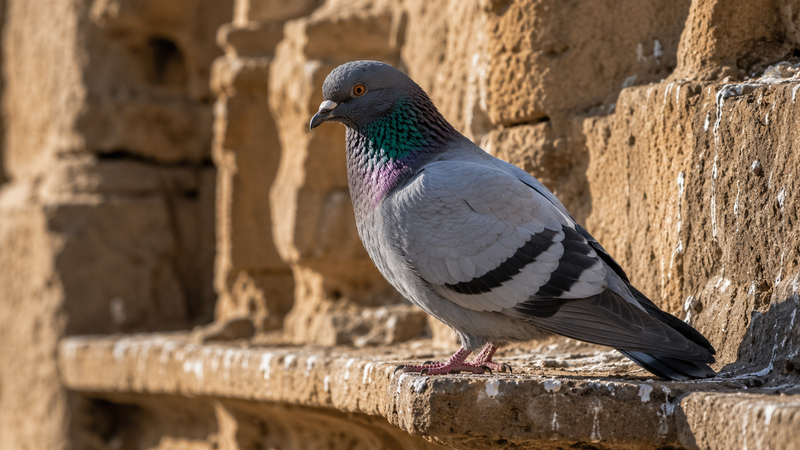
The common wood pigeon (Columba palumbus) is Europe's largest and most widespread pigeon, easily told from the smaller rock dove by its white neck patch and heavier, more powerful build.
Key facts
- Latin name
- Columba palumbus
- Wingspan
- 68–77 cm
- Season
- resident year-round, with northern populations showing seasonal short-distance movements
- Diet
- Seeds, grain, and cereal shoots on farmland, Leaves, buds, and berries, Acorns and other tree seeds in forest habitat, Cultivated crops, including cabbage and clover
- Conservation status
- LCLeast Concern
Appearance
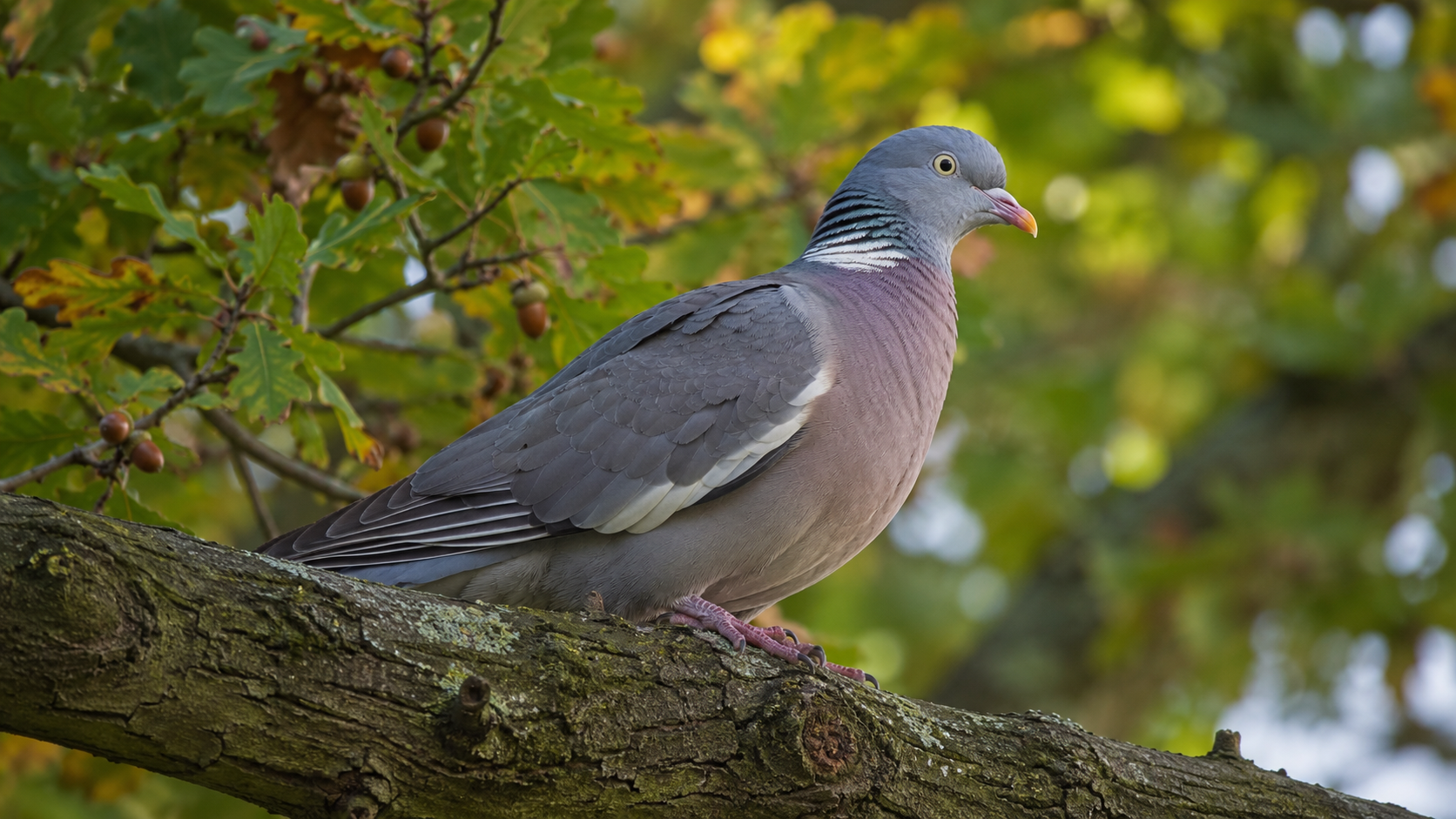
The common wood pigeon (Columba palumbus) is the largest pigeon species covered in this atlas, with a wingspan of 68–77 cm and a body length of 38–43 cm, weighing between roughly 300 and 615 grams, distinctly heavier and bulkier than the rock dove or feral pigeons it is often seen alongside in urban parks. Its plumage is blue-grey overall, with a pinkish-grey wash across the breast and a bold white patch on each side of the neck, a field mark entirely absent in the rock dove and one of the clearest ways to tell the two species apart at a glance.
In flight, the wood pigeon shows a broad white bar crossing each wing, clearly visible against the darker flight feathers, and takes off with a loud, characteristic wing-clatter produced by its wings striking together during the first rapid beats, a distinctive alarm-related sound that often reveals the bird's presence before it is even seen.
Range and habitat
The wood pigeon is widespread and abundant across nearly all of Europe, including most of Russia west of the Urals, and has expanded significantly into urban and suburban habitats over recent decades, now common in city parks and gardens as well as its more traditional woodland and farmland range. It favors broadleaf and mixed forest, farmland with hedgerows and scattered trees, and, increasingly, well-vegetated urban green spaces offering both feeding and nesting opportunities.
Most populations across the milder parts of the range are largely resident, remaining in the same general area year-round, while birds breeding in the coldest, most continental parts of Russia show more pronounced seasonal movement, shifting south for the winter when food and open ground become scarce under heavy snow cover.
Behavior and lifestyle
Wood pigeons feed on a broad range of plant material, including seeds, grain, and cereal shoots on farmland, leaves, buds, and berries in woodland and garden habitats, and acorns and other tree seeds, particularly important in autumn and winter when other food becomes scarcer. The species can form sizeable, sometimes agriculturally significant flocks on farmland, especially where crops such as cabbage, clover, or cereal shoots are abundant.
Outside the breeding season, wood pigeons are notably gregarious, often gathering in large flocks to feed and roost together, a pattern especially pronounced in winter when birds concentrate at the most productive feeding sites. The species is also known for a distinctive soft, rhythmic cooing call, often repeated in a five-syllable pattern, that carries well through woodland and is one of the most familiar background sounds of European parks and forests.
Breeding
Wood pigeons build a notably flimsy, loosely constructed platform of twigs, typically placed in a tree or dense shrub, sometimes so sparse that eggs are visible from below through gaps in the structure. A typical clutch contains 2 eggs, incubated by both parents for 17 days, one of the shorter incubation periods among the species covered in this atlas.
Because the species can breed across an unusually extended season and takes advantage of abundant food availability, wood pigeons often raise multiple broods per year, sometimes as many as three or four in favorable conditions, contributing to their high overall population density across much of their range. Chicks are fed initially on nutrient-rich crop milk produced by both parents before transitioning to solid food, fledging at around 28 to 35 days.
Interesting facts
- The wood pigeon's loud wing-clatter on takeoff is thought to function partly as an alarm signal, alerting other pigeons in the immediate area to a potential threat even before any visual warning is given.
- Because of its capacity for multiple broods per year and broad diet, the wood pigeon is considered one of the most numerous and successful wild bird species across much of Europe, including significant populations in farmland, woodland, and city habitats simultaneously.
- Wood pigeon numbers on agricultural land are sometimes actively managed in parts of Europe due to their capacity for locally significant crop damage, a management concern distinct from any conservation threat, since the species remains classified as Least Concern and widespread.