Birds of Krasnodar Krai
Krasnodar Krai's warm Black Sea coast, Kuban River wetlands, and Caucasus foothills give it one of the mildest climates and richest winter bird communities in Russia.
Russia's mildest major birding region
Krasnodar Krai occupies a distinctive place among Russia's regions covered in this atlas: a warm Black Sea coastline, the wide floodplain of the Kuban River with its marshes and rice paddies, and the foothills of the Caucasus Mountains rising to the east, all combining to give the region one of the mildest climates in the country. That mild winter climate makes Krasnodar Krai an important wintering and migration stopover area for species that leave the colder central and northern parts of Russia entirely during the colder months.
The Kuban River system in particular, with its extensive floodplain wetlands and agricultural rice fields that mimic natural marsh habitat, ranks among the most productive wetland birding corridors in southern Russia, drawing large concentrations of waterfowl and wading birds especially outside the breeding season.
Typical species of the region
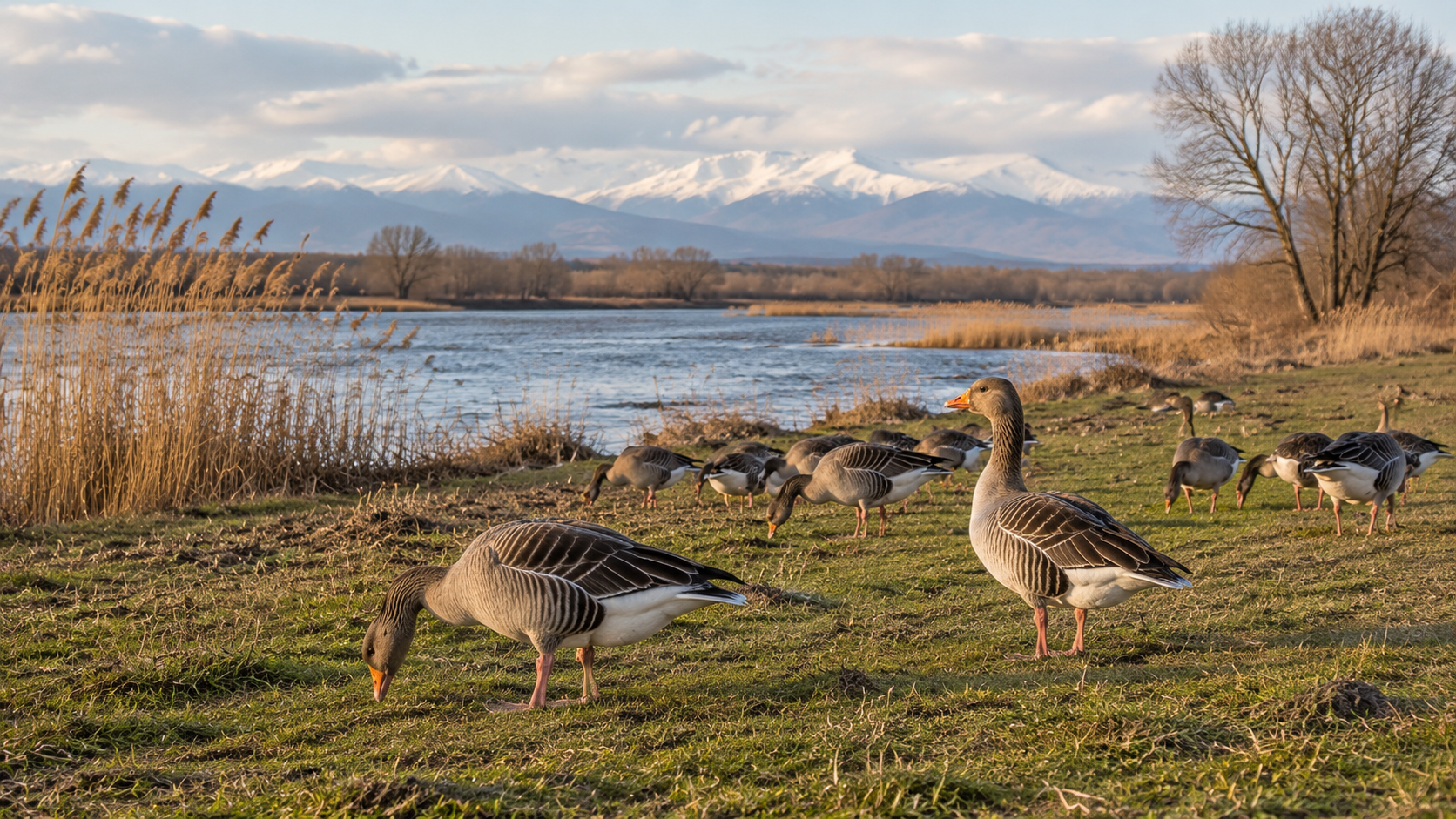
The region's wetlands and coastal waters support strong numbers of waterfowl, with the mallard common year-round and the greylag goose present in particularly large numbers during migration and winter, when birds from colder breeding grounds further north and east arrive to feed on the Kuban floodplain's grassland and stubble fields. The grey heron is a familiar sight along the region's rivers, marshes, and rice paddies, hunting the shallow margins throughout the year in this milder climate.
Farmland and open country across the krai support the ground-nesting Eurasian skylark and, in wetter grassland and floodplain habitat, the northern lapwing, while the region's towns and villages host familiar residents such as the house sparrow and rock dove. Corvids including the hooded crow and Eurasian magpie are widespread across both farmland and settled areas.
Seasonality
Krasnodar Krai's mild climate produces a noticeably different seasonal pattern from regions further north: while spring migration still brings a pulse of new arrivals from March through May, a substantial share of waterfowl and other wetland species are present through the winter months as well, either as genuine residents or as birds that have moved only a short distance from harsher breeding grounds elsewhere in Russia. This makes winter itself, rather than only spring and summer, a genuinely productive season for birdwatching in the region, particularly around the Kuban wetlands and Black Sea coast. Autumn passage from September through November again swells numbers as migrants pass through or settle in for the winter.
Conservation notes
Agricultural intensification along the Kuban floodplain, including drainage and conversion of natural wetland to farmland, poses an ongoing pressure on the wading and waterfowl species that depend on the region's marshes and shallow waters, particularly farmland-associated species like the northern lapwing that have declined across much of their range for similar reasons. The Black Sea coast also faces development pressure from tourism and infrastructure, making the protection of remaining coastal wetland habitat an important regional conservation priority.