Birds of Africa
Africa's savanna, rainforest, desert, and Rift Valley lakes support one of the richest bird faunas on Earth, and serve as the wintering grounds for huge numbers of European and Asian migrants.
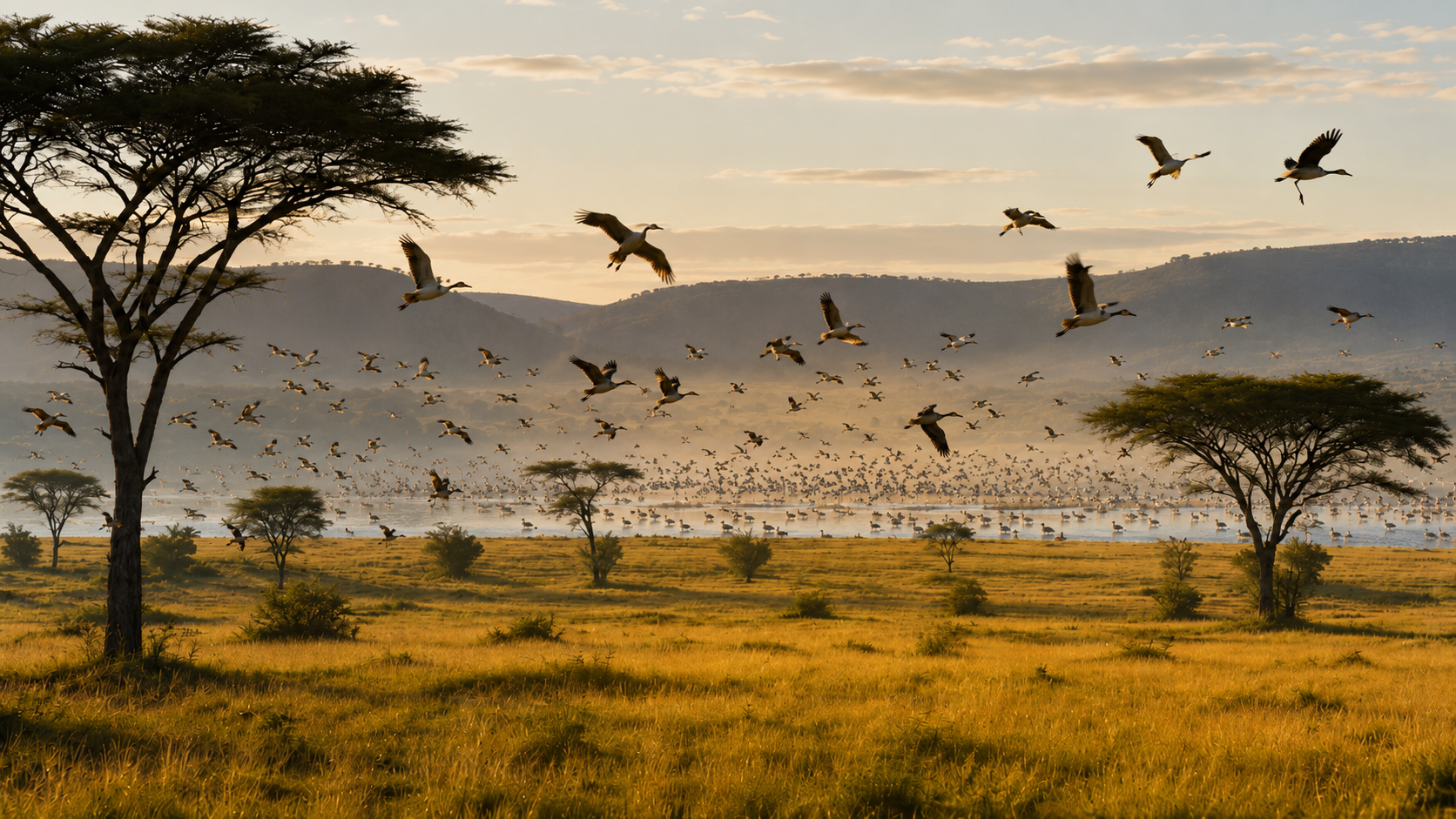
A continent of resident diversity and migratory importance
Africa holds one of the richest bird faunas of any continent, its savanna, tropical rainforest, desert, and Rift Valley lake habitats supporting an enormous number of resident species found nowhere else covered in this atlas. But Africa's significance here extends well beyond its own resident bird life: the continent, particularly its sub-Saharan regions, serves as the essential non-breeding wintering ground for a huge number of species that breed across Europe and western Asia, making it a direct continuation of the migratory story told throughout this atlas's Eurasian sections rather than a wholly separate topic.
This dual role — vast independent diversity alongside deep migratory interdependence with the north — shapes how this section approaches Africa, starting with the species connections most relevant to birdwatchers already familiar with the atlas's Eurasian coverage before country pages build out the continent's own distinct bird communities in more depth.
Migratory species that winter in Africa
Several species profiled elsewhere in this atlas as Eurasian breeders spend the majority of their year in Africa rather than on their breeding grounds. The white stork, so closely associated with European village rooftops in summer, migrates to sub-Saharan Africa for the winter months, following one of two major flyways around either end of the Mediterranean. The barn swallow undertakes an even longer journey, breeding across nearly all of Europe and northern Asia before wintering as far south as South Africa, while the common cuckoo similarly makes the journey to African wintering grounds each year after its distinctive brood-parasitic breeding season further north.
Seasonality from an African perspective
For migratory species, Africa's role reverses the seasonal pattern familiar from the Eurasian sections of this atlas: the same species present and breeding in the north from roughly April through September spend the remaining months, broadly October through March, in African habitats, timing their return north to coincide with the resumption of favorable breeding conditions. Africa's own resident species follow patterns driven more by rainfall than by temperature, with breeding activity in many regions tied closely to wet and dry season cycles rather than a simple spring-to-autumn pattern.
Countries of the region in this atlas
Kenya opens the country-level coverage — thanks to its mix of savanna, Great Rift Valley lakes, montane forest, and coast. Alongside it are Tanzania, Ethiopia, Botswana, Namibia, and South Africa, including southern savanna and fynbos.