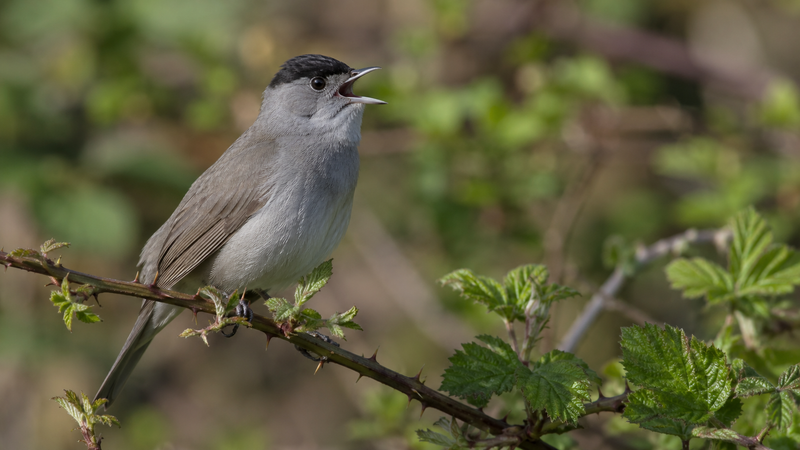
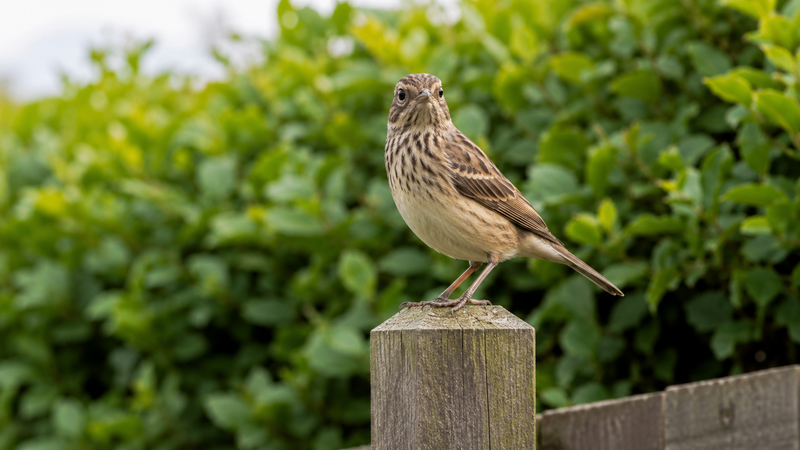
Eurasian Skylark
The Eurasian skylark (Alauda arvensis) is a streaky brown farmland bird famous for singing continuously while climbing almost out of sight into the open sky, and for its dramatic decline across intensively farmed Western Europe.
Key facts
- Latin name
- Alauda arvensis
- Family
- Alaudidae (Larks)
- Wingspan
- 30–36 cm
- Season
- resident in the west and south; migratory further north and east, present March – October
- Diet
- Seeds and grain, Insects and other invertebrates, especially during the breeding season, Young shoots and leaves
- Conservation status
- LCLeast Concern
Appearance
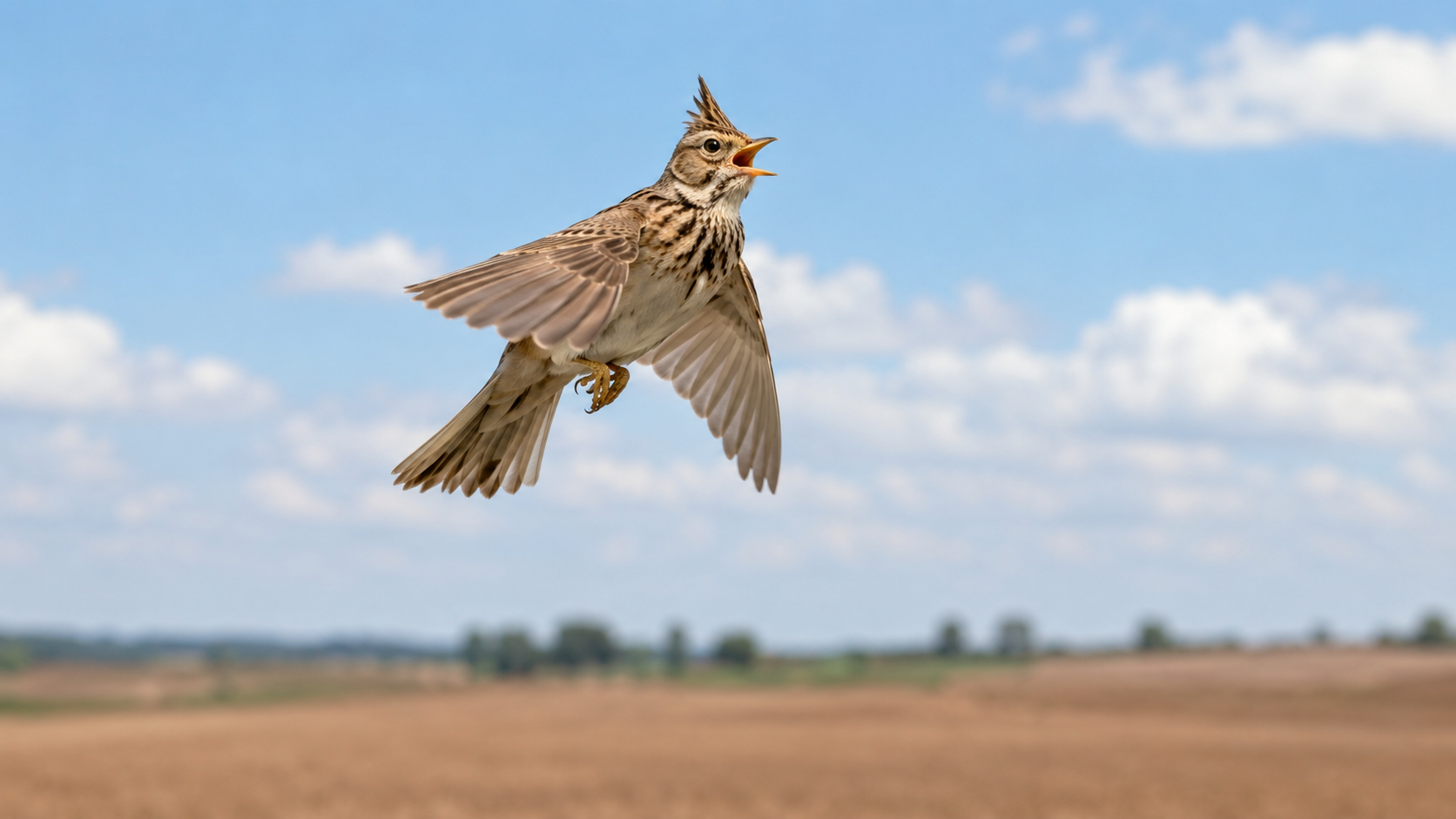
The Eurasian skylark (Alauda arvensis) is a medium-sized, ground-dwelling songbird with a wingspan of 30 to 36 cm and a body length of about 18 to 19 cm, weighing between roughly 30 and 45 grams. Its plumage is streaked warm brown above and pale buff below, with fine dark streaking across the breast — an overall cryptic pattern well suited to camouflage against open farmland and grassland, where the species spends nearly all of its time on or close to the ground.
A small, often raised crest on the crown provides one useful field mark, along with a white trailing edge visible on the wings in flight and white outer tail feathers that flash briefly as the bird takes off or lands. In flight, the combination of a somewhat heavy, direct wingbeat and the species' habit of singing continuously while climbing steeply into open sky is often more distinctive than any single plumage feature alone.
Range and habitat
The Eurasian skylark breeds across almost all of Europe and extends through temperate Russia into Central and East Asia. Populations in the milder west and south of the range are largely resident or only short-distance migrants, while birds breeding in colder parts of northern and eastern Russia are more strongly migratory, present from roughly March to October and wintering further south.
It is a specialist of open, largely treeless habitats: farmland, particularly cereal crops and pasture, along with natural grassland, steppe, and coastal dunes, generally avoiding any landscape with significant tree or tall shrub cover, since its ground-nesting habits and open-sky song display both depend on unobstructed sightlines and airspace.
Behavior and lifestyle
Skylarks feed mainly on seeds and grain for much of the year, shifting toward insects and other invertebrates during the breeding season when growing chicks require additional protein. Foraging takes place almost entirely on the ground, where the species' cryptic plumage provides effective camouflage against predators while it walks and picks through open soil and low vegetation.
The male's signature behavior is its remarkable song-flight: rising almost vertically from the ground while singing a continuous, rapid, warbling song, sometimes climbing to considerable height and remaining airborne and singing for several minutes before descending, often ending with a final steep drop back toward the ground. This sustained aerial song display, unmatched in duration by most other European songbirds, has made the skylark a recurring symbol in literature and music celebrating birdsong.
Breeding
The female builds a simple, well-concealed nest scrape directly on bare or sparsely vegetated ground, typically within a field of grass or cereal crop offering enough surrounding cover to hide the nest from view. The typical clutch is 3 to 5 eggs, incubated solely by the female for 11 to 12 days. Chicks leave the nest remarkably early, at around 8 to 10 days old, well before they can fly, scattering into surrounding vegetation to reduce the risk that a predator finding one chick could locate the entire brood at once.
Interesting facts
- Widespread and severe population declines of skylarks across intensively farmed parts of Western Europe since the 1970s and 1980s have made the species a frequently cited indicator of the broader ecological costs of agricultural intensification on farmland wildlife.
- The skylark's soaring song has inspired numerous works of art and music, most famously Percy Bysshe Shelley's 1820 poem "To a Skylark" and Ralph Vaughan Williams's 1914 orchestral work "The Lark Ascending."
- Conservation measures on some European farms, including leaving unplanted "skylark plots" within cereal fields to provide nesting and foraging space, have shown measurable success in supporting local skylark breeding success where implemented.