Yellowhammer
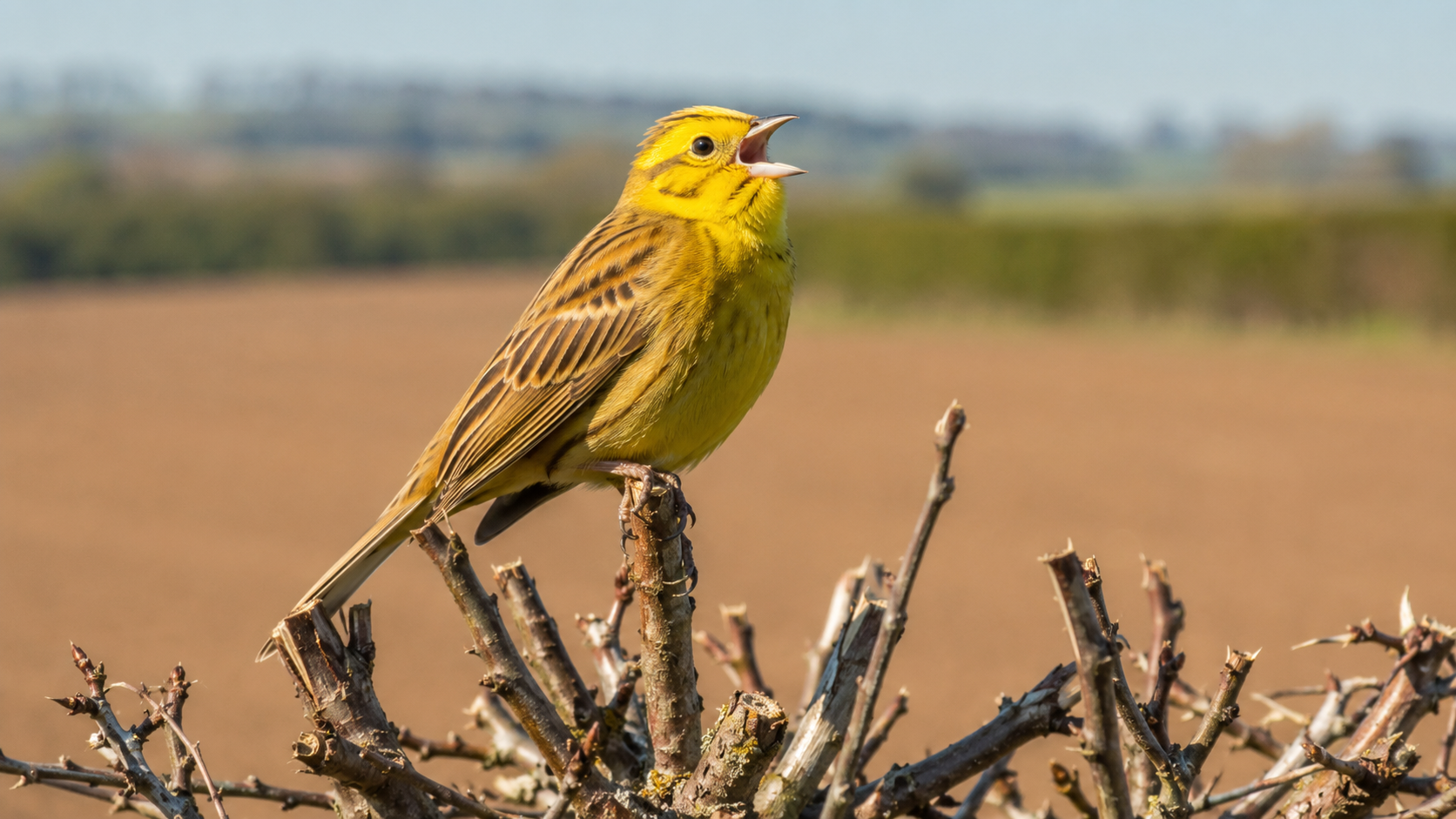
The yellowhammer (Emberiza citrinella) is a vividly yellow-headed farmland bunting known for its distinctive, rhythmic song, often rendered in English as 'a little bit of bread and no cheese.'
Key facts
- Latin name
- Emberiza citrinella
- Family
- Emberizidae (Buntings)
- Wingspan
- 23–29.5 cm
- Season
- mostly resident; some northern and eastern populations partially migratory October – March
- Diet
- Seeds and grain, Insects and other invertebrates, especially fed to nestlings, Weed seeds found along field margins
- Conservation status
- LCLeast Concern
Appearance
The yellowhammer (Emberiza citrinella) is a medium-sized bunting with a wingspan of 23 to 29.5 cm and a body length of about 16 to 16.5 cm, weighing between roughly 24 and 30 grams. The breeding male is unmistakable, with a bright lemon-yellow head and underparts, set against a warm chestnut-brown, dark-streaked back and rump, and a chestnut wash across the breast that varies somewhat between individuals.
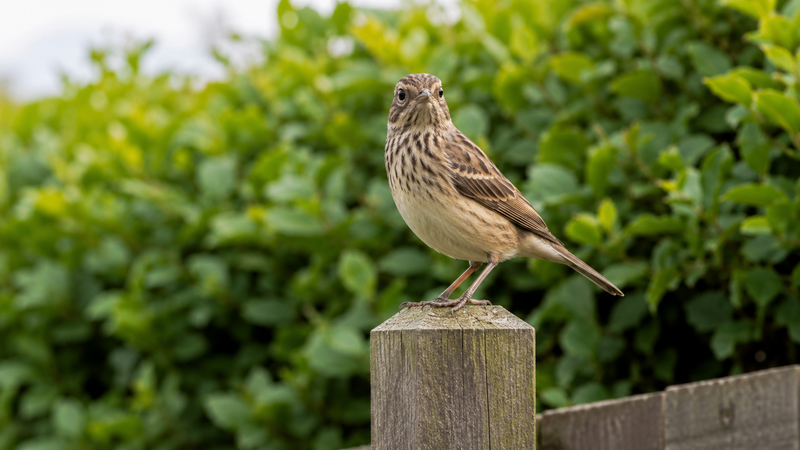
Females and juveniles are noticeably duller and more heavily streaked overall, with far less extensive yellow coloring, particularly on the head, which can make them considerably harder to distinguish at a glance from some other similarly streaked farmland buntings, though the overall size, shape, and any hint of yellow tone usually help confirm identification alongside habitat and behavior.
Range and habitat
The yellowhammer breeds across nearly all of Europe and extends through temperate Russia into western Siberia. Populations across the milder west and south of the range are largely resident, while birds breeding in colder parts of northern and eastern Russia show partial migratory movement, present further south between roughly October and March.
It is closely tied to farmland with hedgerows, scrubby field margins, and open countryside offering a mix of song perches and ground cover, and is generally absent from dense woodland or heavily urbanized areas, reflecting a strong dependence on traditional, structurally diverse agricultural landscapes.
Behavior and lifestyle
Yellowhammers feed mainly on seeds and grain, particularly weed seeds found along field margins and hedgerow bases, shifting toward insects and other invertebrates during the breeding season to meet the higher protein demands of growing chicks. Foraging typically takes place on open ground, close to the hedgerow cover the species relies on for both nesting and escape from predators.
The male's persistent, rhythmic song, delivered from an exposed perch atop a hedge, fence post, or wire, is one of the most familiar and easily learned bird songs across European farmland, its distinctive rhythm — often mimicked in English as "a little bit of bread and no cheese" — making it a useful entry point for beginning birdwatchers learning to identify birds by ear. Outside the breeding season, yellowhammers often form loose flocks, sometimes joining other buntings and finches at shared winter feeding areas.
Breeding
The female builds a fairly loose cup nest of grass and moss low in dense hedge or scrub cover, often close to the ground. The typical clutch is 3 to 5 eggs, incubated mainly by the female for 12 to 14 days. Chicks fledge at around 11 to 13 days old, and pairs commonly raise two or three broods across an extended breeding season from spring into late summer.
Interesting facts
- Alongside the skylark, the yellowhammer has become one of the most frequently cited farmland bird species in conservation research into the effects of agricultural intensification, with population monitoring data extending back many decades in parts of Western Europe.
- The yellowhammer's rhythmic song mnemonic, "a little bit of bread and no cheese," is one of the best-known examples of a bird song mnemonic in English-language birdwatching culture, widely used to teach beginners to recognize the species by ear.
- Research studies have documented regional "dialects" in yellowhammer song across parts of its range, with the final note pattern varying subtly between geographically distinct populations, similar to documented song dialects in some other common European songbirds.