European Robin
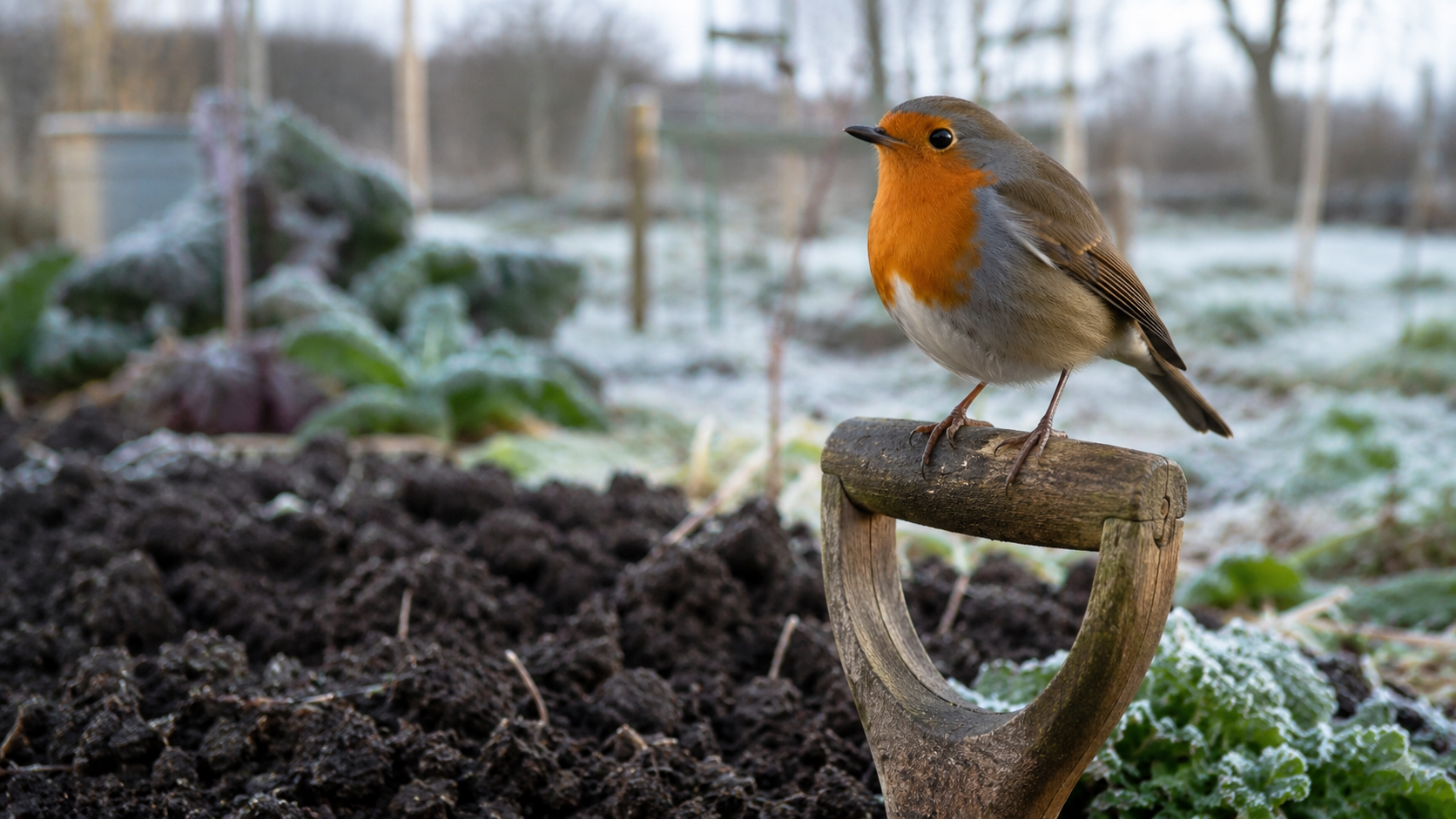
The European robin (Erithacus rubecula) is a small, fiercely territorial songbird instantly recognized by its orange-red face and breast, and one of the few European birds to sing through much of the winter.
Key facts
- Latin name
- Erithacus rubecula
- Wingspan
- 20–22 cm
- Season
- resident in the west and south; migratory further north and east, present March – October
- Diet
- Insects, spiders, and other invertebrates, Earthworms, especially from freshly turned soil, Berries and soft fruit in autumn and winter, Garden feeder food, especially mealworms
- Conservation status
- LCLeast Concern
Appearance
The European robin (Erithacus rubecula) is a small, plump songbird with a wingspan of 20 to 22 cm and a body length of about 12.5 to 14 cm, weighing between roughly 16 and 22 grams. Its most distinctive feature is a vivid orange-red patch covering the face, throat, and breast, bordered by a thin blue-grey band that separates it from the warm olive-brown upperparts — a combination unique enough among common European songbirds to make the species instantly recognizable even to casual observers.
Unlike many songbirds with pronounced differences between the sexes, male and female robins look essentially identical, both sharing the same orange-red breast and face pattern, so the species cannot reliably be sexed by plumage alone in the field. Juveniles lack the orange breast entirely, showing mottled brown and buff spotting instead until their first molt.
Range and habitat
The European robin is widespread across nearly all of Europe and extends into western Russia and parts of North Africa and the Middle East. Populations in the milder west and south of the range are largely resident, while birds breeding in colder parts of northern and eastern Europe and Russia are migratory, present from roughly March to October and wintering further south.
It favors woodland with dense understory, hedgerows, and — very conspicuously — gardens, where it is one of the most familiar and confiding small birds across much of its range, often approaching remarkably close to people, particularly when soil is being disturbed by digging.
Behavior and lifestyle
Robins feed mainly on insects, spiders, and other invertebrates, along with earthworms exposed by disturbed soil, shifting toward berries and soft fruit as these become available in autumn and winter. Unusually among European songbirds, both sexes hold and defend individual feeding territories through the winter as well as the breeding season, and both males and females sing to advertise and defend that space — one of the reasons robin song can be heard through much of the year, including on quiet winter days and, under streetlight, even at night.
Despite their gentle popular image, robins are among the most aggressively territorial small songbirds in Europe, with rival birds engaging in genuine physical confrontations, sometimes resulting in serious injury, when territorial disputes escalate beyond vocal and visual displays — a behavioral pattern well documented by decades of scientific study on the species.
Breeding
The female builds a well-hidden cup nest of dead leaves, moss, and grass, often placed low in dense vegetation, a bank crevice, or occasionally an unusual man-made cavity such as an old kettle or discarded container. The typical clutch is 4 to 6 eggs, incubated solely by the female for 13 to 14 days. Chicks fledge at around 12 to 15 days old, and pairs frequently raise two or three broods across an extended breeding season.
Interesting facts
- The robin's strong association with Christmas in British and some other European traditions is thought to originate partly from Victorian-era postal workers, nicknamed "robins" for their red uniforms, who were commonly depicted delivering Christmas cards alongside the bird itself.
- Because robins sing so persistently through winter and even at night under artificial lighting, they are sometimes mistakenly reported as nightingales by people unfamiliar with the true, much rarer nighttime song of that species.
- Long-term behavioral research on European robins has made the species one of the best-studied model organisms for understanding territorial aggression and year-round singing behavior in wild songbirds.