Birds of Germany
Germany's Baltic and North Sea coasts, lowland farmland, and Alpine foothills give it one of the most varied and well-documented bird communities in central Europe.
From the Wadden Sea to the Alpine foothills
Germany spans a substantial north-south range of habitats within a single country: the tidal mudflats and barrier islands of the Wadden Sea along its North Sea coast, extensive lowland farmland and lake country across the north and center, and increasingly forested, hilly terrain further south as the land rises toward the Bavarian Alps. This range of habitat, combined with a long tradition of organized birdwatching and habitat protection, makes Germany one of the more thoroughly documented countries for bird distribution in continental Europe.
The Wadden Sea, a UNESCO World Heritage site shared with the Netherlands and Denmark, ranks among the most important staging areas anywhere on the East Atlantic Flyway, its exposed mudflats at low tide providing an enormous feeding resource for waterbirds moving between Arctic breeding grounds and wintering areas to the south.
Typical species of the region
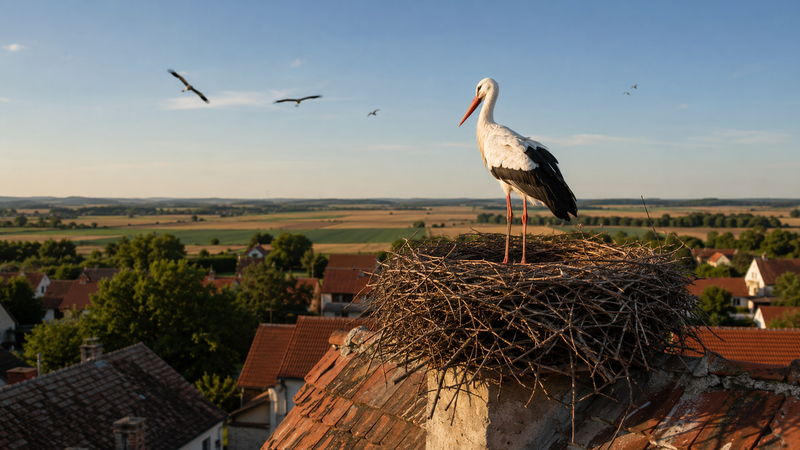
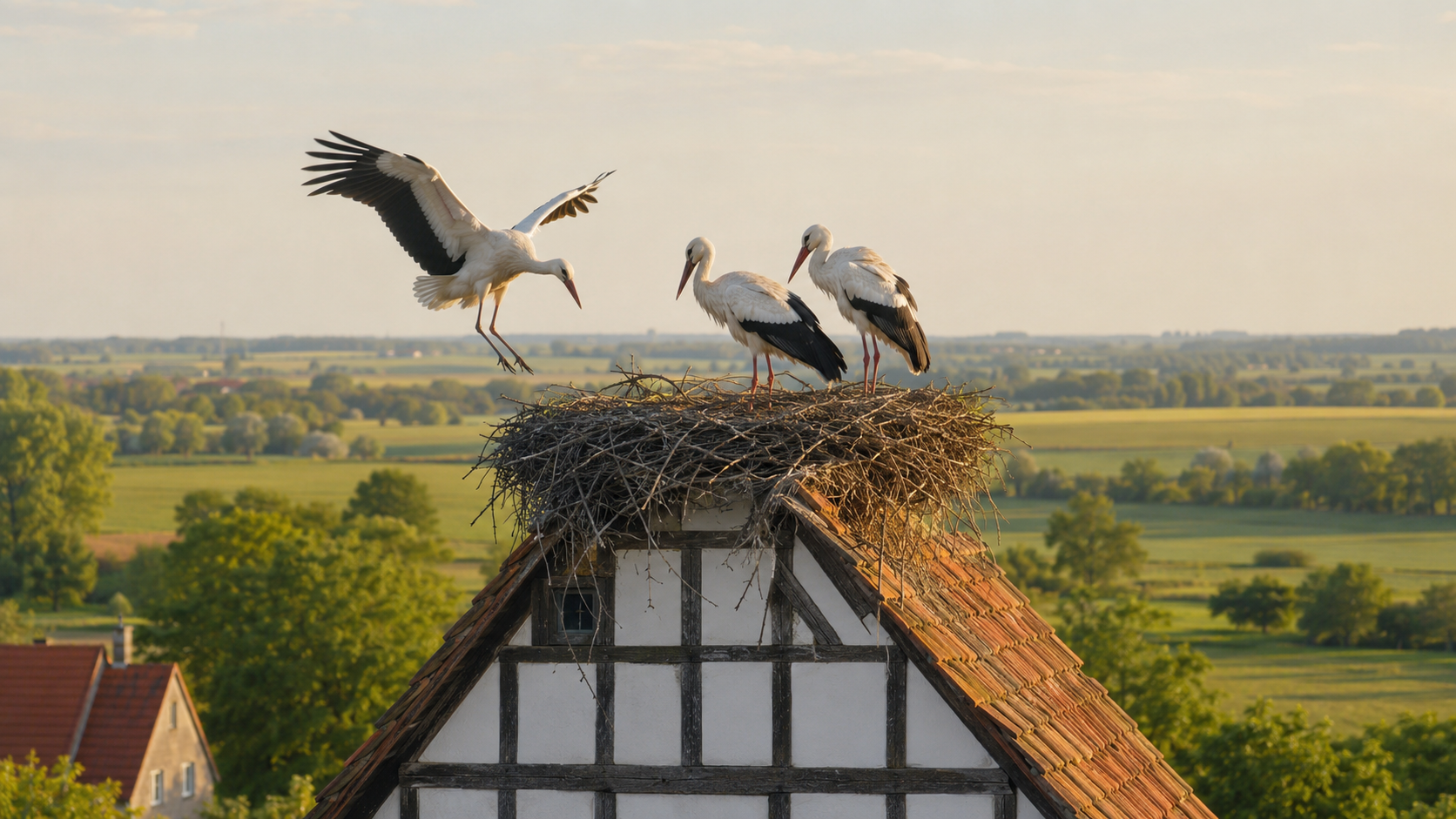
The white stork holds a special place in German birdwatching culture, nesting conspicuously on rooftops, chimneys, and dedicated platforms across rural villages, particularly in the country's north and east, where organized nest monitoring has tracked local populations for decades. Farmland and woodland edges across the country support the common chaffinch, great tit, and Eurasian blackbird, all familiar garden and park birds throughout Germany.
Wetlands and waterways across the country are reliable places to find the mallard and mute swan year-round, while the grey heron hunts the margins of rivers, canals, and fish ponds nationwide. The common buzzard is the most frequently seen bird of prey across German farmland and forest edges, often visible soaring or perched on roadside poles.
Seasonality
Spring migration reaches Germany from March through May, with white storks among the most eagerly anticipated returning migrants, typically arriving back at traditional nest sites from late March into April. Breeding activity peaks through May and June across most species, and the Wadden Sea sees a strong pulse of shorebird and waterbird passage during both spring and autumn migration, the latter running roughly from August through October as birds stage on the mudflats before continuing south. Winters in the north are milder than in continental Russia, allowing a substantial resident and short-distance migrant population to remain, while the higher elevations toward the Alps see a more pronounced seasonal shift in species composition.
Conservation notes
Germany's white stork population underwent a significant decline through the mid-20th century linked to wetland drainage and changes in farmland practice, followed by a notable recovery in many areas thanks to targeted conservation measures and habitat restoration, making it one of the country's clearer conservation success stories. The Wadden Sea's protected status under UNESCO helps safeguard its critical role for migratory waterbirds, though the wider North Sea and Baltic coastlines continue to face pressure from coastal development, shipping, and climate-driven sea level change.