Common Cuckoo
The common cuckoo (Cuculus canorus) is a grey, hawk-like migrant famous for its instantly recognizable call and its remarkable brood-parasitic lifestyle, laying its eggs exclusively in the nests of other birds.
Key facts
- Latin name
- Cuculus canorus
- Family
- Cuculidae (Cuckoos)
- Wingspan
- 55–65 cm
- Season
- April – August, wintering in sub-Saharan Africa
- Diet
- Hairy caterpillars, avoided by most other birds, Other insects and invertebrates
- Conservation status
- LCLeast Concern
Appearance
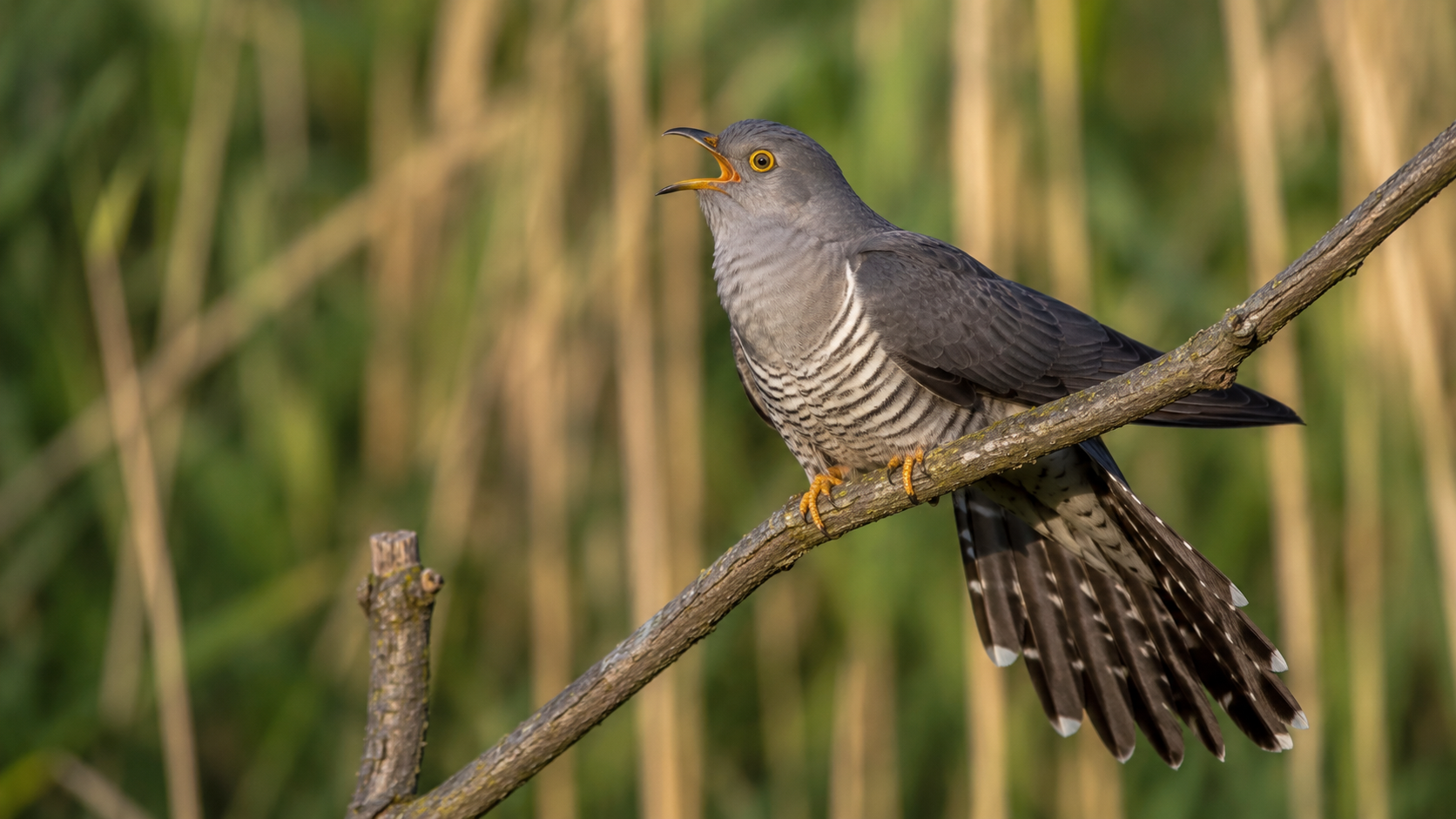
The common cuckoo (Cuculus canorus) is a medium-sized, slender bird with a wingspan of 55 to 65 cm and a body length of about 32 to 34 cm, weighing between roughly 100 and 130 grams. Adults show slate-grey upperparts and head, with fine, dark horizontal barring across otherwise pale underparts, a long, rounded tail tipped with white spots, and pointed wings — an overall silhouette and coloring that bears a notable resemblance to a small hawk, particularly the sparrowhawk, a resemblance some researchers believe plays a functional role in the cuckoo's parasitic breeding strategy.
A less common reddish-brown, or "hepatic," color morph occurs in some females, showing rufous-brown barred plumage rather than the more typical grey, adding further individual variation within the species beyond the straightforward grey-plumaged majority.
Range and habitat
The common cuckoo breeds across almost all of Europe and extends through Russia into much of Asia. The species is entirely migratory, present on the breeding grounds from roughly April to August and wintering across sub-Saharan Africa, departing notably early relative to many other European migrants, with adult cuckoos often beginning their return journey south well before their own offspring, still being raised by host parents, are even ready to leave the nest.
It occupies an unusually broad range of habitats compared to many specialist songbirds, found wherever suitable host species and enough perching and calling cover are available, from wetland reed beds and farmland hedgerows to moorland and woodland edges.
Behavior and lifestyle
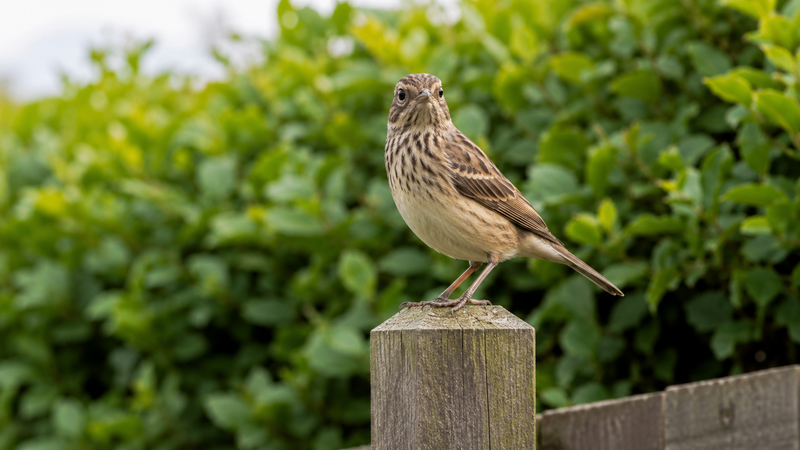
The common cuckoo is one of the best-known obligate brood parasites among European birds, meaning it never builds its own nest or raises its own young directly, instead laying eggs individually into the nests of other, smaller songbird species — reed warblers, dunnocks, and meadow pipits are among the most frequently recorded hosts — leaving the host parents to incubate the egg and raise the resulting chick entirely on their own. A female cuckoo typically lays a single egg per host nest, distributing perhaps a dozen or more eggs across different nests over the course of a breeding season.
Diet consists heavily of hairy caterpillars, a food source many other birds avoid due to the irritating hairs, giving the cuckoo access to an abundant resource with relatively little competition. The male's simple, two-note "cuck-oo" call is one of the most widely recognized bird sounds across Europe, traditionally associated with the arrival of spring, while the female produces a distinctly different, bubbling call rarely as familiar to non-birdwatchers.
Breeding
As a brood parasite, the female cuckoo does not build a nest, but instead watches host nests closely, removing one host egg and replacing it with her own, timed carefully to closely match the host's own laying schedule. Cuckoo eggs often hatch slightly faster than host eggs, and the newly hatched cuckoo chick instinctively works any remaining host eggs or chicks onto its back and evicts them from the nest within its first day or two of life, ensuring it receives all subsequent parental care alone. The host parents then raise the single cuckoo chick, which fledges at around 17 to 21 days old, considerably larger than the host parents feeding it by that point.
Interesting facts
- Research using DNA analysis has confirmed that individual female cuckoos generally specialize in parasitizing a single host species, often reflecting the species that raised them, and lay eggs closely matched in color and pattern to that particular host's own eggs — a striking case of specialized evolutionary adaptation within a single species.
- The image of an oversized cuckoo chick being fed by a much smaller host parent, sometimes perched directly on the host's back to reach food, is one of the most widely photographed and recognized examples of brood parasitism in the natural world.
- Cuckoo numbers have declined in parts of Western Europe in recent decades, a trend researchers have linked partly to declining populations of some preferred host species and changes affecting caterpillar abundance along the cuckoo's migratory route.