Birds of Kenya
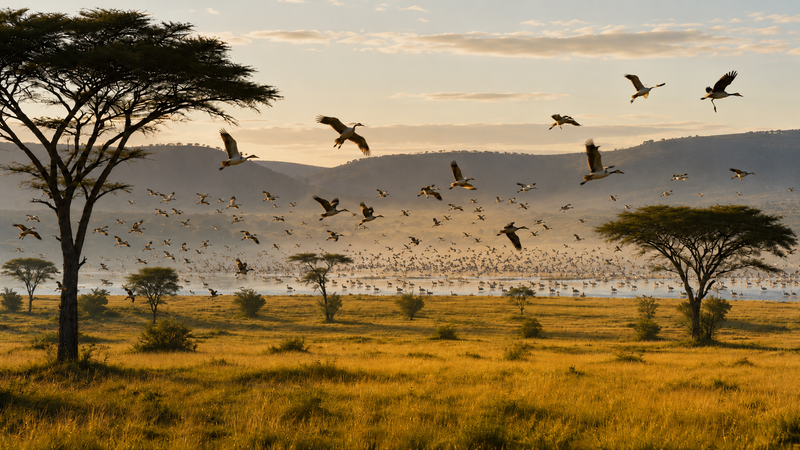
Kenya's savanna, Rift Valley lakes, montane forest, and Indian Ocean coast give it one of the highest bird diversities of any country in Africa, plus an important role for European migrants.
One of Africa's most diverse birding countries
Kenya combines a striking range of habitats within a single, well-documented country: open savanna grassland dotted with acacia trees across much of the south and center, the alkaline soda lakes of the Great Rift Valley running north to south through the country, montane forest on highland peaks such as Mount Kenya, semi-arid scrub across the north, and a stretch of Indian Ocean coastline and coral reef in the southeast. This combination gives Kenya one of the highest recorded bird species totals of any African country, supported by a long-established ecotourism and conservation infrastructure that makes much of this diversity genuinely accessible to visiting birdwatchers.
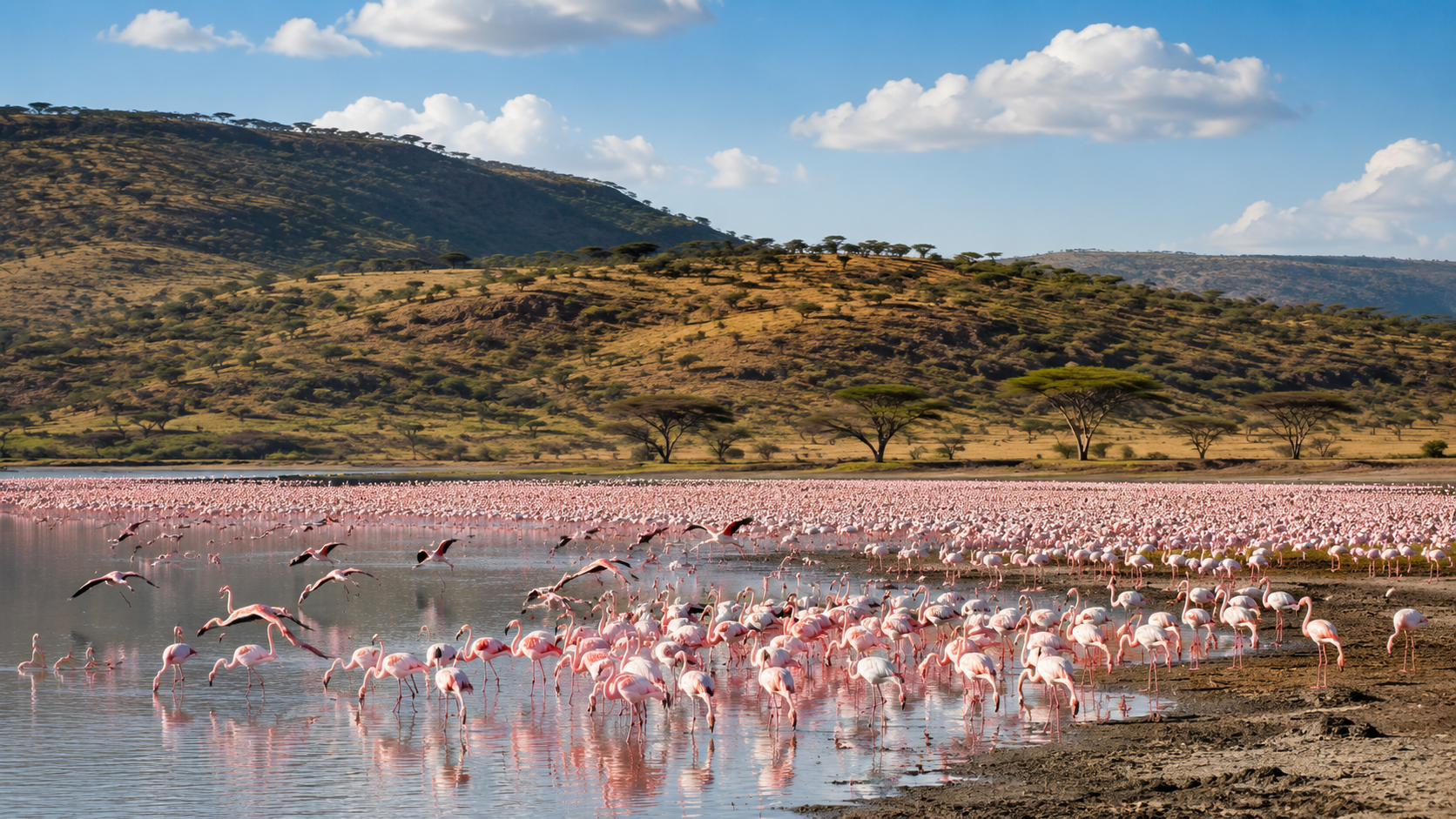
The country's section of the Great Rift Valley is a particular highlight, its chain of soda lakes — shaped by unusual volcanic and mineral chemistry — supporting some of the densest waterbird concentrations found anywhere on the continent.
Species connections to the rest of this atlas
Kenya's location along part of the East African migration corridor means several species covered elsewhere in this atlas as European breeders spend part of their non-breeding year in the country. The barn swallow is a familiar sight over Kenyan farmland and open country during the European winter, having traveled the length of the continent from breeding grounds as far north as Russia and Scandinavia, while the common cuckoo similarly passes through or winters in parts of East Africa after its breeding season further north concludes.
Kenya's own resident bird community includes an enormous number of species not covered elsewhere in this atlas, from the country's iconic flamingo populations on the Rift Valley lakes to a huge diversity of raptors, weavers, and hornbills across its savanna and forest habitats — a richness better served by dedicated regional field guides than by a single overview page here.
Seasonality
Kenya's position near the equator means its bird activity is shaped far more by rainfall than by temperature, with two main wet seasons — roughly March to May and October to December — driving breeding activity for many resident species around the availability of food and standing water. European migrants such as the barn swallow and common cuckoo are present in the country mainly during the northern hemisphere's autumn and winter, broadly October through March, before departing again to breed further north as conditions there become favorable.
Conservation notes
Kenya's Rift Valley lakes and surrounding wetlands face pressure from agricultural runoff, water abstraction, and fluctuating lake levels linked to broader climate patterns, threats that carry particular weight given how many waterbirds depend on a relatively small number of these lakes at any given time. Habitat loss from agricultural expansion and human settlement also affects savanna and forest habitat more broadly, an ongoing conservation challenge balanced against the country's strong tourism-linked incentive to protect its wildlife resources.