Old World Flycatchers and Chats (Muscicapidae)
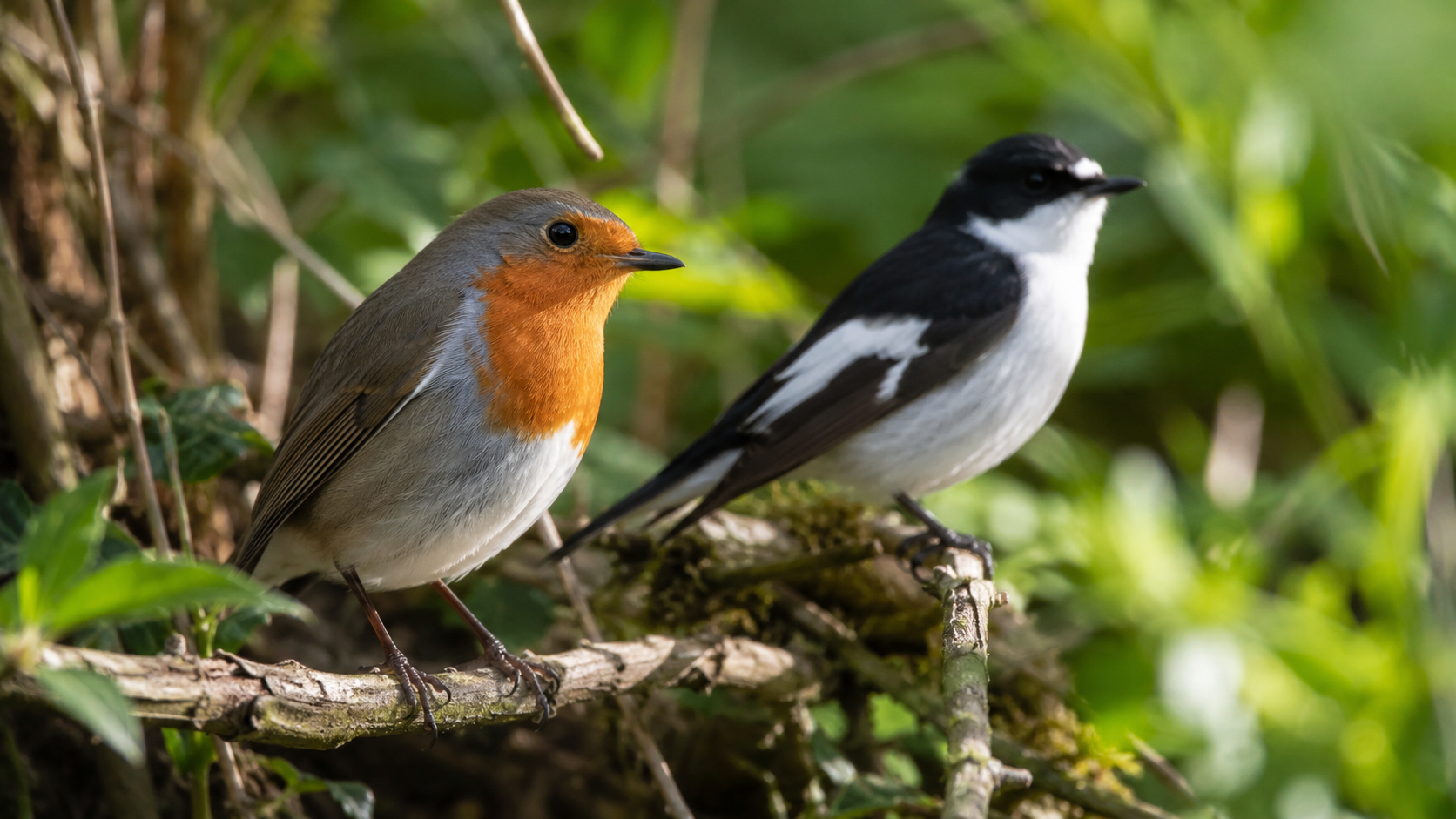
A family spanning the beloved orange-breasted robin, the vocally legendary nightingale, and the acrobatic pied flycatcher, unified more by ancestry and insect-catching habits than by appearance.
What makes Muscicapidae a family
Muscicapidae, the Old World flycatcher and chat family, is one of the largest songbird families, comprising several hundred species with a remarkably diverse range of appearances and habits. Modern genetic research has substantially reshaped this family compared to older classification systems, moving robins, nightingales, and several related "chats" into Muscicapidae from groupings that once placed them closer to the thrush family — a clear example of how DNA evidence can reveal evolutionary relationships not obvious from appearance or behavior alone.
What unites the family at a structural level is a generally fine, often somewhat flattened beak well suited to catching insects, a body built for agile, often short-distance movement whether on the ground, through dense cover, or in brief aerial sallies, and a broadly similar upright perching posture shared across most member species, even as specific foraging strategy varies considerably from one genus to another.
Distinctive traits across the family
Foraging technique highlights the family's internal diversity clearly: the pied flycatcher exemplifies classic "flycatching," making short aerial dashes from a perch to snatch insects directly from the air, while the robin forages mainly by watching and pouncing on invertebrates exposed on open or recently disturbed ground, and the nightingale forages largely hidden within dense low vegetation rather than from an exposed perch at all.
Vocal ability is another notable shared strength across much of the family, though expressed differently by different species: the robin sings persistently across much of the year including winter, while the nightingale is famous specifically for an exceptionally rich and complex song delivered mainly at night — different strategies built on a broadly shared family talent for elaborate, learned song.
Species in this family
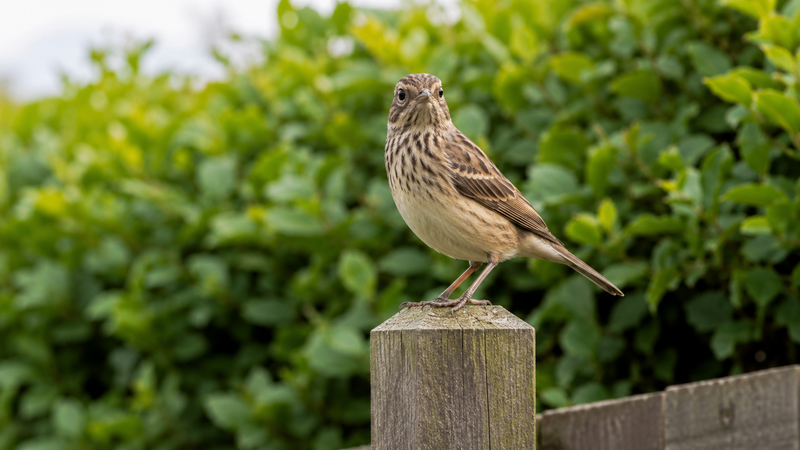
This atlas currently covers three members of Muscicapidae: the European robin (Erithacus rubecula), a small, fiercely territorial garden favorite that sings through much of the year; the thrush nightingale (Luscinia luscinia), a plainly plumaged but vocally legendary skulker of dense riverside thickets; and the European pied flycatcher (Ficedula hypoleuca), a boldly patterned long-distance migrant central to research on climate-driven migration mismatch. Further Muscicapidae species native to the atlas's covered regions will be added to the catalogue over time.
Where and when to watch this family
Because the three species covered here differ so much in migratory strategy — the robin largely resident or short-distance migratory, the nightingale and pied flycatcher both long-distance migrants wintering in Africa — the best time to see members of this family varies considerably by species. Spring, when territorial song is at its peak and long-distance migrants have just returned, offers the richest window for encountering the full range of species covered here, from a robin singing in a garden hedge to a newly arrived nightingale reclaiming a favored riverside thicket.