Larks (Alaudidae)
The lark family: streaked, ground-nesting birds of open farmland and grassland, best known for the extraordinary sustained soaring song-flight of the Eurasian skylark.
What makes Alaudidae a family
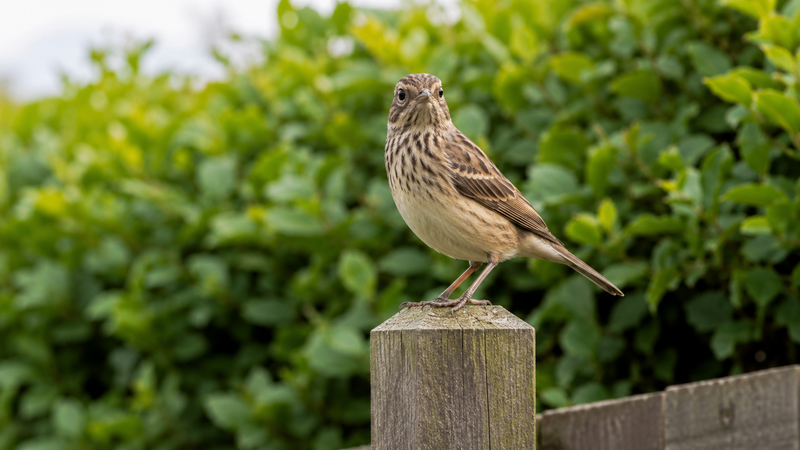
Alaudidae, the lark family, comprises around 90 species of small to medium-sized ground-dwelling songbirds found across open habitats in Europe, Asia, and Africa. Members share a streaked, cryptically colored plumage well suited to camouflage against bare or sparsely vegetated ground, a moderately elongated hind claw adapted for walking and standing securely on soft or uneven soil, and a life history built almost entirely around open, largely treeless terrain rather than woodland or scrub.
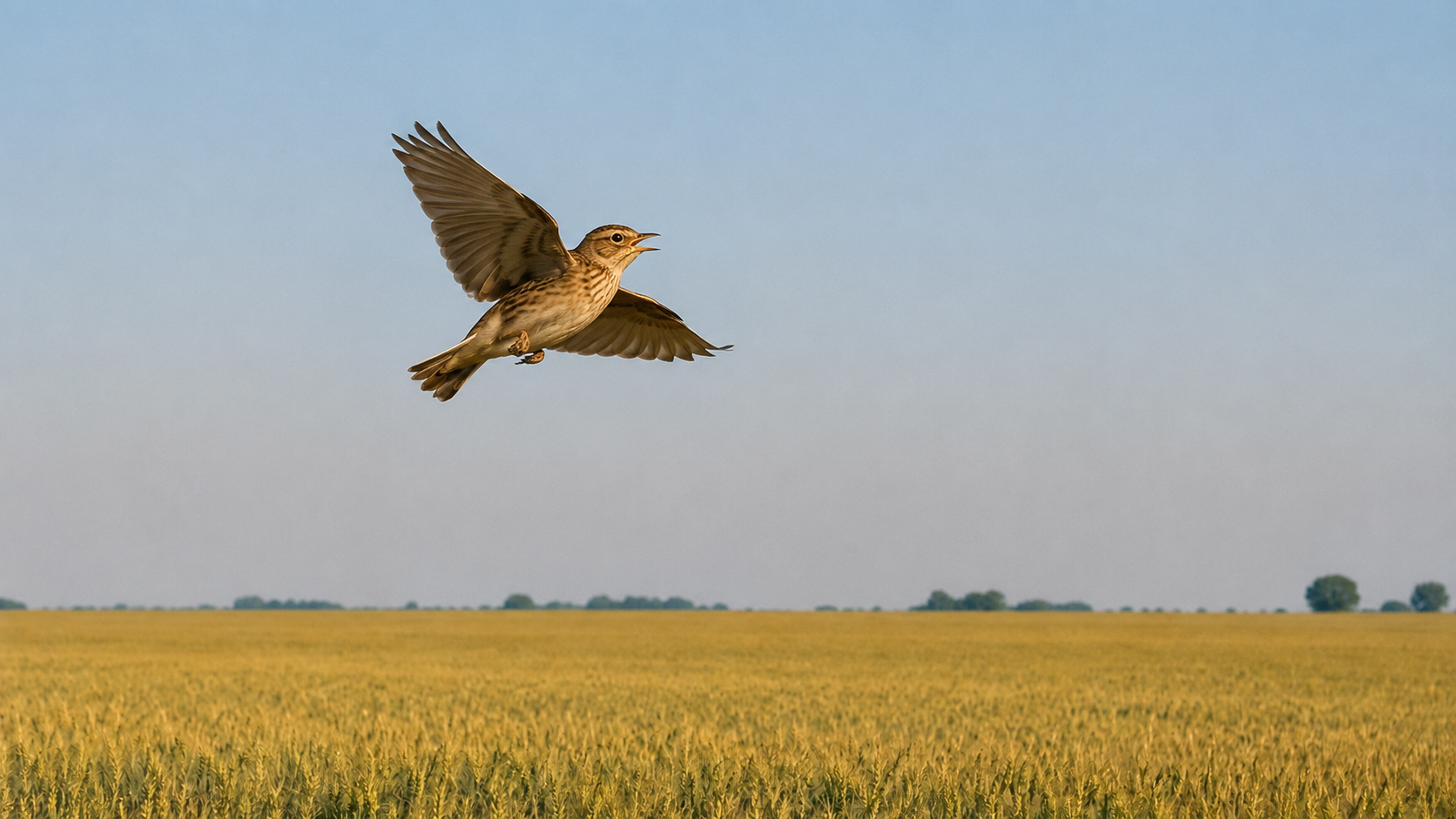
Unlike many songbird families that rely on trees or dense cover for both nesting and singing display, larks are fundamentally birds of open ground: they nest, forage, and — in the case of the family's most celebrated members — even deliver their territorial song while flying high above open fields and grassland, an adaptation directly shaped by the near-total absence of elevated perches across their preferred habitat.
Distinctive traits across the family
The Eurasian skylark's extraordinary sustained song-flight, in which a singing male can remain airborne and vocalizing continuously for several minutes at considerable height, represents one of the most extreme expressions of a broader pattern found across much of the lark family: since no perch is available from which to advertise a territory in open farmland or steppe, altitude itself becomes the substitute, letting song carry over a much wider area of flat, open ground than would be possible from any low perch.
Ground-nesting, shared broadly across the family, also shapes lark breeding biology in distinctive ways, including the skylark's habit of chicks leaving the nest well before they can fly, scattering into surrounding cover to reduce the risk that a single predator discovery could destroy an entire brood at once — a strategy suited to nesting in exposed, largely unprotected open ground.
Species in this family
This atlas currently covers one member of Alaudidae: the Eurasian skylark (Alauda arvensis), famous for its extended aerial song and its status as a widely cited symbol of farmland bird decline across intensively farmed parts of Europe. Further Alaudidae species native to the atlas's covered regions will be added to the catalogue over time.
Where and when to watch this family
Open farmland, grassland, and steppe habitats, entirely free of significant tree cover, are the places to look for larks, and spring through early summer — when territorial song-flight activity peaks — offers by far the best opportunity to encounter this family's most distinctive behavior. Because larks rely so heavily on ground vegetation structure for both nesting and feeding, the specific timing and intensity of local farming activity can noticeably affect how easily the family can be found in a given area from one year to the next.