Thrushes (Turdidae)
The thrush family: medium-sized, powerful-singing ground foragers, from the glossy black common blackbird to the heavily spotted song thrush and the gregarious, flocking fieldfare.
What makes Turdidae a family
Turdidae, the thrush family, comprises well over 150 species worldwide, spanning a considerable range of plumage patterns while sharing a broadly consistent body plan: a medium-sized, upright stance, strong legs built for extensive foraging on open ground, and a diet that shifts seasonally between invertebrates such as earthworms and insects and, later in the year, fruit and berries. The family also has an outsized reputation for vocal ability, with several species, including two covered in this atlas, ranked among the most accomplished singers of any common European bird.
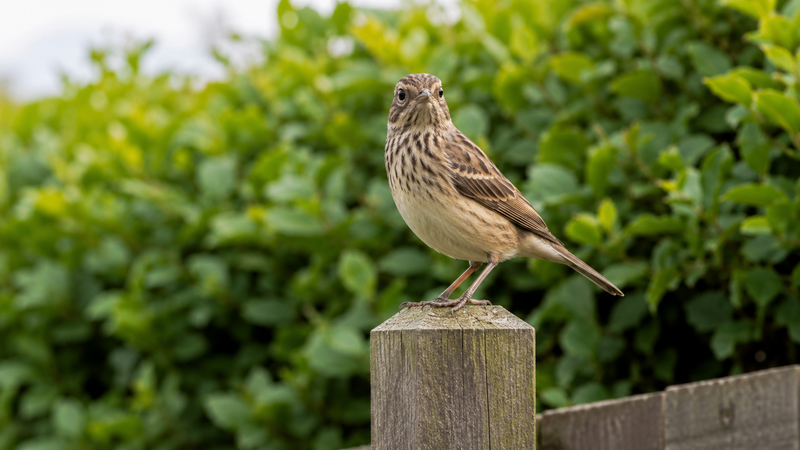
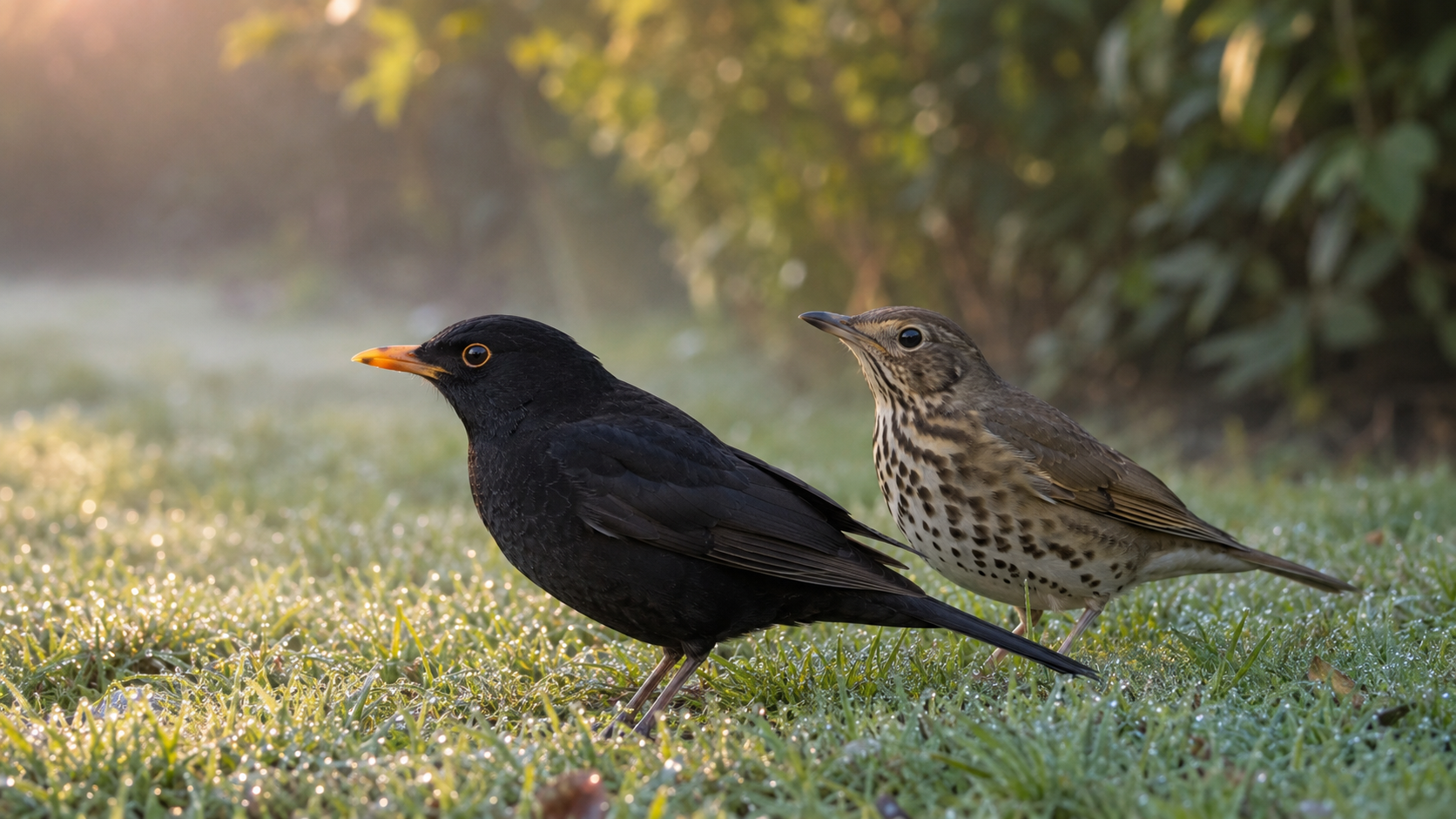
Unlike some bird families where a single shared visual feature makes identification straightforward, Turdidae spans everything from the entirely black plumage of the common blackbird to the heavily spotted breast of the song thrush and the boldly multi-toned pattern of the fieldfare — a reminder that family membership in birds reflects shared ancestry and underlying anatomy rather than a single, consistent color scheme.
Distinctive traits across the family
Social behavior varies considerably across the family covered here: the blackbird is largely solitary or territorial in its habits outside of loose winter roosting, the song thrush is similarly independent, while the fieldfare stands out as unusually gregarious, both feeding in large flocks and, unusually for a thrush, sometimes nesting semi-colonially with coordinated group defense against predators.
Foraging technique also differs in detail even among closely related species: all three thrushes covered here hunt earthworms and invertebrates on open ground using visual cues, but the song thrush alone has developed the specialized habit of smashing snail shells against a favored stone to access food unavailable to the other two.
Species in this family
This atlas currently covers three members of Turdidae: the song thrush (Turdus philomelos), known for its repeated song phrases and snail-smashing habit; the common blackbird (Turdus merula), one of the most familiar garden birds in Europe with a celebrated fluting song; and the fieldfare (Turdus pilaris), a large, gregarious thrush known for its winter flocks and semi-colonial nesting. Further Turdidae species native to the atlas's covered regions will be added to the catalogue over time.
Where and when to watch this family
Thrushes are among the more seasonally variable families covered in this atlas: while the blackbird and song thrush are largely resident or only partially migratory across much of Western and Southern Europe, the fieldfare and the more northerly and easterly populations of both other species undertake substantial seasonal movements, meaning autumn and winter often bring an influx of additional thrushes to farmland and hedgerows well beyond areas where they bred. Dawn and dusk, when territorial song is at its peak, remain the best times to hear — and often see — thrushes across nearly any season.