Birds of Brazil
Brazil holds most of the Amazon basin, the vast Pantanal wetland, and a long Atlantic coastline, giving it the highest bird species count of any country on Earth.
The world's most bird-rich country
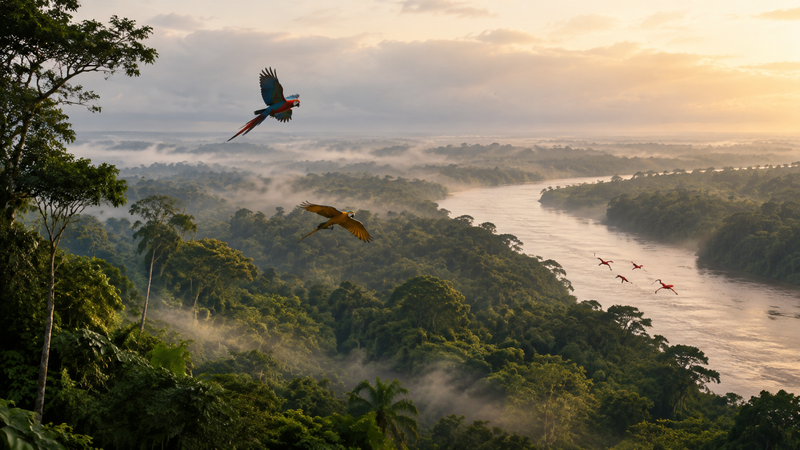
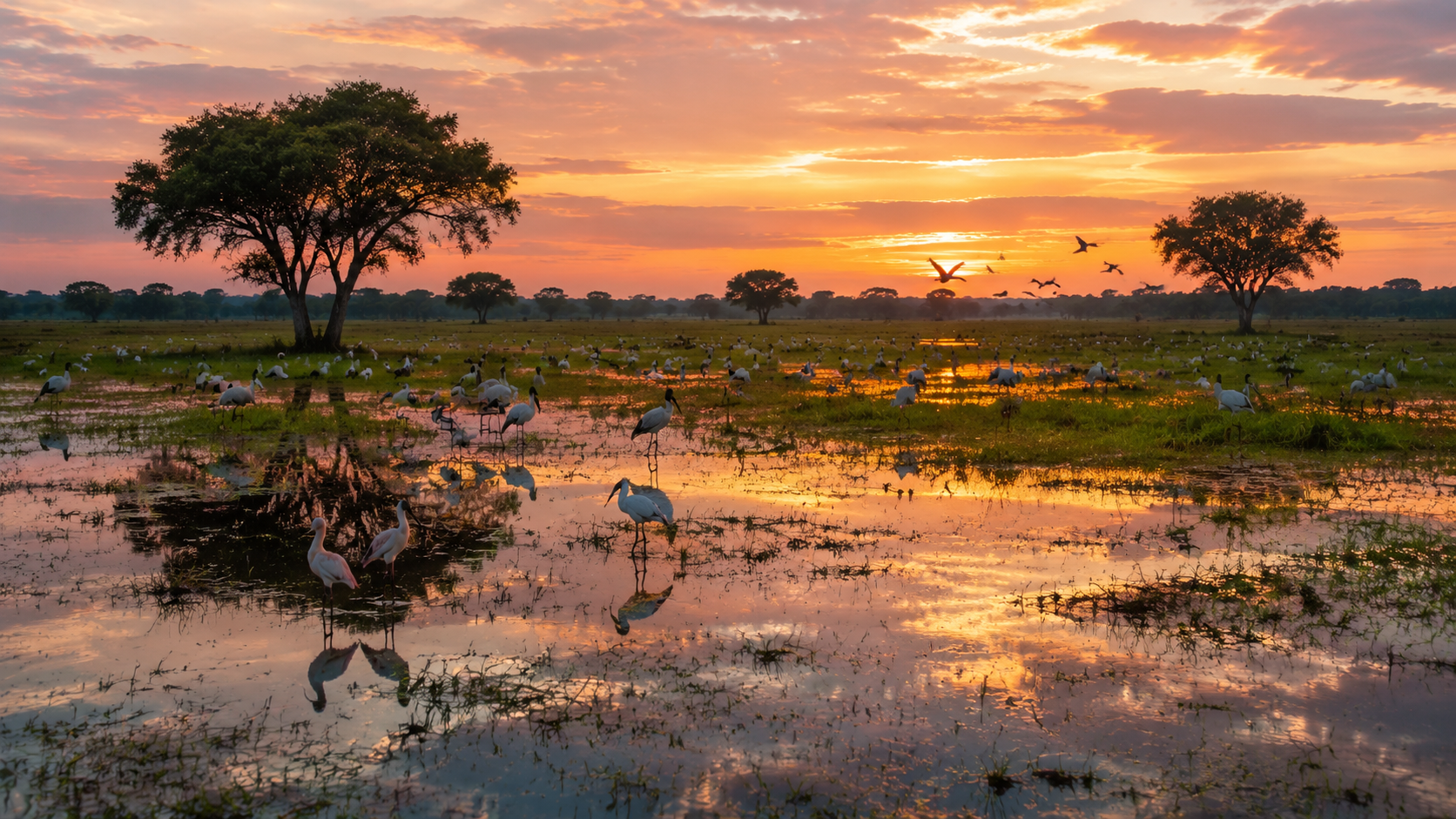
Brazil holds the highest recorded bird species total of any country on Earth, a result of its vast size combined with an unusually wide range of major habitat types within its borders. Most of the Amazon rainforest basin falls within Brazilian territory, supporting a staggering diversity of forest bird species, while the Pantanal, one of the world's largest tropical wetland systems, floods seasonally across the country's west-central region, creating an open, highly visible landscape that concentrates large numbers of waterbirds and wading birds in a way the denser Amazon canopy rarely allows. Further habitat variety comes from the drier savanna-like Cerrado region and a long Atlantic coastal forest strip, itself home to numerous species found nowhere else.
This combination of scale and habitat range means a single country page can only gesture toward Brazil's true bird diversity, which numbers in the thousands of species and is better explored in depth through dedicated Neotropical field guides.
Two very different flagship habitats
The Amazon and the Pantanal, Brazil's two most internationally recognized natural regions, offer contrasting birdwatching experiences. The Amazon's dense, multi-layered rainforest canopy holds an enormous number of species, but its closed structure makes many of them genuinely difficult to see well without considerable time, patience, and often specialized guiding. The Pantanal's open, seasonally flooded grassland and wetland, by contrast, makes large numbers of birds — particularly sizeable wading birds, waterfowl, and raptors — visible at a glance in a way few other tropical regions in the world can match, a major reason the Pantanal has become one of South America's premier birdwatching destinations despite holding fewer total species than the Amazon.
Seasonality
Brazil's bird activity is governed far more by rainfall than by temperature across almost the entire country. The Pantanal's defining seasonal rhythm follows its flood cycle, with the wetland reaching its fullest extent and greatest concentration of waterbirds during and shortly after the wet season, roughly November through March, then gradually drying through the middle of the year to expose feeding grounds that concentrate remaining water and prey into a smaller area, itself a productive time for visible bird activity. The Amazon's rainfall pattern varies regionally but generally follows a broadly similar wet-to-dry cycle, shaping breeding and movement patterns for many of its resident species.
Conservation notes
Deforestation across the Brazilian Amazon, driven by agricultural expansion, logging, and infrastructure development, represents one of the most significant ongoing threats to global bird diversity, given how many species depend entirely on intact rainforest habitat found only within this basin. The Pantanal faces its own pressures from agricultural conversion of surrounding uplands, altered water flow from dam construction, and periodic severe wildfires, threats that together make continued protection of both regions a matter of substantial international as well as national conservation significance.