Birds of Australia
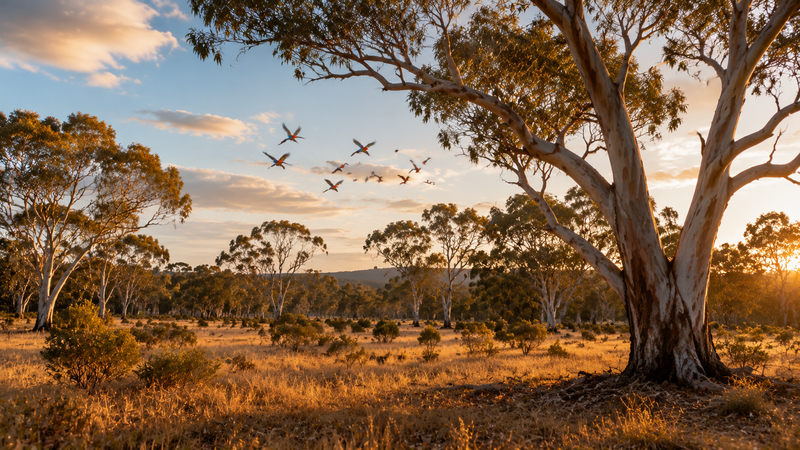
Australia's long isolation produced one of the world's most distinctive bird faunas, from parrots and honeyeaters in eucalyptus woodland to seabirds along its enormous coastline.
An island continent's own bird world
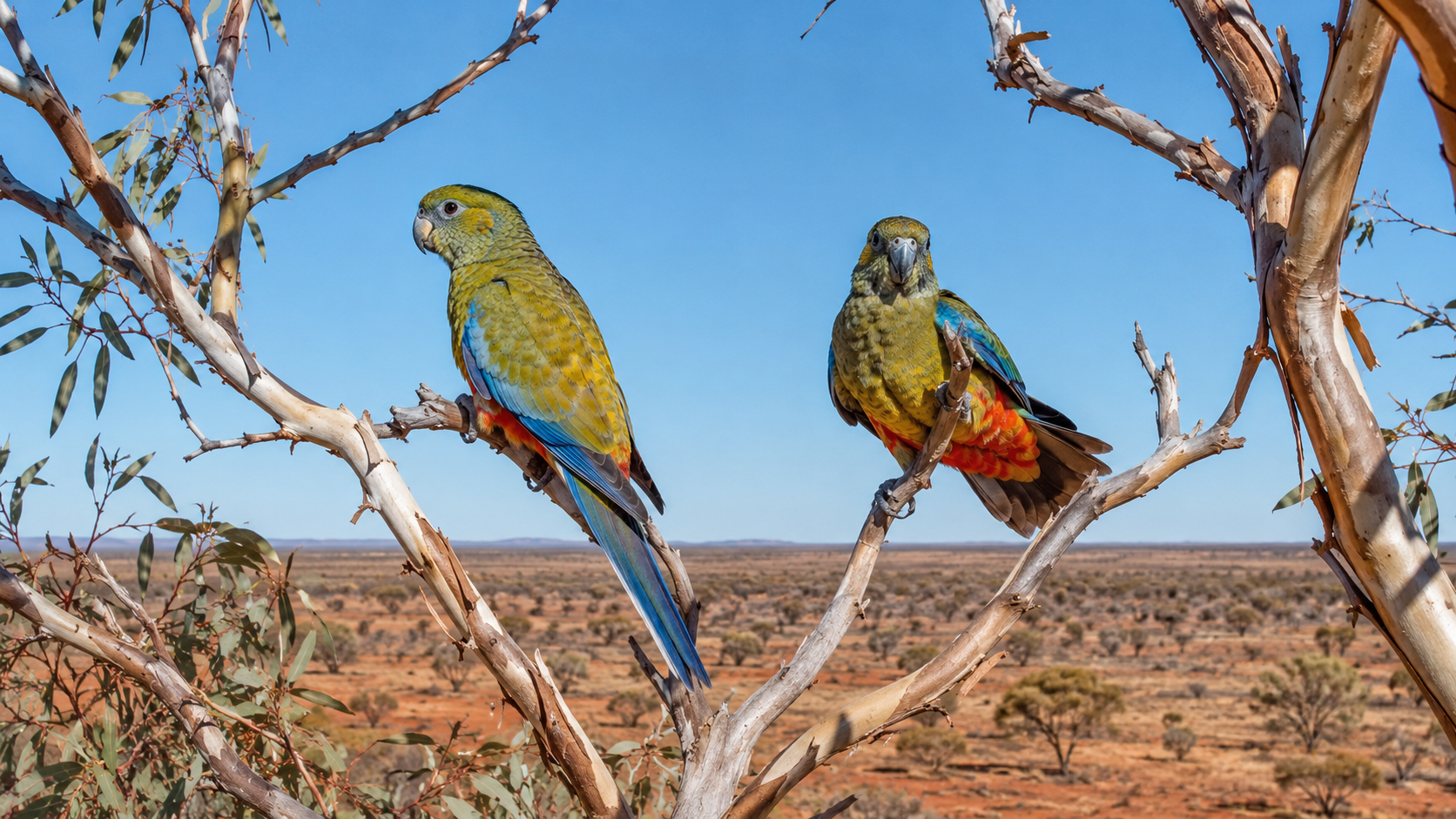
Australia's tens of millions of years of geographic isolation produced one of the most distinctive bird faunas found on any continent. Parrots diversified extensively across the country's eucalyptus-dominated woodlands, while honeyeaters, a large family found in greatest diversity in Australia and nearby parts of Oceania, evolved alongside the nectar-rich flowers of eucalyptus and banksia plants that dominate much of the continent's vegetation. Together these two groups alone account for a level of avian diversity and specialization rarely matched by comparable groups anywhere else in the world.
This distinctiveness plays out against a backdrop of dramatic climate variation across the continent: tropical monsoon conditions across the north, vast arid desert dominating the interior, and a milder temperate climate along the populated southern and eastern coastal fringe, each supporting a correspondingly different bird community.
A largely unique bird fauna
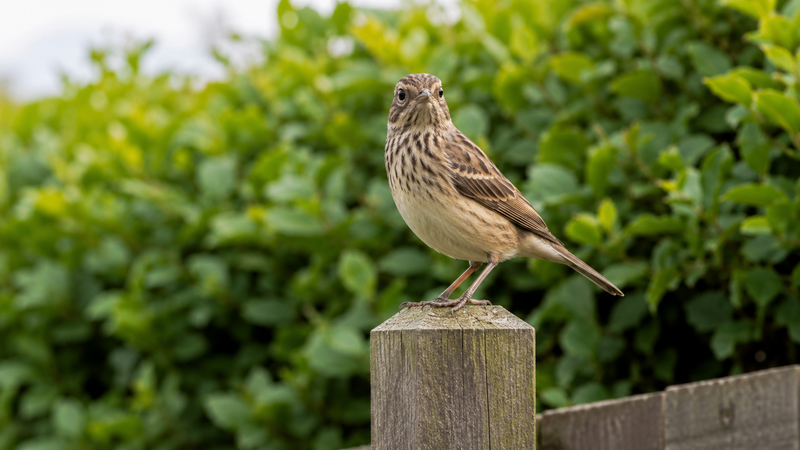
Almost none of Australia's native bird species overlap with those covered elsewhere in this atlas, a reflection of just how long the continent has evolved in isolation from Eurasia, Africa, and the Americas. A modest number of European-origin species were introduced to Australia during colonial settlement and have since established permanent populations in cities and farmland, but they remain a small exception within a bird fauna that is overwhelmingly, distinctively Australian — parrots, honeyeaters, and a wide range of other endemic and near-endemic groups better explored through dedicated Australian field guides than summarized through comparisons to species profiled elsewhere in this atlas.
Australia's extensive coastline also supports substantial seabird populations, particularly around offshore islands and remote stretches of coast largely free from disturbance, adding a further dimension to the continent's bird diversity beyond its well-known woodland and desert specialists.
Seasonality
Australia's seasons run opposite to the Northern Hemisphere, with breeding activity for most temperate and woodland species concentrated broadly across spring and summer, roughly September through February. The tropical north follows a more rainfall-driven pattern shaped by its wet and dry season cycle rather than temperature alone, while the arid interior's bird activity often responds opportunistically to unpredictable rainfall events rather than a fixed annual calendar, a pattern well suited to a landscape where reliable water can appear and disappear from one season to the next.
Conservation notes
Habitat clearing for agriculture, along with the impact of introduced predators such as foxes and cats on species with no evolutionary history of defending against them, represent major ongoing pressures on Australia's native bird fauna, particularly for ground-nesting and smaller species vulnerable to predation. Extensive protected area networks and active conservation programs targeting some of the country's most threatened endemic species reflect the scale of effort required to address these long-standing pressures across such a vast and varied continent.