Waterfowl (Anatidae)
The waterfowl family: ducks, geese, and swans, unified by webbed feet, waterproof plumage, and a broad flattened bill, from the familiar mallard to the massive mute swan.
What makes Anatidae a family
Anatidae, the waterfowl family, comprises well over 150 species worldwide, including all ducks, geese, and swans, unified by fully webbed feet built for efficient swimming, dense and thoroughly waterproofed plumage maintained through regular preening with oil from a gland at the base of the tail, and a broad, somewhat flattened bill shaped to suit each species' particular feeding style. Almost every member of the family depends on open water for at least part of its daily life, whether for feeding, roosting, escaping predators, or raising young.
Despite this shared foundation, the family spans an enormous range of body sizes and feeding strategies, from small dabbling ducks that tip forward to reach submerged plants without fully diving, to geese that graze mainly on land like small livestock, to swans whose exceptionally long necks let them reach plant growth well beyond the range of any duck sharing the same water.
Distinctive traits across the family
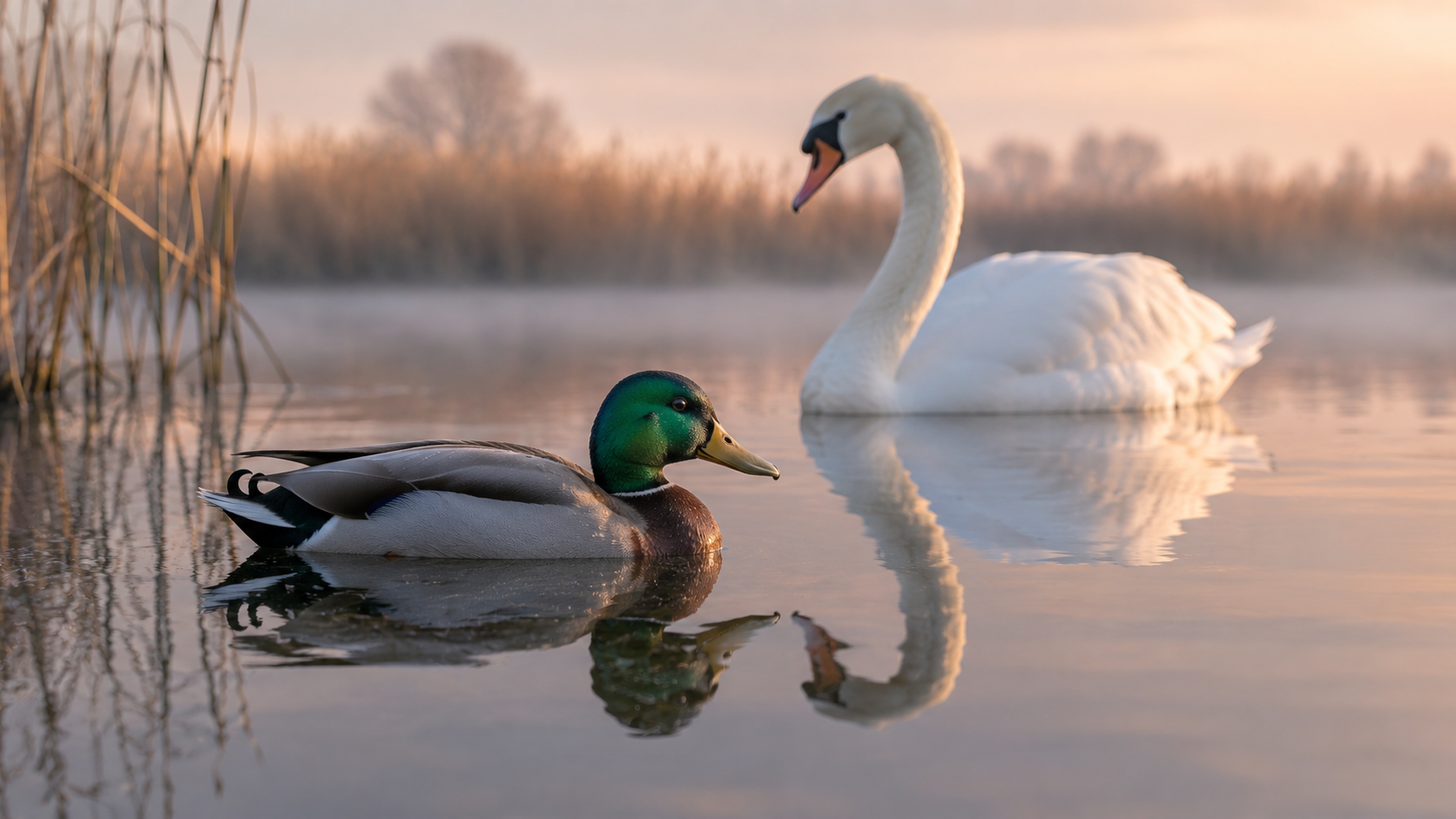
The three species covered in this atlas illustrate the family's characteristic size progression well: the mallard is a mid-sized dabbling duck feeding at or just below the surface; the greylag goose is substantially larger and feeds mainly by grazing on grass and cereal shoots on land near water; and the mute swan is larger still, using its long neck to reach deep underwater vegetation unavailable to either the duck or the goose sharing its lake.
Breeding behavior also varies meaningfully by group size within the family: mallards form pair bonds mainly for a single breeding season, while greylag geese and mute swans both tend toward much longer, often lifelong pairings, reflecting the greater investment both partners typically make in defending a nest site and rearing precocial young that must survive largely on their own from the moment they hatch.
Species in this family
This atlas currently covers three members of Anatidae: the mallard (Anas platyrhynchos), the world's most familiar dabbling duck and ancestor of most domestic duck breeds; the greylag goose (Anser anser), a large grazing goose and the wild ancestor of domestic geese; and the mute swan (Cygnus olor), one of the largest flying birds in the world, instantly recognized by its curved neck and orange knobbed bill. Further Anatidae species native to the atlas's covered regions will be added to the catalogue over time.
Where and when to watch this family
Lakes, rivers, ponds, marshes, and reservoirs of almost any size are the most reliable places to find this family, and because all three species covered here include substantially resident populations across much of their range, waterfowl can typically be observed on suitable water bodies throughout the year, with numbers often swelling in spring and autumn as migratory populations pass through or arrive to breed and winter. Early morning and late afternoon, when feeding activity peaks and water is often calmest, tend to offer the best viewing conditions.