Wagtails and Pipits (Motacillidae)
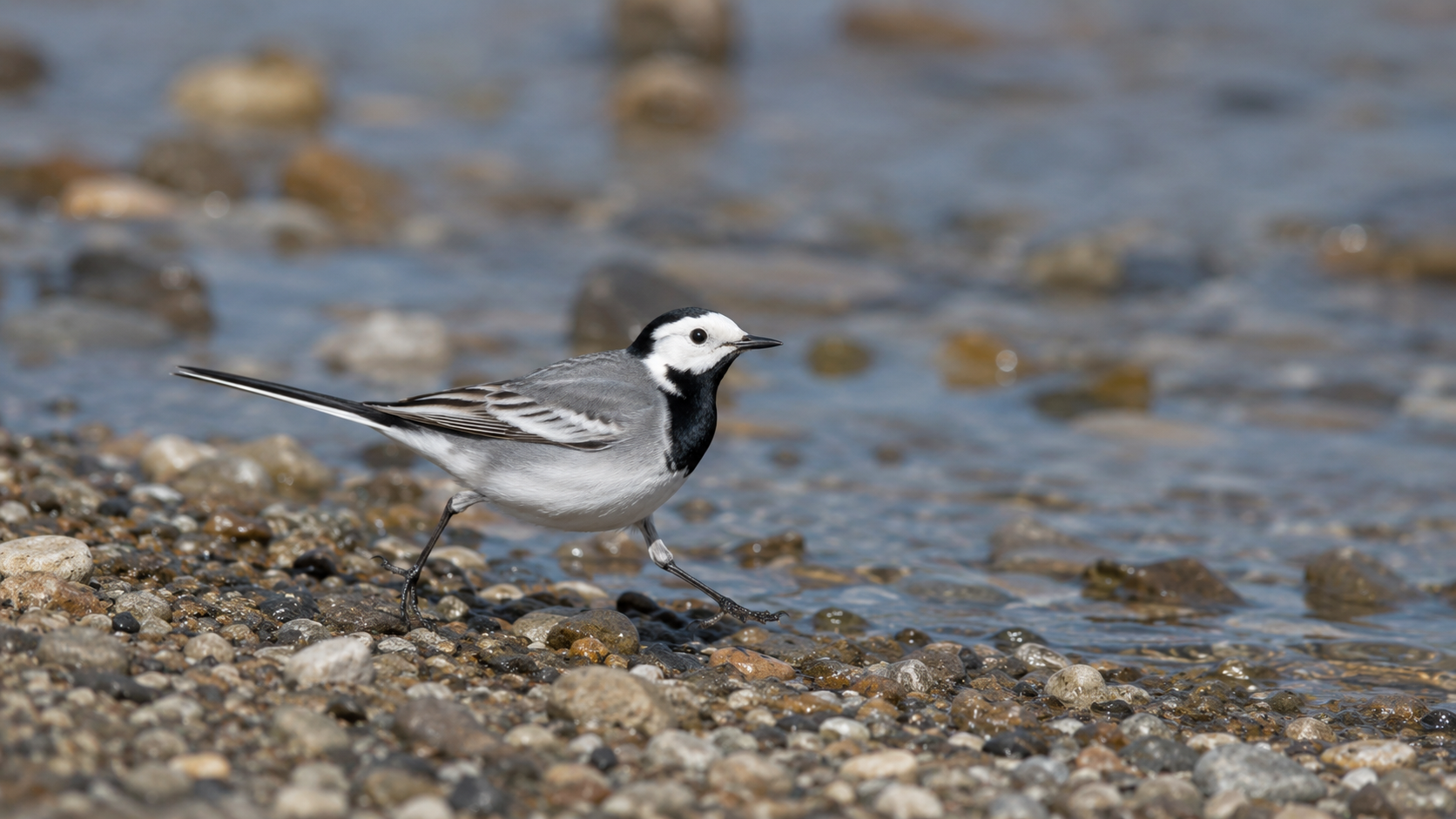
A family of slender, long-tailed, ground-foraging songbirds best exemplified by the constantly tail-bobbing white wagtail, equally at home beside a river or in a busy town square.
What makes Motacillidae a family
Motacillidae, the wagtail and pipit family, comprises around 65 species of slender, ground-adapted songbirds found across open habitats worldwide. Members share a body built for near-constant walking and running rather than hopping, unusually long legs and tail relative to overall body size, and a diet centered heavily on insects and other small invertebrates gleaned or snapped up from open ground, riverbanks, and other largely unvegetated or short-vegetation surfaces.
The family's defining and most easily observed behavioral trait is a near-continuous up-and-down wagging or pumping motion of the tail while the bird is on the ground, a habit shared to varying degrees by both the boldly patterned wagtails and the more subdued, streaky-brown pipits, though the movement is most pronounced and most familiar to casual observers in the white wagtail and its close relatives.
Distinctive traits across the family
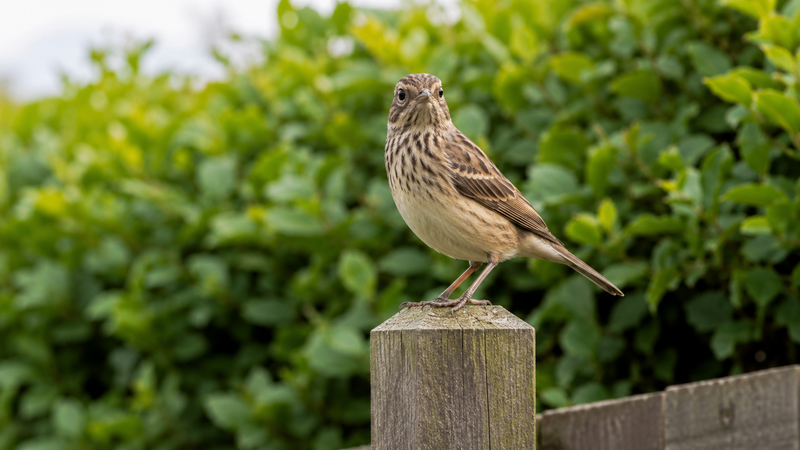
Wagtails and pipits, though united within the same family, present two somewhat different visual impressions: wagtails typically show bold, high-contrast plumage — black, white, grey, or yellow in various combinations — paired with a particularly long and actively wagged tail, while pipits are generally more streaked and uniformly brown, closer in overall appearance to larks, reflecting a more camouflage-oriented strategy suited to open grassland and similar habitats where wagtails' bolder patterning would be less advantageous.
Habitat flexibility is a notable strength across much of the family, and several species, including the white wagtail, have proven remarkably capable of exploiting open, human-modified surfaces such as paved areas, rooftops, and urban parks, functionally standing in for the open riverbanks, short grassland, and bare ground the family relies on in more natural settings.
Species in this family
This atlas currently covers one member of Motacillidae: the white wagtail (Motacilla alba), a slender, black-and-white bird known for its constantly bobbing tail and its striking large communal winter roosts, sometimes formed directly in busy town centers. Further Motacillidae species, including pipits, native to the atlas's covered regions will be added to the catalogue over time.
Where and when to watch this family
Open ground of almost any kind — riverbanks, farmland, parks, car parks, and rooftops — offers a reasonable chance of encountering a member of this family, and the group's tolerance for human-altered landscapes means sightings are not restricted to remote or particularly wild habitat. Communal winter roosting behavior, most dramatically documented in the white wagtail, can make late autumn and winter an especially interesting time to observe this family in unexpectedly large numbers at a single urban or suburban site.