Grebes (Podicipedidae)
The grebe family: highly specialized freshwater diving birds with lobed toes, elaborate courtship displays, and chicks that ride on their parents' backs while swimming.
What makes Podicipedidae a family
Podicipedidae, the grebe family, comprises around 22 species of freshwater diving birds found on lakes, ponds, and slow-moving rivers across most of the world. Grebes are built almost entirely for life on and under the water: their toes are individually lobed rather than webbed like a duck's, and their legs sit unusually far back on the body, an arrangement that maximizes underwater propulsion but makes walking on land so awkward that most species come ashore only reluctantly, if at all, outside of nesting.
This intense specialization for diving extends to the family's diet, dominated by fish and aquatic invertebrates caught during dives that can last well over a minute in larger species, and to a distinctive habit shared across the family: grebes routinely eat their own feathers, and feed feathers to their chicks, forming a matted plug in the stomach believed to protect the gut lining from sharp fish bones and to slow the passage of indigestible material.
Distinctive traits across the family
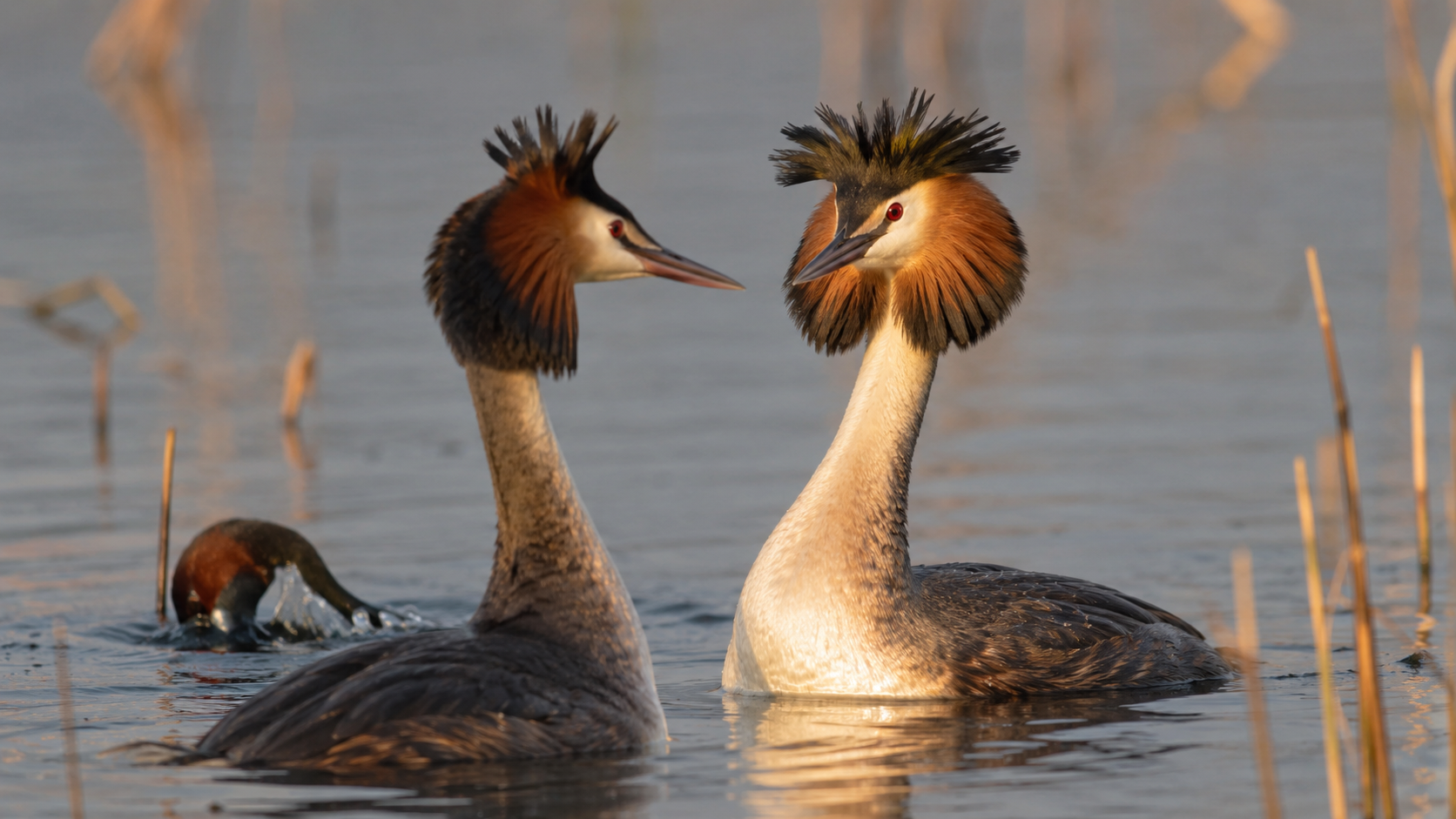
Grebes typically show marked seasonal plumage change, with plain grey-brown non-breeding plumage giving way to often striking breeding-season ornaments — crests, ear-tufts, or colored neck ruffs — that play a central role in the family's elaborate courtship displays. These displays, involving synchronized postures and mutual head-shaking, rank among the most visually distinctive courtship rituals of any freshwater bird family.
Grebe nests are floating platforms of waterweed anchored to standing vegetation, an adaptation that lets the nest rise and fall safely with changing water levels. Chicks are precocial, able to swim within hours of hatching, but are frequently carried tucked into a parent's back plumage during their first days, both for warmth and protection, an image widely recognized as one of the more endearing sights on any lake where grebes breed.
Species in this family
This atlas currently covers two members of Podicipedidae: the little grebe (Tachybaptus ruficollis), the smallest and most compact species in the family, often first detected by its distinctive rapid, whinnying trill from deep within waterside vegetation rather than by sight; and the great crested grebe (Podiceps cristatus), the largest grebe across most of its Eurasian range, instantly recognizable in breeding plumage by its double dark crest and chestnut-and-black head ruff, and famous for its elaborate mutual courtship dance. Further Podicipedidae species will be added to the catalogue over time.
Where and when to watch this family
Grebes are best looked for on calm freshwater lakes, ponds, and slow rivers with a fringe of reed or other emergent vegetation, which provides both nesting material and cover. Courtship displays are most visible in early spring, as pairs establish territories and begin nest-building, while family groups with chicks riding on a parent's back are a characteristic sight through late spring and summer. Outside the breeding season, grebes become considerably less conspicuous, often favoring larger, more open bodies of water and diving frequently enough to make sustained observation more challenging than during the display-heavy breeding period.