Little Grebe
The little grebe (Tachybaptus ruficollis) is the smallest European grebe, a dumpy, tailless-looking diver more often heard than seen, its loud whinnying trill echoing from dense waterside vegetation.
Key facts
- Latin name
- Tachybaptus ruficollis
- Family
- Podicipedidae (Grebes)
- Wingspan
- 40–45 cm
- Season
- April – September in most of the range, with some birds wintering further south and west on unfrozen water
- Diet
- Aquatic insects and their larvae, Small fish, Freshwater crustaceans and molluscs, Tadpoles
- Conservation status
- LCLeast Concern
Appearance
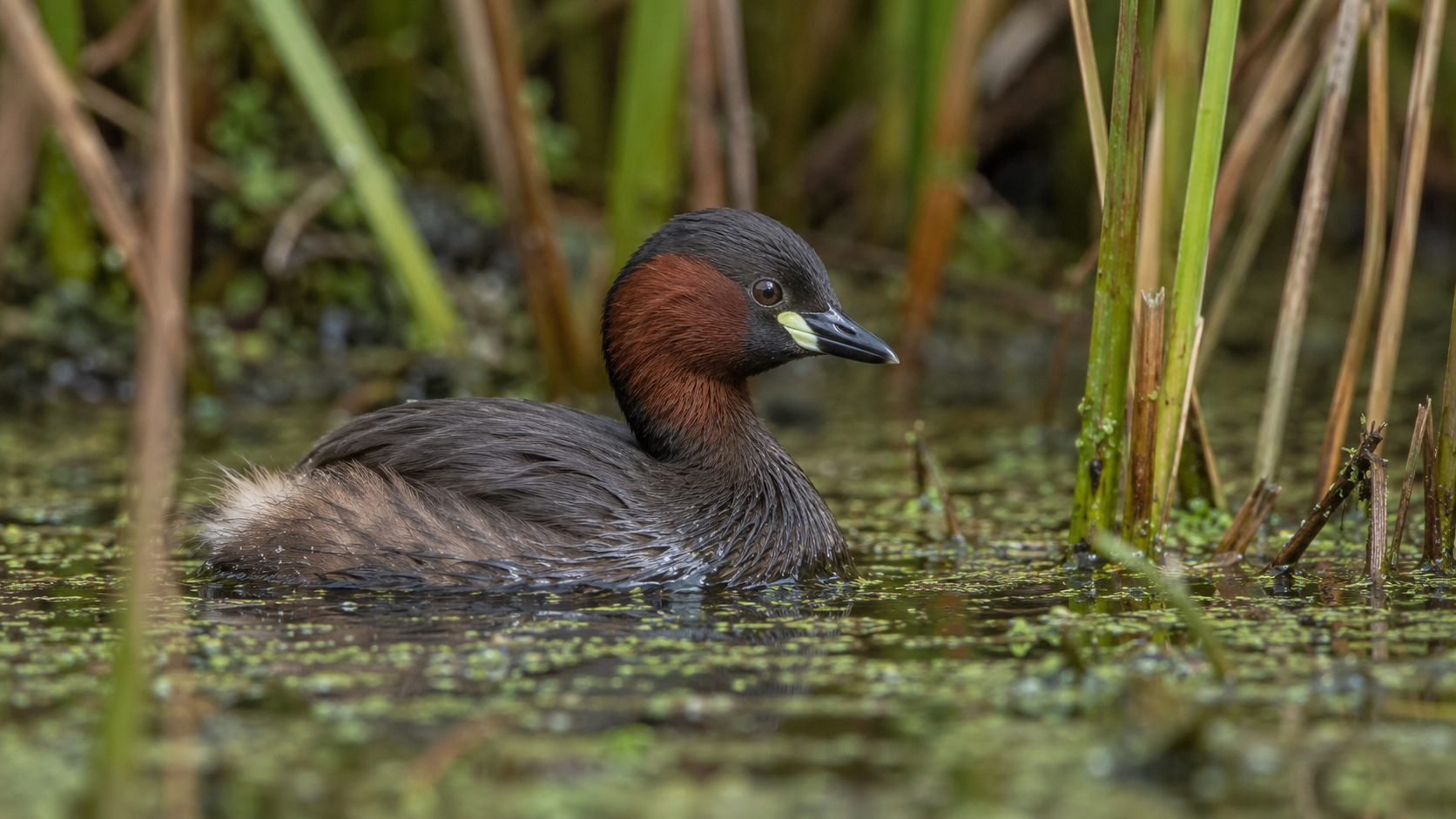
The little grebe (Tachybaptus ruficollis) is the smallest grebe found across most of Europe and Asia, with a wingspan of 40–45 cm and a body length of just 25–29 cm, weighing a mere 100–140 grams. In breeding plumage it shows a dark chestnut face, throat, and foreneck, a blackish cap extending down the back of the neck, and a small but distinctive pale yellow-green patch of bare skin at the base of its short, sharply pointed dark bill.
Its most immediately recognizable feature, however, is its shape: a dumpy, rounded body with such reduced tail feathers that it appears essentially tailless, the rear plumage often fluffed into a soft, powder-puff-like tuft. This compact, tailless silhouette, combined with its small size, separates it at a glance from every other waterbird likely to share its pond or ditch.
Range and habitat
The little grebe is found across a vast range spanning most of Europe, much of Asia, and parts of Africa, favoring small, still, or slow-moving bodies of water with dense fringing or emergent vegetation: ponds, ditches, canals, and the quieter, more overgrown margins of lakes and slow rivers. It generally avoids large stretches of open water, preferring the cover that denser vegetation provides against both predators and disturbance.
Across the colder, more continental parts of its range, including most of Russia, the species is migratory, present from roughly April to September and withdrawing to milder areas with reliably unfrozen water for the winter, while populations across milder western, southern, and more maritime parts of the range tend to be largely resident, remaining on the same waters year-round.
Behavior and lifestyle
The little grebe is an accomplished diver, disappearing beneath the surface with barely a ripple to hunt aquatic insects, small fish, crustaceans, and tadpoles among submerged vegetation, typically surfacing again some distance from where it went under. Rather than flying to escape danger, it usually dives or slips quietly into cover, and it is a notably reluctant, weak flier that takes wing only when necessary, usually at night during migration.
Far more often heard than seen, the species announces its presence with a loud, rapid, whinnying trill that carries well across still water even from deep within dense reed cover, frequently the first and only sign of its presence to an observer standing at the water's edge.
Breeding
Little grebes build a floating nest of waterweed and other plant material, anchored to standing vegetation to keep it stable as water levels shift, typically in a well-hidden spot among dense reeds or other emergent growth. A clutch usually contains 4 to 6 eggs, and when the adult leaves the nest unattended it characteristically covers the eggs with a layer of wet vegetation, concealing them from potential predators.
Chicks are precocial, downy, and boldly striped, able to swim within hours of hatching, and — as in other grebes — are frequently carried tucked into a parent's back plumage during their first days, both for warmth and protection while the adult continues to dive and feed.
Interesting facts
- The little grebe's loud trilling call is so distinctive that experienced birdwatchers often identify the species purely by ear, without ever glimpsing the bird itself among the waterside vegetation it favors.
- Despite its weak, reluctant flight during the day, the little grebe is capable of long migratory journeys, traveling largely under cover of darkness between breeding and wintering areas.
- The species remains widespread and classified as Least Concern, benefiting from its tolerance of a wide range of small and even artificial water bodies, including garden ponds and drainage ditches, that many other waterbirds avoid.