Sylvia Warblers (Sylviidae)
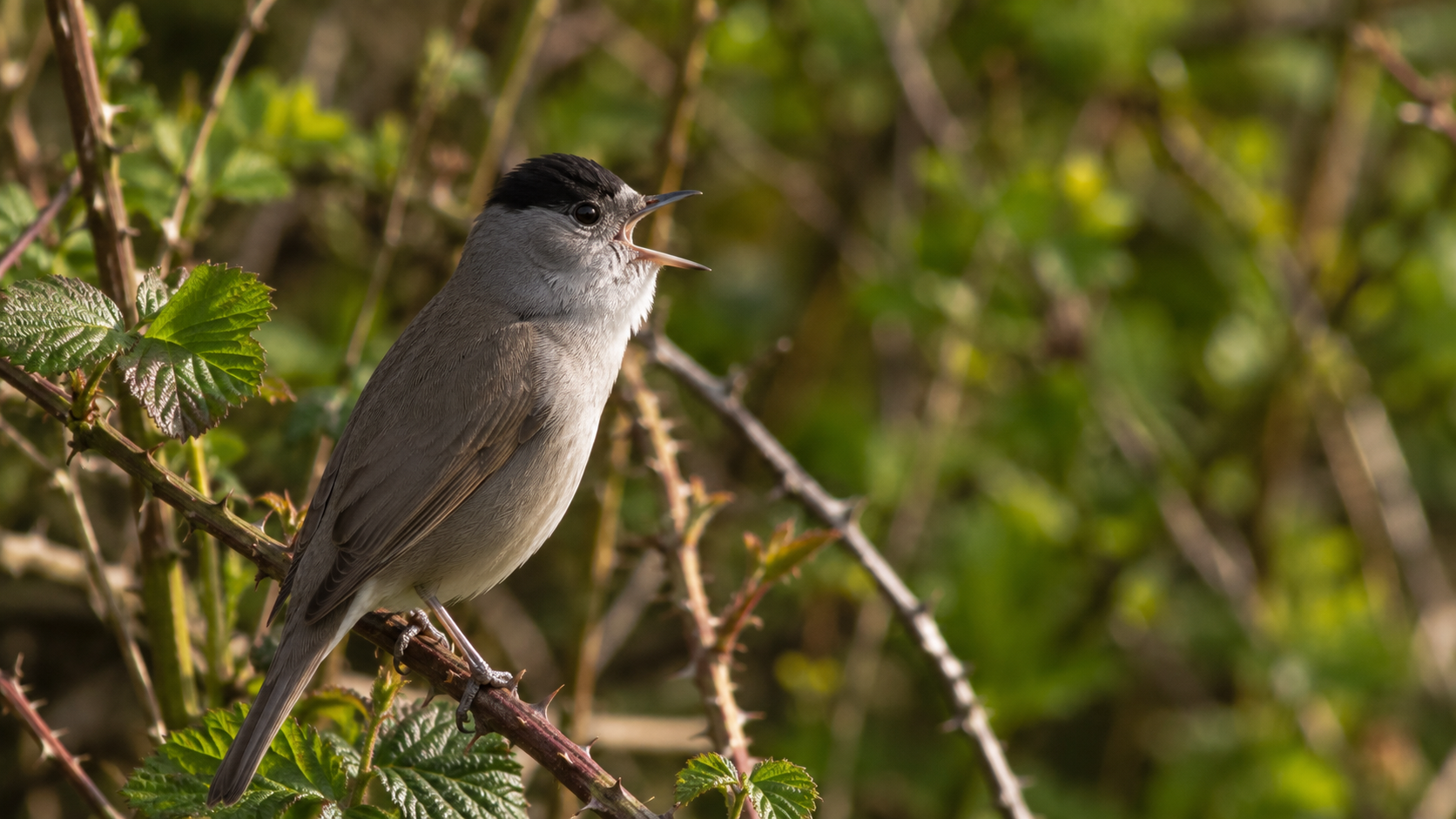
A family of small, plainly plumaged, densely-vegetation-loving warblers prized far more for their voices than their looks, exemplified by the richly singing Eurasian blackcap.
What makes Sylviidae a family
Sylviidae, in its modern, genetically revised sense, is a family centered on the genus Sylvia and its closest relatives — a considerably narrower grouping than older classification systems once used, which lumped a much broader range of unrelated "Old World warblers" together based mainly on superficial resemblance. Members are small, slender songbirds with fine, insect-catching beaks, typically favoring dense scrub, thickets, and heavy undergrowth rather than open ground or tall tree canopy.
Plumage across the family tends toward understated grey, brown, and buff tones, generally lacking the bold color patches or strongly patterned wings seen in some other songbird families, which places much greater relative importance on song as a means of communication, territory defense, and mate attraction — a pattern the blackcap embodies clearly, pairing plain grey-brown plumage with one of the most admired songs of any common European warbler.
Distinctive traits across the family
Because Sylviidae species typically remain within dense cover for much of their time, direct observation is often harder than for more open-perching songbird families, and identification in the field frequently depends as much on song, call, and habitat as on a clear, prolonged view of the bird itself. This has made the family a particular focus for birders developing song-based identification skills rather than relying primarily on visual field marks.
Migratory behavior within the family also illustrates a broader evolutionary flexibility: while most Sylvia warblers follow well-established long-distance migration routes to sub-Saharan Africa or the Mediterranean, the blackcap's documented, relatively rapid evolution of an entirely new wintering route to northwestern Europe shows that even long-established migratory patterns within this family can shift meaningfully within a few decades under the right combination of pressures.
Species in this family
This atlas currently covers one member of Sylviidae: the Eurasian blackcap (Sylvia atricapilla), a plainly plumaged but richly singing warbler known both for its celebrated song and for a striking, well-documented shift in migratory behavior over recent decades. Further Sylviidae species native to the atlas's covered regions will be added to the catalogue over time.
Where and when to watch this family
Spring and early summer, when males are singing most actively to establish and defend breeding territories, offer by far the best opportunity to encounter Sylviidae warblers, since their generally skulking habits make them far easier to detect by ear than by sight for much of the rest of the year. Dense scrub, overgrown hedgerows, and woodland edges with a thick shrub layer are the habitats most likely to reward patient listening for this family's distinctive songs.