Buntings (Emberizidae)
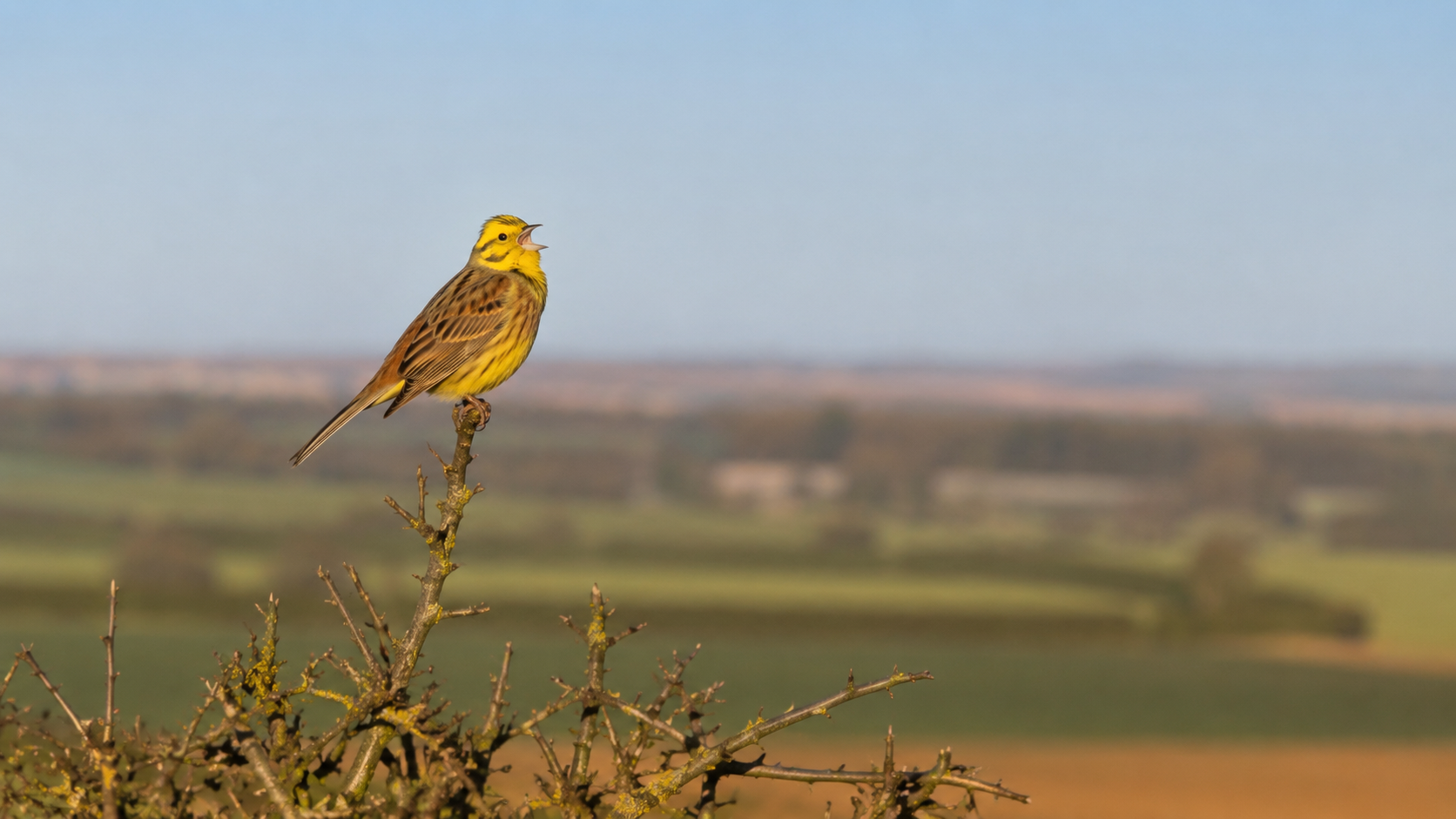
The bunting family: sturdy, seed-eating farmland and open-country songbirds represented here by the vividly yellow-headed yellowhammer, one of Europe's most familiar hedgerow singers.
What makes Emberizidae a family
Emberizidae, the bunting family, comprises several hundred species worldwide, the great majority native to the Americas, with a smaller number, including the yellowhammer, found across Europe and Asia. Members share a sturdy, conical beak specialized for cracking seeds, distinguished from the similarly shaped beak of true finches by a subtle but consistent angular kink where the upper and lower mandible meet, along with a generally longer, more notched tail than most finches of comparable body size.
Diet across the family centers heavily on seeds and grain for most of the year, with a pronounced shift toward insects and other invertebrates during the breeding season, a pattern shared broadly with several other seed-specialist songbird families but especially pronounced in ground- and farmland-associated buntings like the yellowhammer.
Distinctive traits across the family
Many bunting species, including the yellowhammer, favor structurally diverse open farmland with hedgerows and other elevated song perches from which males can advertise their territory, a habit that generally makes singing male buntings relatively conspicuous compared to some other small farmland songbirds that prefer to remain hidden within denser cover while singing.
This close association with a particular kind of farmland structure — hedgerows for nesting and song perches, weedy uncultivated margins for winter seed supply — has made several bunting species, much like larks, unusually sensitive indicators of how agricultural land management practices affect farmland wildlife more broadly, with notable population declines documented in parts of Europe as farming has intensified.
Species in this family
This atlas currently covers one member of Emberizidae: the yellowhammer (Emberiza citrinella), a vividly yellow-headed farmland bunting known for its distinctive rhythmic song and its status as a frequently cited farmland conservation indicator species. Further Emberizidae species native to the atlas's covered regions will be added to the catalogue over time.
Where and when to watch this family
Open farmland with hedgerows, scrubby field margins, and other structurally varied countryside offers the best chance of encountering this family, and spring through summer — when territorial males sing persistently from exposed perches — is by far the easiest time to locate and identify them, both by sight and by the distinctive songs many species produce from their favored hedge-top or fence-post singing positions.