Plovers and Lapwings (Charadriidae)
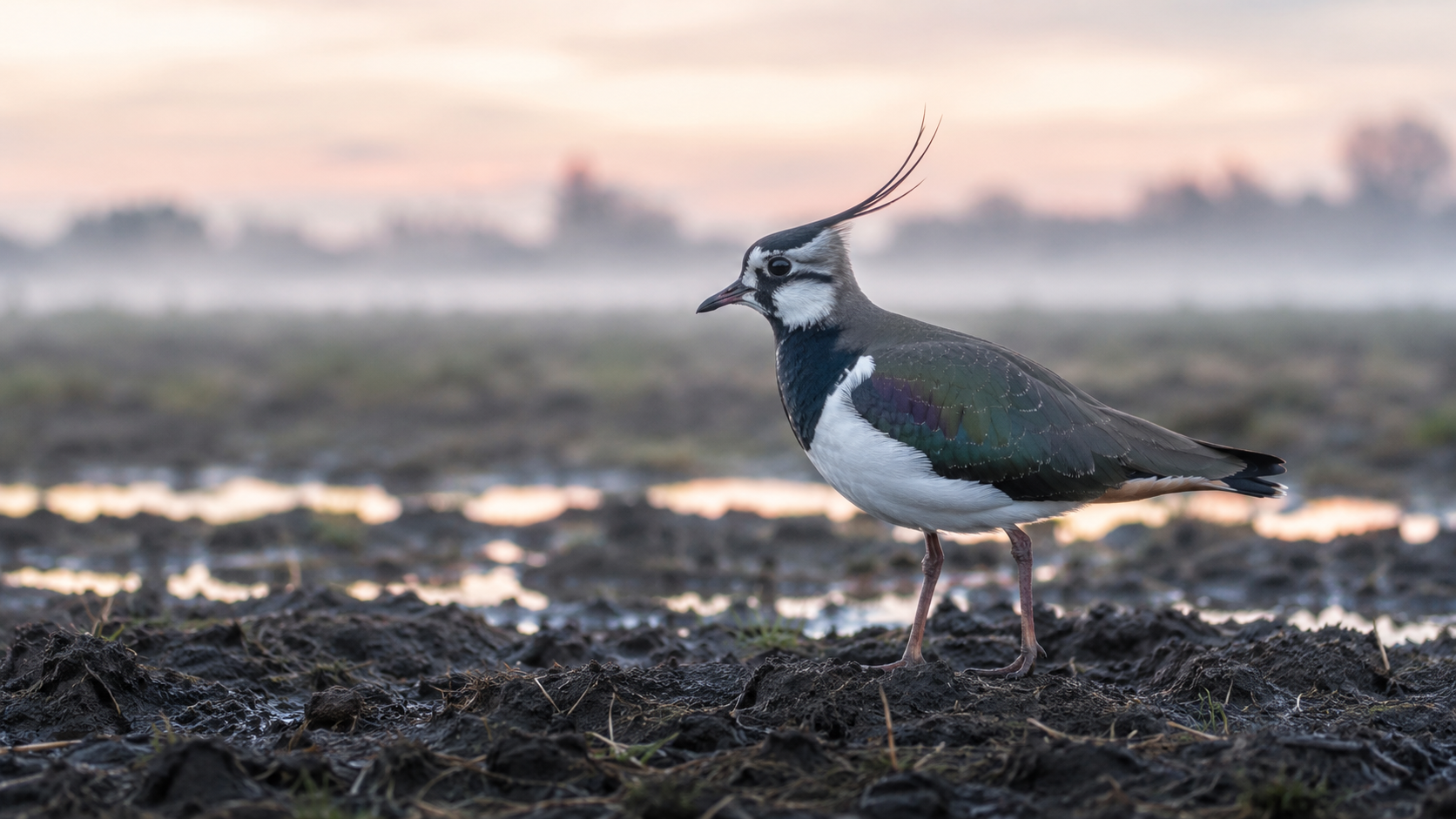
The plover family: compact, large-eyed waders with short bills adapted for visual foraging, from the crested, iridescent northern lapwing to its smaller and plainer relatives.
What makes Charadriidae a family
Charadriidae, the plover family, comprises around 65 species of waders found on every continent except Antarctica, unified by a compact, rounded body, short, straight bills suited to picking prey directly from the surface, and notably large eyes that support a foraging style built around vision rather than continuous tactile probing. Unlike many other wader families that walk steadily forward while probing soft mud or sand, plovers hunt with short, fast runs punctuated by abrupt stops to scan the ground visually before pecking at detected prey.
Most Charadriidae species favor open habitats with short vegetation or bare ground, including farmland, pasture, mudflats, and shorelines, environments that suit their visual hunting strategy far better than dense vegetation would, and many species — the lapwing among the clearest examples — have adapted particularly well to human-modified agricultural landscapes.
Distinctive traits across the family
The northern lapwing, the sole species covered so far in this atlas, illustrates several traits shared more broadly across the family: a compact body and short bill built for surface-level foraging, a strong reliance on open or sparsely vegetated ground for both feeding and nesting, and a well-developed set of nest defense behaviors, including loud alarm calling and injury-feigning distraction displays, used to protect eggs and precocial chicks that have little cover to hide behind.
The lapwing also displays a trait found in several other plover species to varying degrees: a distinctive head ornament — in this case a long, wispy crest — used in visual signaling during territorial and courtship encounters, alongside an elaborate aerial display flight that is among the most recognizable courtship performances of any European wader.
Species in this family
This atlas currently covers one member of Charadriidae: the northern lapwing (Vanellus vanellus), a crested farmland wader known for its iridescent plumage, tumbling display flight, and Near Threatened conservation status following significant declines linked to changes in agricultural land use. Further Charadriidae species native to the atlas's covered regions will be added to the catalogue over time.
Where and when to watch this family
Open farmland, damp pasture, ploughed fields, and coastal or wetland mudflats are the most reliable places to encounter this family, with the best viewing typically in spring when breeding birds are most visible and vocal, performing display flights and defending territories over open ground. Outside the breeding season, plovers often become more gregarious, gathering in loose or mixed-species flocks on favored feeding grounds, particularly during spring and autumn passage periods.